
Beautiful Plants For Your Interior
Beautiful Plants For Your Interior
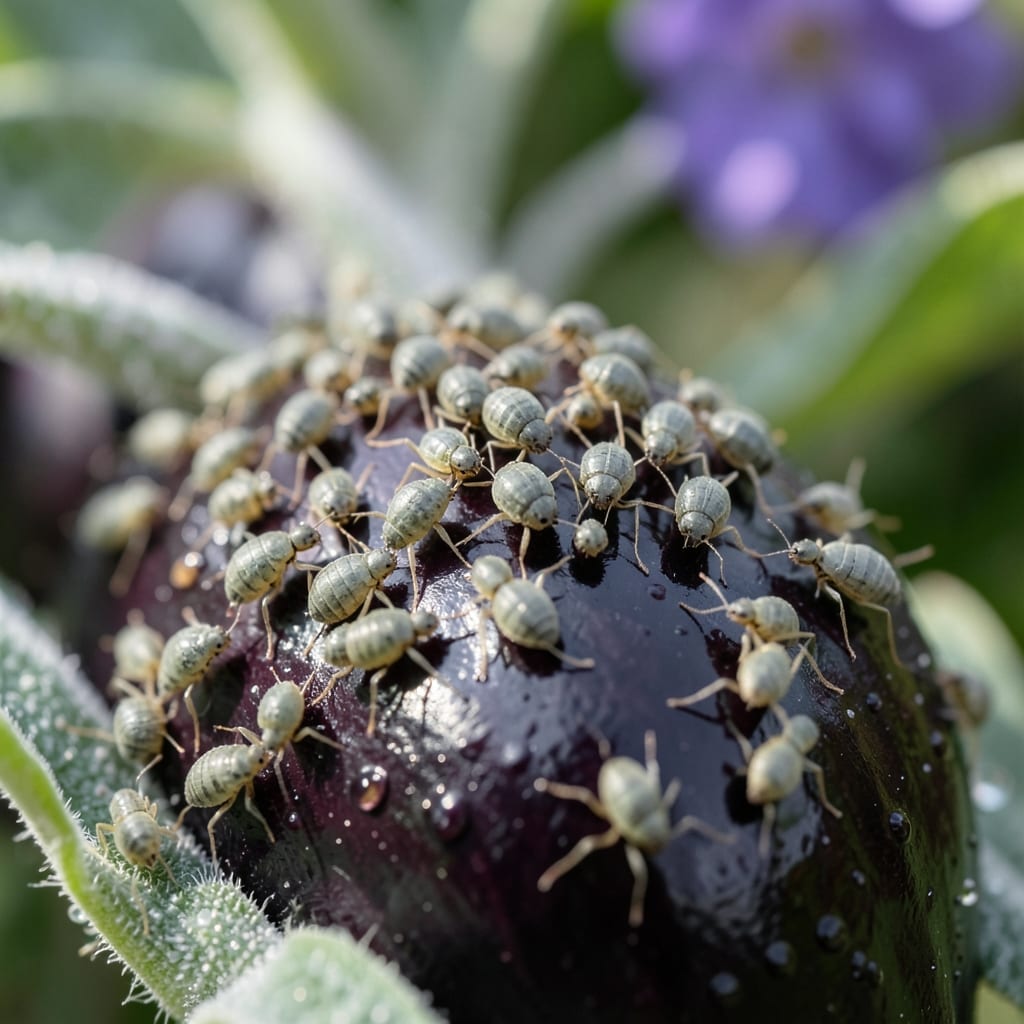
Tiny green invaders can ruin your eggplant crop overnight. I lost an entire row to aphids my first year—the plants looked fine one day, then wilted with curled leaves the next.
These pests suck sap from leaves and stems, stunting growth and spreading disease. The good news? Natural solutions work fast when you catch them early. A strong spray of water dislodges most, while neem oil or insecticidal soap handles the rest.
Your plants bounce back within 2-3 days of treatment, and the harvest stays healthy and productive. The key is consistent monitoring—aphids multiply quickly in warm weather.
Prevention is simpler than cure. Encourage ladybugs, avoid over-fertilizing, and inspect leaves weekly. Works for container or in-ground eggplants alike.
Aphids thrive on eggplant due to a combination of environmental, biological, and cultural factors. Understanding these causes helps you prevent and manage outbreaks effectively.
Excess nitrogen in the soil promotes lush, soft growth in eggplants, which aphids find irresistible. These pests prefer tender new shoots and leaves, which are easier to pierce and feed on. Action: Balance fertilization with phosphorus and potassium to strengthen plant cell walls, making them less appealing to aphids.
Aphids multiply rapidly when their natural enemies—like ladybugs, lacewings, or parasitic wasps—are absent. Monoculture gardens or excessive pesticide use can disrupt these beneficial insect populations. Action: Plant companion flowers (e.g., marigolds, alyssum) to attract predator insects and avoid broad-spectrum pesticides.
Both overwatering and drought stress weaken eggplants, making them more susceptible to aphid attacks. Overwatering creates humid conditions ideal for aphid reproduction, while drought-stressed plants produce higher levels of amino acids in their sap, which aphids seek out. Action: Use drip irrigation to maintain consistent moisture and avoid wetting the foliage.
Aphids reproduce most aggressively in temperatures between 65–80°F (18–27°C) with low humidity. These conditions speed up their life cycle, allowing populations to explode within days. Action: Use row covers in early season to physically block aphids, and monitor plants closely during warm spells.
Dealing with aphids on your eggplant doesn’t have to be a losing battle. Here are practical, natural solutions to reclaim your plants and keep them thriving.
A strong blast of water from a garden hose can knock aphids off your eggplant leaves. Do this early in the day so the plant dries quickly, reducing the risk of fungal infections. Repeat every few days until the aphids are gone. For extra power, mix 1 tablespoon of mild dish soap per quart of water and spray directly on the pests. The soap disrupts their cell membranes, but it won’t harm your plants.
Encourage ladybugs, lacewings, and parasitic wasps—aphids’ natural enemies—to take up residence in your garden. Plant dill, fennel, or marigolds nearby to attract them. You can also purchase ladybugs from garden centers and release them at dusk for the best results. Avoid pesticides, as they’ll harm these helpful insects too.
Neem oil is a powerful, natural insecticide. Mix 1-2 tablespoons of neem oil with a gallon of water and a teaspoon of dish soap (as an emulsifier). Spray this solution on both sides of the leaves, focusing on areas where aphids cluster. Reapply every 5-7 days, especially after rain. 💡 Pro tip: Test on a small section of the plant first to ensure no adverse reactions.
With these steps, your eggplants will stay healthy and aphid-free, ensuring a bountiful harvest! 🌱
They appear as tiny green, black, or gray bugs clustered on new growth or leaf undersides. You might also notice sticky residue (honeydew) or curled leaves.
They return due to over-fertilizing or lack of natural predators. Balance soil nutrients and plant companion flowers to deter them long-term.
Diluted white vinegar (1 part vinegar to 3 parts water) can work as a spray, but test on a small area first. It may harm plants if too strong.
Inspect plants weekly, focusing on new leaves and stems. Early detection makes treatment easier and more effective.