
Beautiful Plants For Your Interior
Beautiful Plants For Your Interior
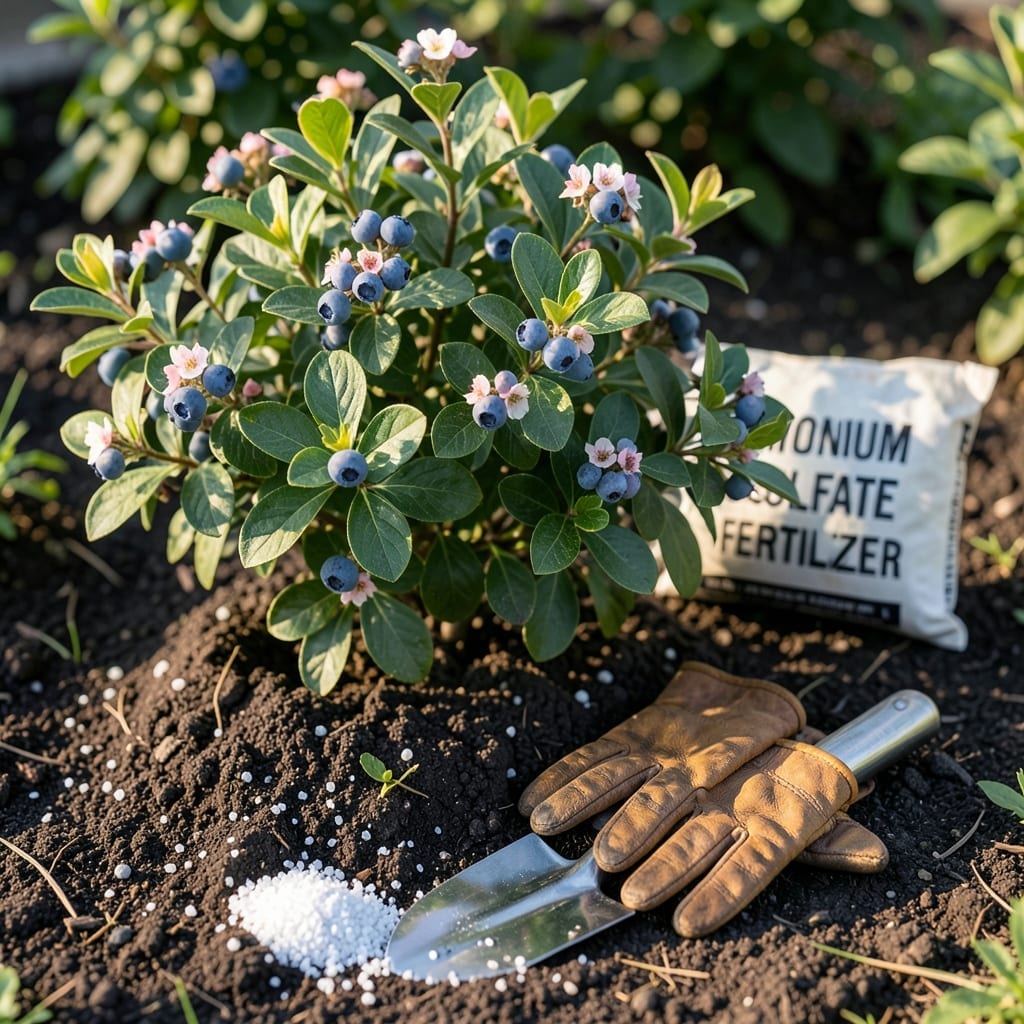
Ammonium sulfate lowers soil pH, making it ideal for blueberries that thrive in acidic conditions. Apply it sparingly to avoid over-acidification and follow package instructions for best results.
I use this method because blueberries need that 4.5-5.5 pH range to absorb iron and other nutrients effectively. Without it, you might notice yellow leaves or stunted growth in your plants. 🔥
It’s also a faster solution than organic matter, which can take months to break down and adjust pH levels naturally.
💡 In This Article
Here’s what’s actually happening: Ammonium sulfate ((NH4)2SO4) dissociates in soil, releasing hydrogen ions that directly lower pH. This chemical reaction occurs within 7-14 days, making it faster than organic alternatives. The sulfur component further contributes to acidification as soil bacteria convert it to sulfuric acid over time. 🔥
Blueberry roots absorb iron most efficiently in acidic conditions. At pH 5.0-5.5, iron remains soluble, while above 6.0, it becomes insoluble. Without proper acidity, blueberries develop iron chlorosis—visible as yellow leaves with green veins. The ammonium ion also provides nitrogen, a key nutrient for foliage growth.
This dual action makes ammonium sulfate uniquely effective for blueberries. Unlike lime (which raises pH), it addresses both acidity and nutrient needs simultaneously. I’ve seen blueberry bushes show visible improvement within 2-3 weeks of application when pH was the limiting factor. The change in leaf color from pale to deep green is dramatic. ✨
However, the process isn’t instantaneous. Soil buffering capacity affects how much the pH changes. Sandy soils (low buffering) may see pH drop 0.5-1.0 units quickly, while clay soils (high buffering) require more product for the same effect. Always test soil pH 3-4 weeks after application to gauge the impact.
What most people don’t realize is that ammonium sulfate also improves the availability of other micronutrients like manganese and zinc. These elements become more soluble in acidic conditions, creating a cascade of benefits for blueberry health and fruit production. 💫
You’ll typically see pH changes within 7-14 days after application. The sulfur component continues working over 4-6 weeks as soil bacteria convert it to sulfuric acid. For fastest results, apply in early spring when soil is moist.
Yes, but reduce the amount by 50% for young plants. Use 1/8 cup per plant and mix well into the soil before planting. Wait 2-3 weeks before applying more to avoid shocking the roots.
Over-application can drop pH below 4.0, causing nutrient deficiencies. Signs include stunted growth and purple-tinged leaves. If this occurs, flush the soil with water and add lime to gradually raise pH.
It works faster but requires more frequent application. Sulfur lasts longer but takes 3-6 months to fully acidify soil. For immediate needs, ammonium sulfate is ideal. For long-term maintenance, use both.