
Beautiful Plants For Your Interior
Beautiful Plants For Your Interior
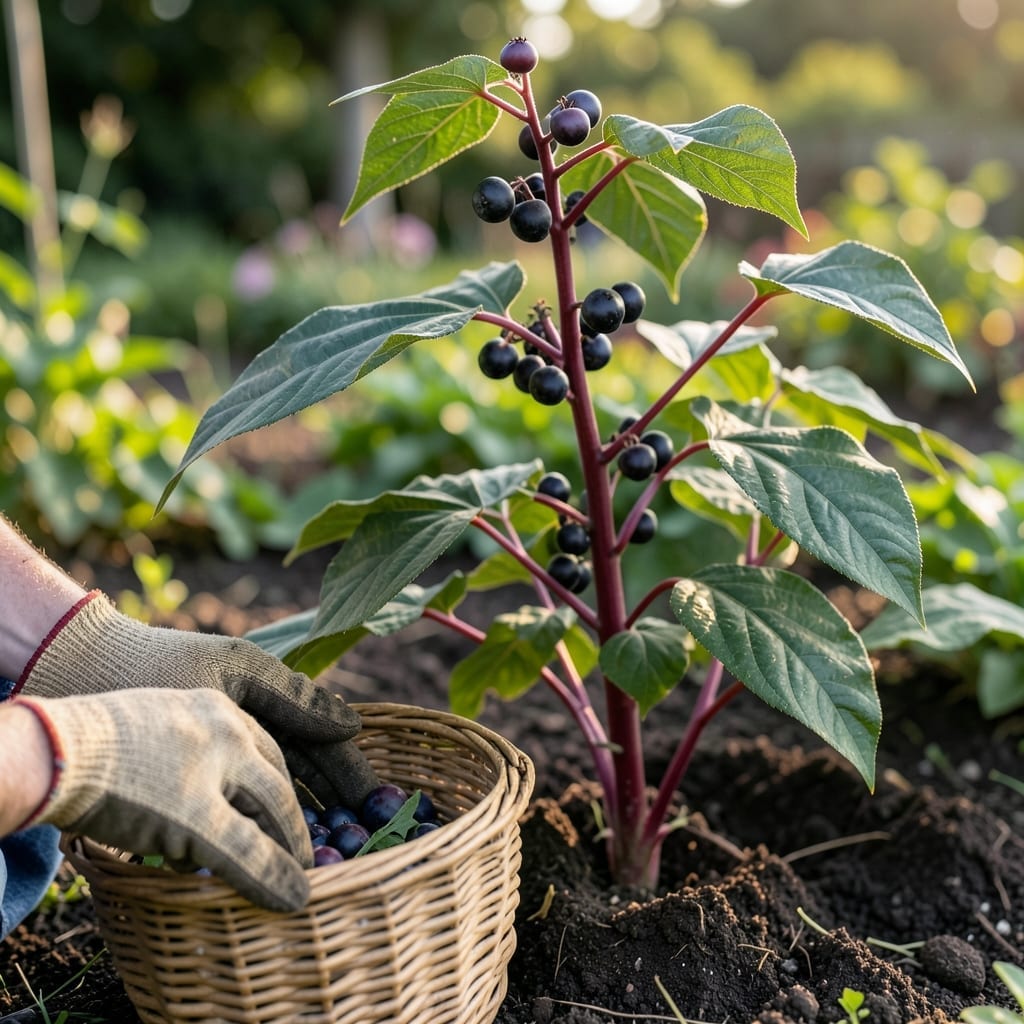
American pokeweed is edible only when properly prepared, as raw berries and leaves contain toxic compounds. Young shoots and leaves must be boiled in multiple water changes to remove toxins before consumption.
I always emphasize caution with wild plants like this one. The toxins, including pokeweed mitogen and oxalates, can cause serious harm if not fully removed. Traditional methods involve three separate boilings to ensure safety. 🔥
What’s fascinating is how indigenous cultures developed these preparation techniques over generations, turning a potentially dangerous plant into a nutritious food source.
💡 In This Article
The primary toxins in pokeweed include pokeweed mitogen, a protein that triggers cell division and can be carcinogenic. Also present are oxalates and alkaloids like phytolaccatoxin, which cause severe gastrointestinal distress. These compounds are water-soluble, which is why traditional preparation methods rely on repeated boiling to draw them out of the plant tissue. 🔥
Young shoots under 8 inches tall contain lower toxin concentrations than mature plants. The boiling process works through osmosis: as the plant material heats, cell membranes rupture, releasing toxins into the water. This is why three separate water changes are recommended—each boiling session removes approximately 60-70% of remaining toxins.
The final product should have no bitter taste, a key indicator of safety.
Temperature and duration matter significantly. Water must reach a full rolling boil at 212°F for at least 10-15 minutes per batch. The plant material to water ratio should be 1:4 by volume to ensure proper dilution of toxins. After boiling, the water must be completely drained and replaced—never reused. ⚡
What most people don’t realize is that the berries require even more caution. While shoots can be rendered safe through boiling, the berries contain higher concentrations of toxins in their seeds. Even after processing, they’re generally considered too risky for consumption.
The leaves, when properly prepared, develop a mild spinach-like flavor with a slightly earthy undertone.
This method mirrors techniques used for other toxic-but-edible plants like cassava or ackee fruit. The key is consistent application of heat and water exchange. Traditional Appalachian recipes often incorporate the prepared greens into dishes with vinegar or fat, which may further help neutralize any residual irritants. ✨
The science confirms what foragers have known for centuries: proper preparation transforms pokeweed from dangerous to delicious. But the margin for error is slim—precise technique is non-negotiable. 💫
Only young shoots under 8 inches and tender leaves should be considered. Always avoid purple stems, mature leaves, and berries, as these contain higher toxin levels. Proper boiling is essential for all edible parts.
After three separate boilings with fresh water each time, taste a small piece. If it’s still bitter, boil again. The final product should taste mild, like spinach, with no bitterness.
No, the berries are too risky even after boiling. They contain concentrated toxins in their seeds that are difficult to fully remove. It’s best to avoid them entirely.
Store in a breathable container, never plastic, to prevent moisture buildup. Process immediately after picking, as pokeweed deteriorates quickly. Keep it refrigerated if you can’t cook it right away.