
Beautiful Plants For Your Interior
Beautiful Plants For Your Interior
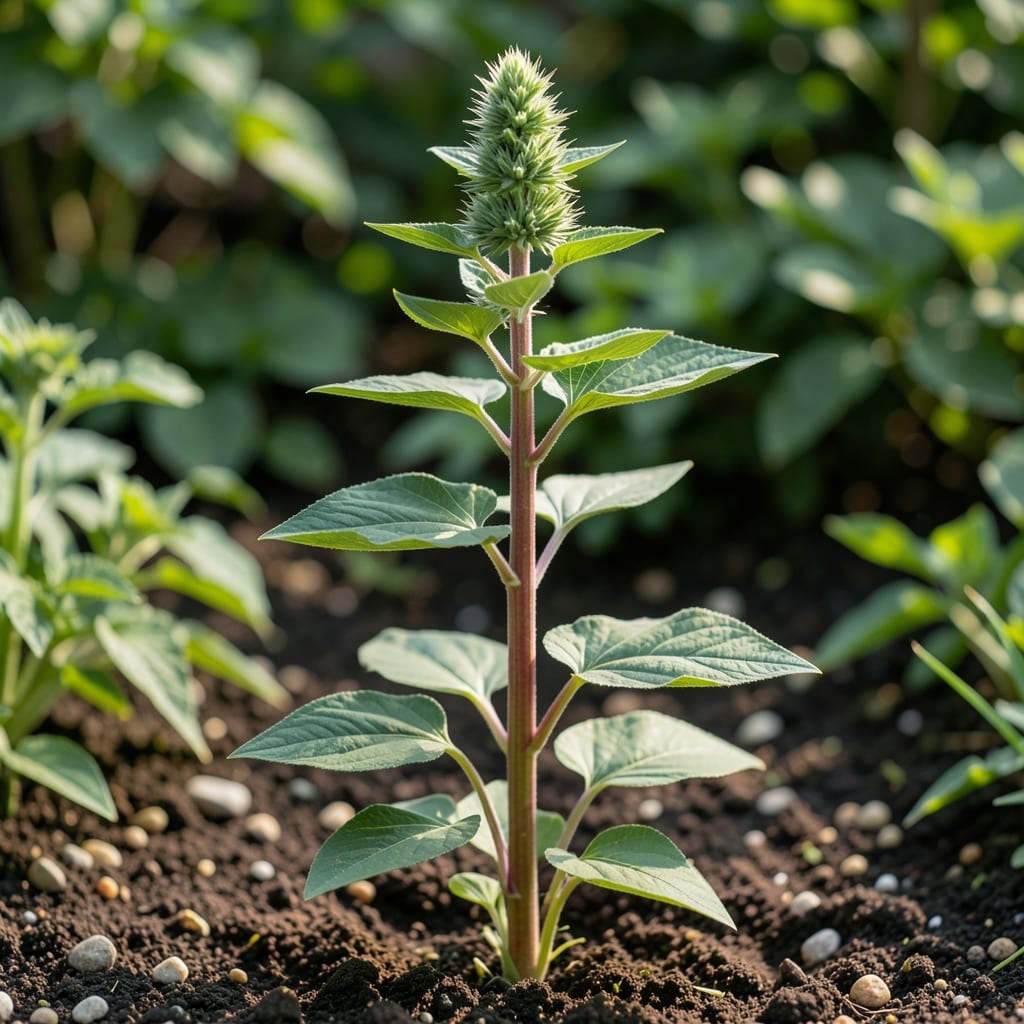
Yes, amaranth pigweed is edible and highly nutritious, packed with protein, fiber, and minerals like iron and calcium. Both leaves and seeds can be cooked or eaten raw when properly identified.
I love how versatile this plant is—you can use the young leaves in salads for a spinach-like flavor or cook mature ones like swiss chard. The seeds, rich in lysine, are perfect for popping or grinding into flour. 🔥
Just be sure to confirm you’ve got the right variety, as some look-alikes can be harmful. Foraging safely means checking for the plant’s distinctive diamond-shaped leaves and reddish stems. ✨
💡 In This Article
Edible amaranth pigweed stands out with its diamond-shaped leaves that grow in an alternating pattern along the stem. The stems often display a distinctive reddish or purple hue, especially near the base. Unlike toxic look-alikes such as black nightshade, amaranth pigweed lacks the glossy, smooth leaves and dark berries that signal danger.
The plant typically reaches 1-3 feet in height, with a bushy, upright growth habit. 🌟
The leaves of edible varieties feel slightly fuzzy or textured, not slick like some toxic mimics. When crushed, they release a mild, earthy aroma. The seeds, another edible part, are tiny and black or dark brown, clustered in dense spikes at the top of the plant.
These spikes can grow 4-8 inches long, making them a key identifier. ✨
Another distinguishing feature is the flower structure. Edible amaranth pigweed produces small, greenish flowers that lack petals, forming dense clusters at the stem tips. This contrasts with toxic plants like pokeweed, which have showy berries or smooth, berry-free stems. Always check for these details before harvesting. 🔥
Growth environment matters too. Amaranth pigweed thrives in disturbed soils, such as gardens, fields, or roadsides, often in full sun. It’s less likely to grow in heavily shaded or wooded areas. If you spot a plant that matches these traits, cross-reference with a reliable foraging guide to confirm its edibility. ⚡
Remember, young plants are easier to identify accurately. As amaranth pigweed matures, its leaves may develop a more ovate shape, but the stem color and growth pattern remain consistent. When in doubt, avoid plants with milky sap, thorns, or bitter tastes—these are red flags for toxicity. 💫
Both leaves and seeds are edible. Young leaves work well raw in salads, while mature ones are best cooked. Seeds can be toasted, popped, or ground into flour.
Look for diamond-shaped leaves with reddish stems and no glossy finish. Avoid plants with milky sap or bitter taste, as these indicate toxicity.
Cooking is recommended, especially for beginners. Blanching leaves for 30-60 seconds reduces oxalates. Seeds should be dried or toasted before eating.
Fresh leaves last 3-4 days in the fridge. Dried seeds keep in an airtight container for up to 6 months.
Toast them for a nutty snack or grind into flour for baking. They pop like tiny popcorn when heated in a dry pan for 3-4 minutes.