
Beautiful Plants For Your Interior
Beautiful Plants For Your Interior
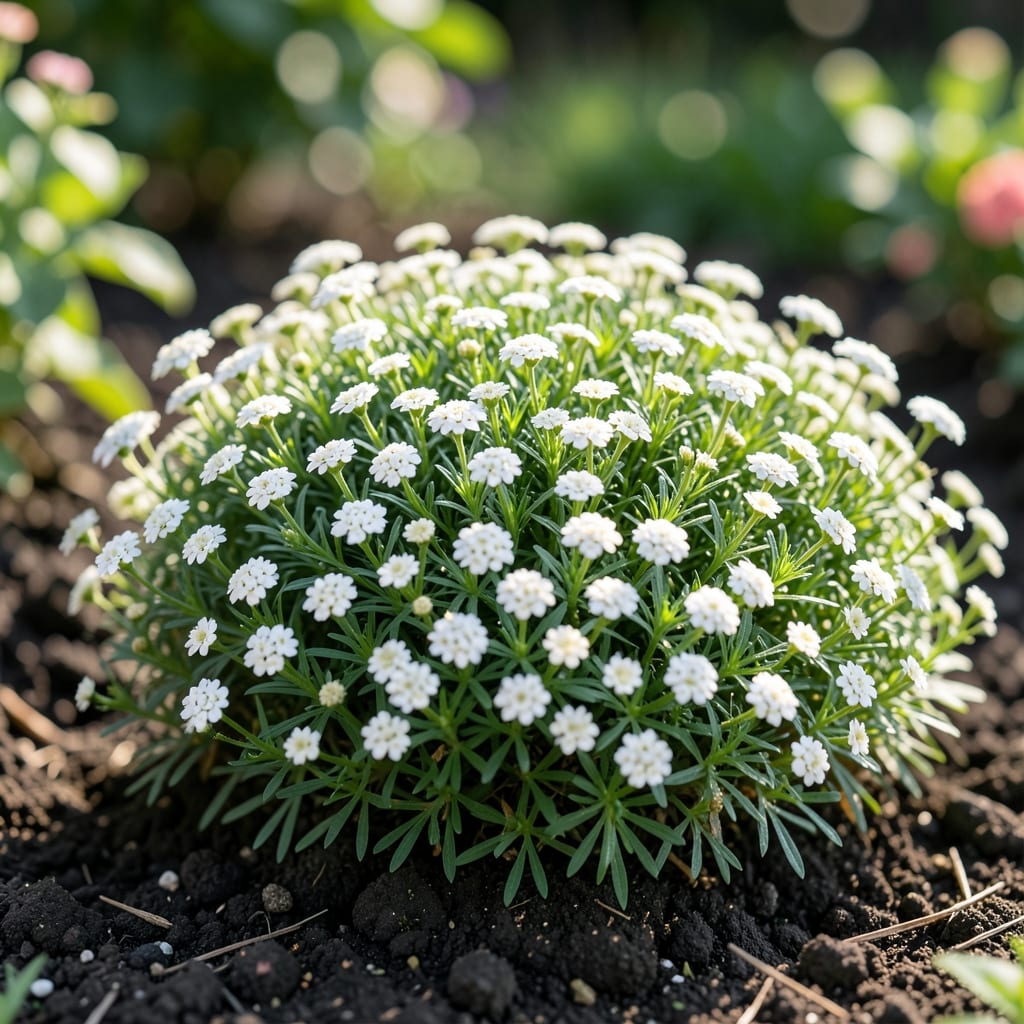
Alyssum ‘Carpet of Snow’ is typically grown as an annual in most climates, though it can behave as a short-lived perennial in very mild winter regions. It self-seeds readily, often returning each year under the right conditions.
I’ve found this plant thrives in USDA zones 5-9, where its self-seeding nature creates a perennial-like effect even if the original plants don’t survive winter. The key is allowing seed pods to mature and drop naturally. 🌟
In colder areas, it’s treated as a true annual, but its prolific blooming and easy care make it a garden favorite regardless of its lifespan.
💡 In This Article
This plant’s classification shifts dramatically by region due to its frost sensitivity. In USDA zones 7-9, where winters stay above 20°F, it often survives as a short-lived perennial, producing new growth from the crown each spring.
The secret lies in its ability to maintain a semi-woody base that protects the root system during mild winters 🔥
North of zone 6, it behaves as a true annual, with frost killing the plant completely. However, its prolific self-seeding creates a perennial illusion. Each plant produces hundreds of tiny seeds that germinate when soil temperatures reach 50-60°F the following spring, often before you’ve planted anything new ✨
The self-seeding mechanism works because the seed pods shatter when dry, dispersing seeds up to 2 feet from the parent plant. This natural propagation means you’ll often see new plants emerging in cracks between pavers or along garden edges where the original planting was.
The seeds remain viable for up to 3 years in the soil 💫
What makes this particularly interesting is how the plant adapts to microclimates. In protected southern exposures or urban heat islands, it may survive winters in zone 6, while the same variety might die back completely in exposed northern locations just a few miles away.
This adaptability explains why gardeners in borderline zones often report inconsistent behavior from year to year ⚡
For those in colder climates, the annual classification doesn’t diminish its value. The plant grows so quickly from seed—reaching bloom in just 6-8 weeks—that it provides the same seasonal impact as a perennial would, just with fresh plants each year.
This rapid growth cycle is why it’s often used for quick color in spring and fall gardens 🌟
It depends on your climate. In USDA zones 7-9, it often returns as a short-lived perennial. In colder areas, it self-seeds so well that it seems to return annually on its own.
This fast grower typically produces flowers in just 6-8 weeks from sowing. Its rapid growth makes it perfect for quick seasonal color in spring or fall gardens.
Regular deadheading encourages more flowers. For self-seeding, leave some spent blooms to mature and drop seeds naturally before cleaning up.
Allow seed pods to dry and shatter naturally. The seeds can disperse up to 2 feet and remain viable in soil for up to 3 years.