
Beautiful Plants For Your Interior
Beautiful Plants For Your Interior
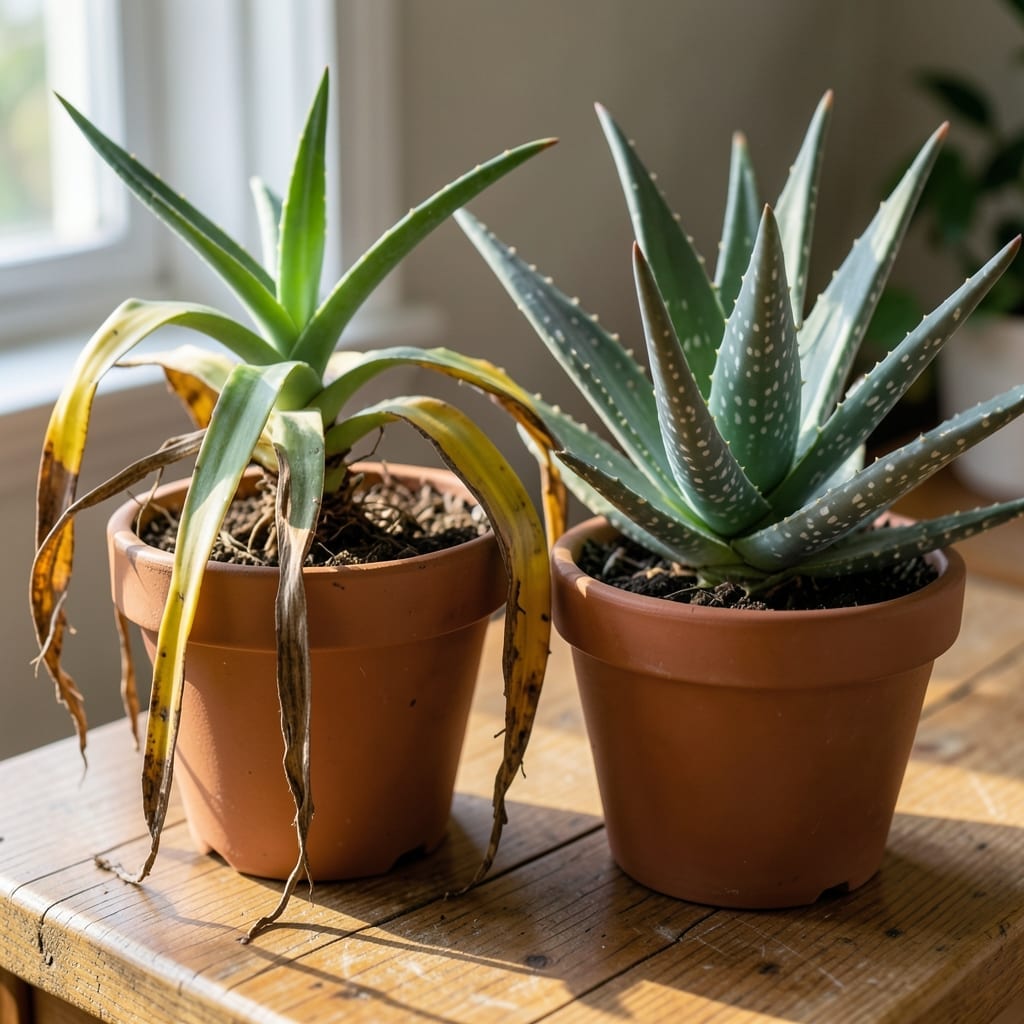
My aloe plant looked perfect last week—plump leaves, vibrant green. Now it’s wilting and the base is mushy. Root rot strikes fast when water sits too long in the pot.
I’ve saved dozens from this death spiral. The fix starts with pulling it from the soil, trimming black roots, and letting it dry in sunlight for 2-3 days. Then repot in fresh, gritty mix.
Most people overwater out of love. Aloe thrives on neglect—water only when the soil is bone dry two inches down. And that south-facing window? Might be too much direct sun.
With the right adjustments, you’ll see new growth within 3-4 weeks. The plant bounces back stronger, and you’ll never panic over drooping leaves again.
Even the hardiest aloe plants can decline when their basic needs aren’t met. Here’s why your aloe might be struggling, broken down by the most frequent culprits:
Root rot is the #1 killer of aloe plants. These succulents store water in their thick leaves, so soggy soil suffocates their roots. Fusarium and Phytophthora fungi thrive in waterlogged conditions, breaking down root tissues. Always use a well-draining soil mix (50% perlite/pumice, 50% cactus soil) and pots with drainage holes.
Aloe vera needs 6–8 hours of bright, indirect light daily. Too little light causes etiolation—stretched, weak growth as the plant searches for sunlight. Conversely, sudden exposure to direct harsh sun (especially afternoon rays) can scorch leaves, leading to brown, crispy patches. Acclimate your plant gradually to new light conditions.
Aloes prefer temperatures between 55–80°F (13–27°C). Below 50°F (10°C), growth slows, and frost can kill the plant. Heat above 90°F (32°C) accelerates water loss, stressing the plant. Avoid placing aloe near drafty windows, AC vents, or heaters.
Tap water high in chlorine, fluoride, or minerals can cause tip burn or yellowing. Use filtered or distilled water if your local water is hard. Additionally, dense, organic-rich soils (like regular potting mix) retain too much moisture. Stick to mineral-heavy, gritty mixes to mimic aloe’s native arid habitats.
If your aloe plant is struggling, don’t lose hope! Here are practical solutions for the most common issues, along with tips to keep your plant thriving long-term.
If the leaves are mushy or yellowing, stop watering immediately. Remove the plant from its pot, trim any black or rotting roots with clean scissors, and repot it in fresh, well-draining soil. Use a terracotta pot with drainage holes to prevent waterlogging. Prevention tip: 💡 Water only when the top 1-2 inches of soil are completely dry.
Aloe plants need bright, indirect light. If your plant is leggy or pale, move it closer to a sunny window (but avoid harsh direct sunlight, which can scorch the leaves). If it’s turning brown or crispy, it might be getting too much sun—relocate it to a spot with filtered light. Prevention tip: 🌡️ Rotate the pot occasionally for even light exposure.
Check for mealybugs, scale, or spider mites under the leaves. Wipe them off with a cotton swab dipped in rubbing alcohol or spray the plant with a mix of water and mild soap. Repeat every few days until pests are gone. Prevention tip: ✨ Keep your aloe in a clean environment and inspect it regularly.
Yellowing or weak growth may signal a lack of nutrients. Use a balanced, water-soluble fertilizer (diluted to half strength) once a month during the growing season (spring and summer). Avoid fertilizing in winter. Prevention tip: 🎯 Repot your aloe every 2-3 years to refresh the soil.
With these fixes and a little care, your aloe plant can bounce back to its healthy, vibrant self!
Water only when the top 1-2 inches of soil are bone dry. In summer, this may mean every 2-3 weeks; in winter, even less. Overwatering is the most common cause of decline.
Brown tips often mean too much direct sun or fluoride in tap water. Move to indirect light and switch to filtered or distilled water. Crispy edges signal underwatering or low humidity.
Yes! Remove it from soil, cut off all black/mushy roots, and let the base dry for 2-3 days. Repot in fresh, gritty mix. Skip watering for a week after repotting.
Use a mix of 50% cactus soil and 50% perlite/pumice for sharp drainage. Avoid dense potting mixes—they hold too much moisture and suffocate roots.