
Beautiful Plants For Your Interior
Beautiful Plants For Your Interior
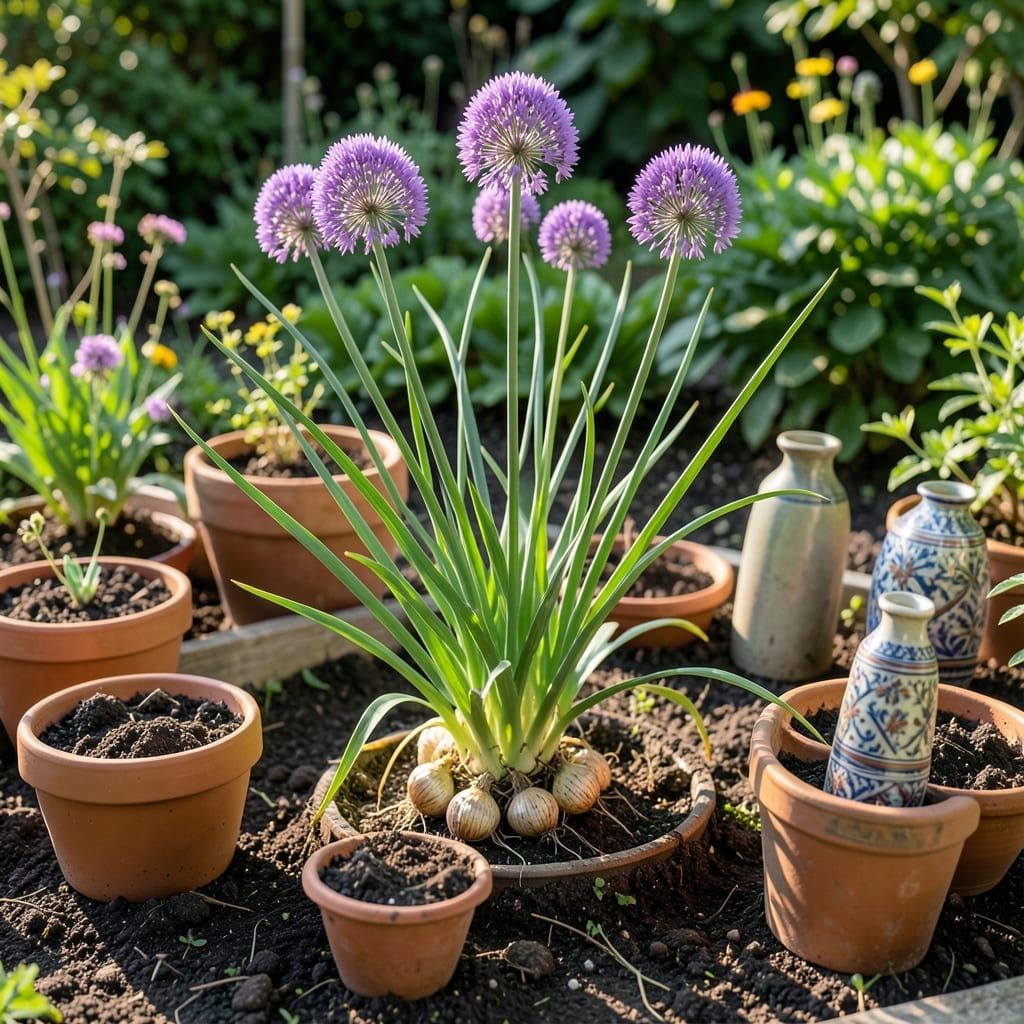
Last spring, I grew 20 alliums in pots on my balcony. The green shoots pushed up in early March, and by May, I was harvesting fresh chives, garlic, and onions whenever I needed them.
Container alliums need deep pots, well-draining soil, and a sunny spot. I use 12-inch containers for full-sized bulbs and smaller ones for chives. The key is consistent moisture without waterlogging.
You’ll get multiple harvests from a single planting. The chives come back every year, and the garlic greens keep producing as you snip them. It’s a low-maintenance way to add flavor to meals.
Works for apartments, patios, or any space with sunlight. Here’s how to set it up right the first time.
Growing alliums in containers can sometimes lead to underwhelming results, and the reasons often boil down to a few key factors. Understanding these causes helps you create the ideal environment for thriving plants.
Alliums, like onions, garlic, and leeks, develop extensive root systems. In containers, restricted space can stunt growth, leading to smaller bulbs or weaker foliage. Shallow or narrow pots exacerbate this issue, as roots cannot spread adequately to absorb water and nutrients. Always choose deep, wide containers (at least 8–12 inches deep) to accommodate root development.
Containers dry out faster than garden soil, and alliums are particularly sensitive to moisture fluctuations. Overwatering can cause rot, while underwatering leads to stress and poor bulb formation. The solution? Use well-draining soil and monitor moisture closely—aim for consistently moist (but not soggy) conditions, especially during bulb development.
Potted plants rely solely on the nutrients in their confined soil. Alliums are heavy feeders, depleting nitrogen, phosphorus, and potassium quickly. Without regular fertilization, they struggle to form large, flavorful bulbs. Incorporate slow-release organic fertilizer at planting and supplement with liquid feeds every 2–3 weeks during the growing season.
Most alliums require full sun (6–8 hours daily) to thrive. Containers placed in shady spots or on north-facing balconies often result in leggy, weak plants. If natural light is limited, consider supplemental grow lights or relocate pots to sunnier areas. Even a few hours of missed sunlight can significantly reduce yield and flavor.
Growing alliums in pots is rewarding, but even the best gardeners hit snags. Here’s how to troubleshoot and prevent the most common problems, so your container alliums stay healthy and flavorful all season long.
Cause: Nutrient-deficient soil or overcrowding. Alliums are heavy feeders and need room to thrive.
Fix: Refresh the soil with a balanced, slow-release fertilizer (10-10-10) and thin out crowded bulbs. Space them at least 2–3 inches apart in a container with drainage holes.
Prevention Tip: 💡 Start with a high-quality potting mix enriched with compost, and reapply fertilizer every 4–6 weeks during the growing season.
Cause: Overwatering or poor drainage. Soggy soil suffocates roots and invites fungal issues.
Fix: Stop watering immediately and move the container to a sunny, breezy spot. Trim any blackened or mushy roots, and repot in fresh, dry soil. If mold appears on leaves, spray with a bicarbonate solution (1 tsp baking soda per quart of water).
Prevention Tip: 🌡️ Water only when the top inch of soil is dry, and ensure pots have drainage holes. Terracotta pots help wick away excess moisture.
Cause: Aphids, onion maggots, or thrips love alliums. Weak or stressed plants are especially vulnerable.
Fix: Blast aphids off with water or apply insecticidal soap. For maggots, remove affected plants and drench the soil with neem oil. Yellow sticky traps can catch thrips.
Prevention Tip: ✨ Rotate crops yearly (if reusing pots) and interplant with pest-deterring herbs like rosemary or thyme.
Cause: Heat stress or inconsistent watering. Alliums bolt to set seed when they sense tough conditions.
Fix: Snip off flower stalks as soon as they appear to redirect energy back to the bulb. Keep soil consistently moist (but not soggy) and provide afternoon shade in hot climates.
Prevention Tip: 🎯 Mulch the soil surface to retain moisture and regulate temperature. Choose bolt-resistant varieties like ‘White Lisbon’ for containers.
Use 12-inch deep pots for full-sized bulbs like onions and garlic. Smaller varieties like chives thrive in 8-inch containers. Ensure every pot has drainage holes to prevent waterlogging.
Water when the top 1 inch of soil feels dry. Containers dry out faster than garden beds, so check daily in hot weather. Avoid soggy soil to prevent root rot.
No, alliums are heavy feeders and deplete nutrients quickly. Refresh soil annually with compost and slow-release fertilizer for best results.
Leggy growth usually means insufficient sunlight. Move pots to a spot with 6-8 hours of direct sun daily. Staking may help until they strengthen.