
Beautiful Plants For Your Interior
Beautiful Plants For Your Interior
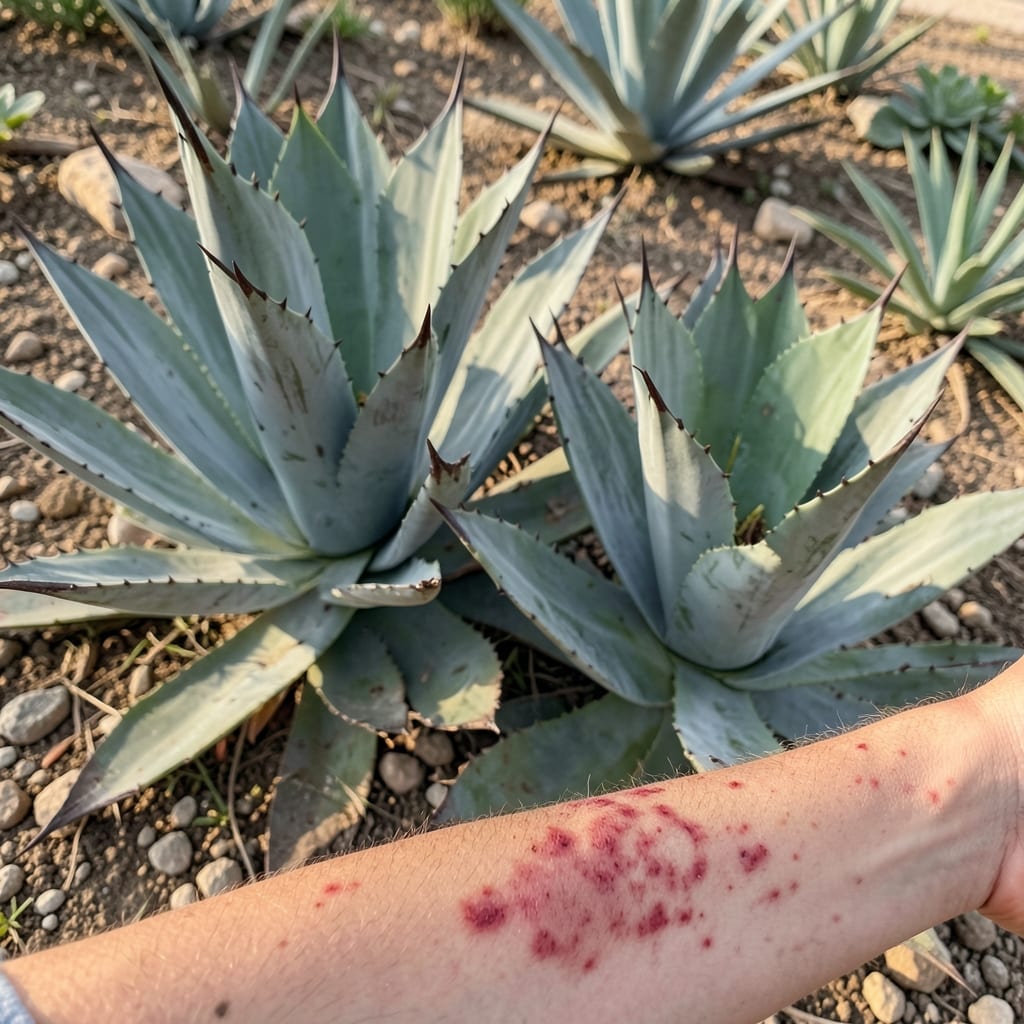
That stinging sensation after handling agave isn’t in your head. I learned the hard way that the sap contains compounds that can trigger painful skin reactions within minutes.
Redness, itching, and small blisters often appear where the liquid touched your skin. Some varieties are worse than others, but even common types like blue agave can cause issues if you’re sensitive.
Washing immediately with soap and cool water helps, but the real fix is preventing contact in the first place. Gloves and long sleeves are non-negotiable when working with these plants.
Most rashes clear up in 2-3 days with proper care, but severe cases might need medical attention. Here’s how to handle it safely.
An agave plant rash typically occurs due to contact with the plant’s sap or needle-like leaves. Here’s why it happens:
The agave plant contains calcium oxalate crystals and saponins in its sap. When this sap touches your skin, it can cause irritation, redness, and even blistering. These compounds are a natural defense mechanism, but they trigger an inflammatory response in human skin.
Agave leaves have sharp edges and terminal spines. A scratch or puncture from these can introduce irritants directly into the skin, leading to localized swelling, pain, or a rash. Even minor cuts can allow sap to penetrate deeper, worsening the reaction.
Some agave species contain furocoumarins, which increase skin sensitivity to sunlight. If sap gets on your skin and you’re exposed to UV rays, it can cause a phytophotodermatitis reaction—redness, itching, and dark patches that resemble a burn.
Dealing with an agave plant rash can be uncomfortable, but the right steps can bring quick relief. Below are targeted solutions based on the cause, along with prevention tips to keep your skin safe.
If the rash appears after touching agave sap, rinse the affected area right away with cool water and mild soap. This removes the irritating compounds (saponins and calcium oxalate) before they penetrate deeper. Follow up with a cool compress to reduce inflammation. Avoid hot water, as it can open pores and worsen absorption.
For itchy, red welts, take an oral antihistamine (like Benadryl) to curb the allergic response. Apply 1% hydrocortisone cream to calm the skin. If blisters form, do not pop them—cover with a sterile bandage to prevent infection. Severe swelling or difficulty breathing? Seek medical help immediately.
Dry, flaky skin from irritation benefits from fragrance-free moisturizers (e.g., CeraVe or Vanicream). Aloe vera gel (from a non-agave source) can soothe mild redness. Wear long sleeves and gloves when handling agave to prevent future flare-ups.
Most rashes improve within 24–48 hours with proper care. If symptoms persist or worsen, consult a dermatologist.
Symptoms typically develop within 10-30 minutes of exposure. You may notice redness and itching first, followed by small blisters in severe cases.
A paste of baking soda and water can help soothe mild irritation. Apply for 15-20 minutes, then rinse. For stronger reactions, stick to medical treatments.
Yes, those with sensitive skin or plant allergies are at higher risk. Previous exposure may increase sensitivity over time. Always wear protective clothing.
Seek help if the rash spreads, causes swelling, or affects breathing. Also consult a doctor if symptoms last beyond 3 days despite treatment.