
Beautiful Plants For Your Interior
Beautiful Plants For Your Interior
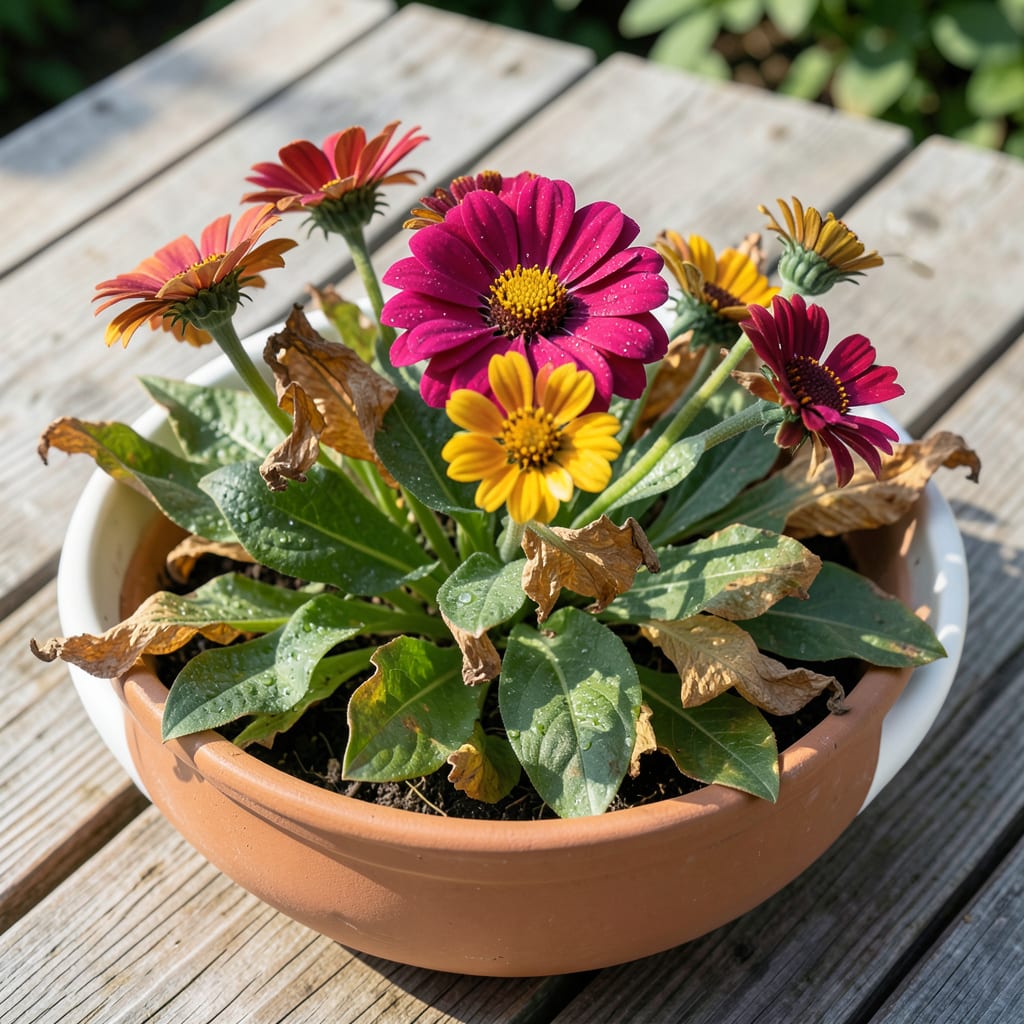
Your zinnias looked vibrant yesterday. Today, the leaves are brown and crispy—and you’re not alone. I’ve lost count of how many times this happened in my garden before I figured out the patterns.
Brown, crispy leaves usually signal water stress or disease. Sometimes it’s too much sun, other times it’s a sneaky pest. The good news? Most causes are fixable with a few simple adjustments to your care routine.
Once you identify the issue, the solution is often straightforward. Better watering habits, a little shade, or an organic spray can bring your zinnias back to life within a week or two.
No green thumb required—just a bit of observation and the right approach. Here’s how to diagnose and fix it for good.
Zinnia leaves turning brown and crispy is often a sign of stress from environmental or care-related factors. Here are the most common causes:
Zinnias thrive in warm climates, but excessive heat or intense sunlight can scorch their leaves. When temperatures soar above 90°F (32°C), the plant’s tissues dehydrate, leading to necrosis (cell death), which manifests as brown, crispy edges or patches. This is especially common in container-grown zinnias, where roots overheat quickly.
Inconsistent moisture levels disrupt the plant’s ability to transport nutrients. Underwatering causes leaves to dry out and turn crispy, while overwatering leads to root rot, which blocks water uptake—paradoxically causing similar symptoms. Zinnias prefer well-draining soil and should be watered when the top 1–2 inches of soil are dry.
Pathogens like Alternaria or Septoria leaf spot thrive in humid conditions, causing brown, crispy spots with yellow halos. These fungi infect weakened plants, often spreading via overhead watering or poor air circulation. Left untreated, they can defoliate the plant.
A deficiency in potassium or magnesium can cause leaf edges to turn brown and crispy, a condition called “scorch.” Conversely, excess fertilizer (especially nitrogen) may lead to salt buildup in the soil, burning the roots and mimicking drought stress.
Sap-sucking pests like spider mites or aphids drain moisture from leaves, causing them to dry out and crisp. Check the undersides of leaves for webbing (mites) or sticky residue (aphids) as telltale signs.
Here’s how to tackle each common cause of brown, crispy zinnia leaves with simple, actionable fixes:
Give your zinnias a deep watering at the base (not overhead) in the early morning to reduce evaporation. Aim for 1–1.5 inches of water per week, adjusting for extreme heat. Mulch around the base with straw or shredded leaves to retain moisture.
Prevention tip: 💡 Check soil moisture 1 inch deep—if it’s dry, it’s time to water. Consider drip irrigation for consistent hydration.
Stop watering immediately and let the soil dry out. If the plant is in a pot, ensure it has drainage holes. For garden beds, improve drainage by mixing in compost or sand. Trim any blackened, mushy roots with sterilized shears to prevent rot.
Prevention tip: 🎯 Use well-draining soil and water only when the top inch of soil feels dry.
Remove and destroy affected leaves to stop the spread. Apply a homemade spray of 1 teaspoon baking soda + 1 quart water + a few drops of dish soap every 7–10 days. Space plants 12–18 inches apart for better airflow.
Prevention tip: ✨ Avoid overhead watering and water in the morning so leaves dry quickly.
Blast pests off with a strong stream of water, then treat with neem oil or insecticidal soap. Repeat every 5–7 days until gone. Introduce beneficial insects like ladybugs for natural control.
Prevention tip: 🌡️ Regularly inspect the undersides of leaves for early signs of infestation.
Feed zinnias with a balanced, water-soluble fertilizer (10-10-10) every 2–3 weeks or work compost into the soil at planting. Yellowing leaves may indicate a nitrogen deficiency, while crispy edges often signal potassium or magnesium shortages.
Prevention tip: 🔥 Test your soil annually and amend as needed for optimal nutrient levels.
Water deeply at the base 1–2 times per week, providing 1–1.5 inches total. Always check the top 1–2 inches of soil first—if dry, it’s time to water.
Yes, zinnias can get sunburned in extreme heat above 90°F (32°C). Provide afternoon shade in peak summer or use mulch to keep roots cool.
Remove infected leaves immediately. Spray with a mix of 1 tsp baking soda + 1 quart water + dish soap every 7–10 days. Ensure good airflow between plants.
Check leaf undersides for tiny webbing (spider mites) or sticky residue (aphids). A strong water spray can dislodge them, followed by neem oil treatment.
