
Beautiful Plants For Your Interior
Beautiful Plants For Your Interior
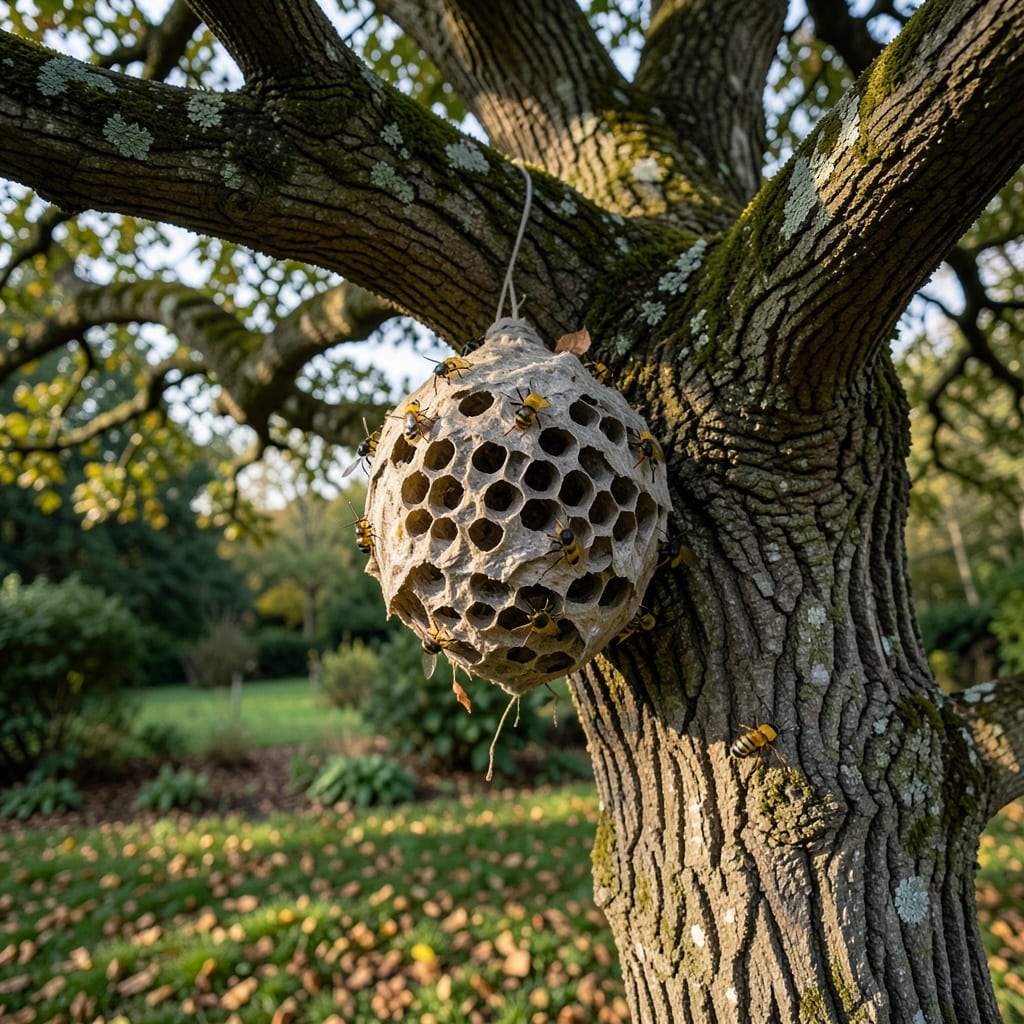
Nothing ruins a peaceful garden faster than a yellow jacket nest taking over your favorite tree. I’ve been stung enough times to know these pests don’t mess around.
Here’s the thing—removing them the wrong way can make things worse. With the right approach, you can reclaim your yard safely and keep them from coming back next season.
📚 In This Guide
Use this method at dusk when wasps are less active and you can work safely.
Stand at a safe distance and observe the nest location in the tree. Note the size, height, and any visible wasp activity. I always wait until temperatures drop below 50°F because yellow jackets become sluggish in cooler weather, reducing their ability to defend the nest aggressively.
Check the wind direction—you want to approach from downwind so any disturbed wasps are blown away from you. If the nest is high, ensure you have a sturdy ladder and someone to hold it steady. Never attempt this alone if the nest is more than 6 feet off the ground.
Put on long sleeves, thick pants, gloves, and a head covering with a veil. I use a beekeeping suit if I have one, but a thick jacket with the hood up and duct tape around the cuffs works too. The goal is to seal any gaps where wasps could crawl under clothing.
Wear closed-toe shoes and tuck your pant legs into your socks. This sounds excessive, but yellow jackets will target any exposed skin. Also, avoid dark colors and floral prints—these can attract wasps.
Use a wasp and hornet spray labeled for yellow jackets. These sprays typically shoot 15-20 feet, allowing you to treat the nest from a safe distance. I aim directly at the nest entrance and spray for 10-15 seconds to ensure the insecticide penetrates deeply.
Work quickly but calmly. After spraying, move away immediately—disturbed wasps may still come out. Do not shine a flashlight directly at the nest, as this can agitate the wasps. Instead, use a red light or work by ambient light.
Wait 24-48 hours before checking the nest. If you see no wasp activity, the nest is likely inactive. Approach cautiously and look for any signs of movement. I tap the tree lightly with a long stick to see if any wasps emerge.
If the nest is inactive, carefully remove it using a long-handled tool or pruning pole. Place the nest in a sealed plastic bag and dispose of it in an outdoor trash bin. Never leave the nest in place, as it can attract new colonies next year.
Inspect your property for potential nesting sites, like tree cavities or dense shrubs. I seal any holes or gaps in trees with caulk or foam to deter wasps from returning. Keep outdoor trash cans tightly sealed, as yellow jackets are attracted to food scraps.
Set up wasp traps in early summer to catch queens before they establish new nests. This reduces the chance of another infestation. Regularly check trees and structures for early signs of nesting activity.
These practical strategies will help you stay safe while tackling this task.
Temperature Timing: The 50°F threshold in Step 1 is critical—yellow jackets become noticeably sluggish below this temperature, making them far less aggressive. I’ve found that waiting until just after sunset when temps have dropped works best for safety.
Safety Distance: In Step 3, those 15-20 feet spray ranges exist for a reason. Always position yourself at the maximum distance your spray allows, and never approach closer than 15 feet even if the nest seems inactive.
Patience Pays Off: The 24-48 hours waiting period in Step 4 isn’t just a suggestion. I once checked a nest after only 12 hours and got stung by a few lingering wasps. Trust the full waiting time to ensure complete effectiveness.
Lighting Strategy: During Step 3, that note about avoiding flashlights is crucial. White light agitates wasps, but a red headlamp or even your phone’s red light mode (if it has one) lets you see without provoking them.
Look for high wasp activity, especially near the trunk or branches. A visible nest resembles a papery, grayish ball. Listen for buzzing sounds and watch for aggressive behavior when approaching the tree.
Early morning or late evening is ideal, as yellow jackets are less active. Avoid daytime when they’re most aggressive. Cooler temperatures (below 50°F) also slow them down, making removal safer.
Small nests may be manageable with protective gear and insecticide, but large or hard-to-reach nests are best left to professionals. If you’re allergic or unsure, always call an expert to avoid risks.
Stay calm and move away slowly—don’t swat or run, as this provokes them. Seek shelter indoors or in a car. If stung multiple times or allergic, seek medical help immediately.
Seal trash cans tightly, remove food sources, and keep outdoor areas clean. Hang fake nests (decoys) to deter them, as yellow jackets are territorial and avoid existing nesting sites.
