
Beautiful Plants For Your Interior
Beautiful Plants For Your Interior
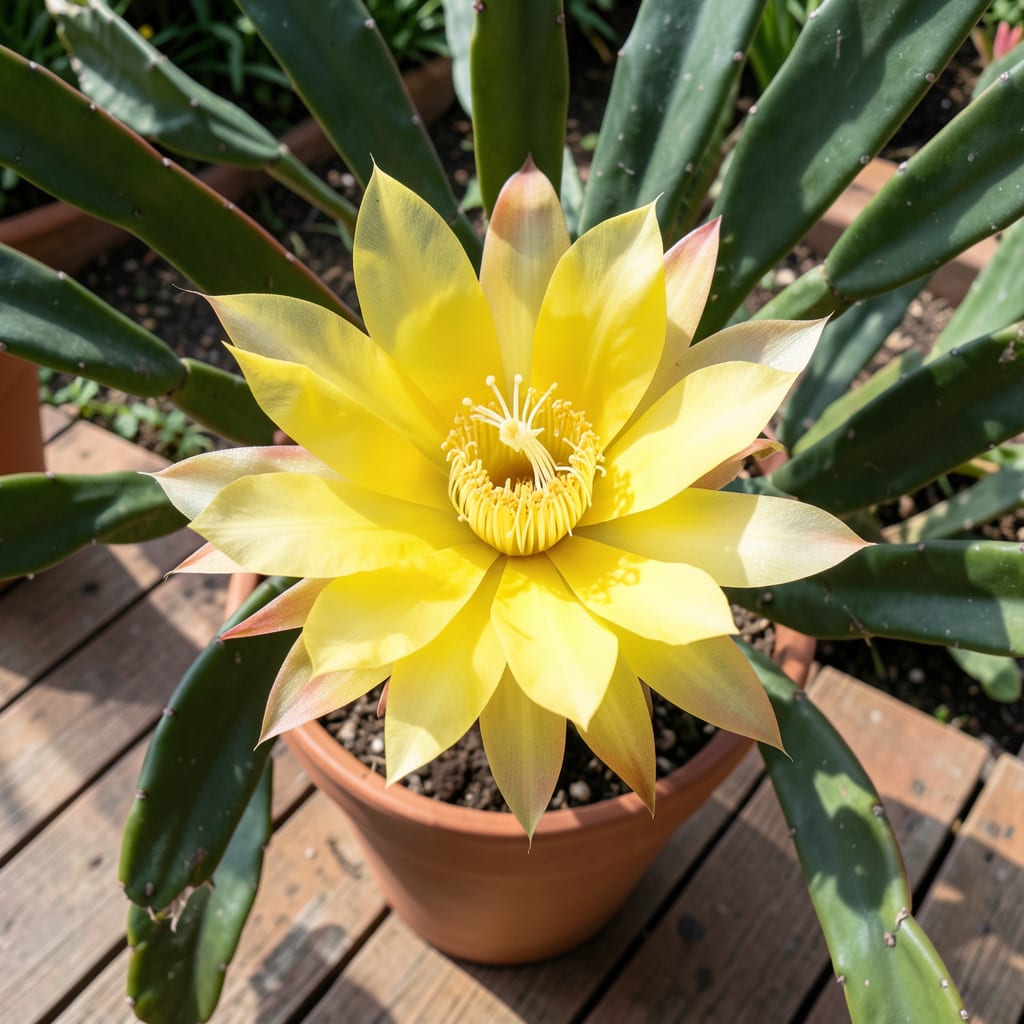
That first yellow dragon fruit bloom stopped me in my tracks. Huge, fragrant, and only open for one night—it’s nature’s fireworks show in your garden.
These exotic flowers need tropical warmth, well-draining soil, and a sturdy trellis. Get those right, and you’ll have dinner-plate-sized blooms that turn into sweet fruit. The real magic happens after sunset when the flowers release their perfume.
📚 In This Guide
This method ensures vibrant, healthy blooms that thrive in tropical conditions.
Choose a spot with full sun exposure, as these flowers require at least 6-8 hours of direct sunlight daily. I’ve found that a south-facing area works best, but any location with consistent, bright light will do. Ensure the site is sheltered from strong winds, which can damage the delicate stems and buds.
Soil should be well-draining to prevent waterlogging, which quickly leads to root rot. If planting in containers, use a large pot with drainage holes. A trellis or sturdy support structure is essential—these vines can grow rapidly and need guidance to climb properly.
Yellow dragon fruit flowers prefer slightly acidic to neutral soil with a pH between 6.0 and 7.0. Amend the planting area with organic matter like compost or well-rotted manure to improve fertility and drainage. I always mix in a handful of perlite or coarse sand to ensure excess water can escape.
If growing in pots, use a high-quality cactus or succulent mix, as these blends mimic the well-draining conditions the plant loves. Avoid heavy clay soils, which retain too much moisture and suffocate the roots. A light, airy soil mix encourages strong root development and healthier blooms.
Plant cuttings or young plants at the base of the trellis, spacing them 3-4 feet apart if growing multiple vines. Dig a hole slightly larger than the root ball and place the plant so the base sits just above soil level. Backfill with soil and press gently to remove air pockets.
Water deeply after planting to help the roots settle, but avoid soaking the soil. You’ll want to keep the soil consistently moist but not soggy during the first 2-3 weeks as the plant establishes. I’ve learned the hard way that overwatering at this stage can rot the cutting before it even takes root.
Once established, water the plant when the top inch of soil feels dry. These plants are drought-tolerant but produce the best flowers with regular, moderate moisture. Reduce watering in the winter or during cooler periods when growth slows.
Fertilize lightly every 4-6 weeks during the growing season with a balanced, water-soluble fertilizer. I switch to a low-nitrogen formula once buds form to encourage blooming rather than leafy growth. Watch for the first signs of flower buds—small, rounded bumps along the stems—which typically appear in late spring or early summer.
The flowers are large, fragrant, and stunning but can be heavy. As buds develop, gently tie the stems to the trellis with soft plant ties or strips of cloth to prevent them from breaking. Yellow dragon fruit flowers are night-blooming, so plan to enjoy their perfume in the evening.
Protect the plant from frost, as cold temperatures below 32°F can damage or kill the vines. If you’re in a cooler climate, consider growing it in a container that can be moved indoors during winter. With the right care, you’ll be rewarded with spectacular blooms that are as striking as they are fragrant.
These insights will help you nurture the most vibrant blooms with minimal fuss.
Sunlight Essentials: Those 6-8 hours of direct sunlight daily aren’t just a suggestion—they’re critical. In Step 1, if your location only gets partial sun, consider supplementing with grow lights. I’ve seen vines struggle with fewer than 6 hours, producing weak stems and sparse flowers.
Drainage Non-Negotiable: Waterlogging is the enemy here. In Step 2, when amending soil, don’t skimp on perlite or coarse sand. Even with well-draining soil, I check drainage holes in containers monthly to ensure they’re not clogged. Root rot sets in fast with these plants.
Establishment Care: During the first 2-3 weeks mentioned in Step 3, resist the urge to overwater. The line between “consistently moist” and “soggy” is thin. I use my finger to test soil moisture daily—if the top inch feels damp, hold off on watering.
Frost Protection: That 32°F threshold in Step 5 is absolute. Even a light frost can kill the vines. In cooler climates, I move potted plants indoors before temperatures drop near this mark. For in-ground plants, frost cloth can provide temporary protection during unexpected cold snaps.
The yellow dragon fruit flower typically blooms at night, with each bloom lasting just one evening. In ideal conditions, the plant may flower multiple times throughout the growing season, usually spring to early fall.
Yes, but it’s challenging! Ensure bright, indirect light (or grow lights), warm temperatures (65–80°F), and a sturdy trellis. Pollination may require hand-pollinating since indoor plants lack natural pollinators.
Plant in early spring after the last frost. This gives the vine time to establish roots and grow before its first flowering season, usually within 1–2 years for mature plants.
Common issues include insufficient light, poor soil drainage, or lack of maturity (plants under 1–2 years old rarely bloom). Ensure proper fertilization with a balanced, low-nitrogen formula to encourage flowering.
Yes! Consider night-blooming cereus or moonflower for similar large, fragrant nighttime blooms. Both thrive in tropical climates and add dramatic flair to gardens.
