
Beautiful Plants For Your Interior
Beautiful Plants For Your Interior
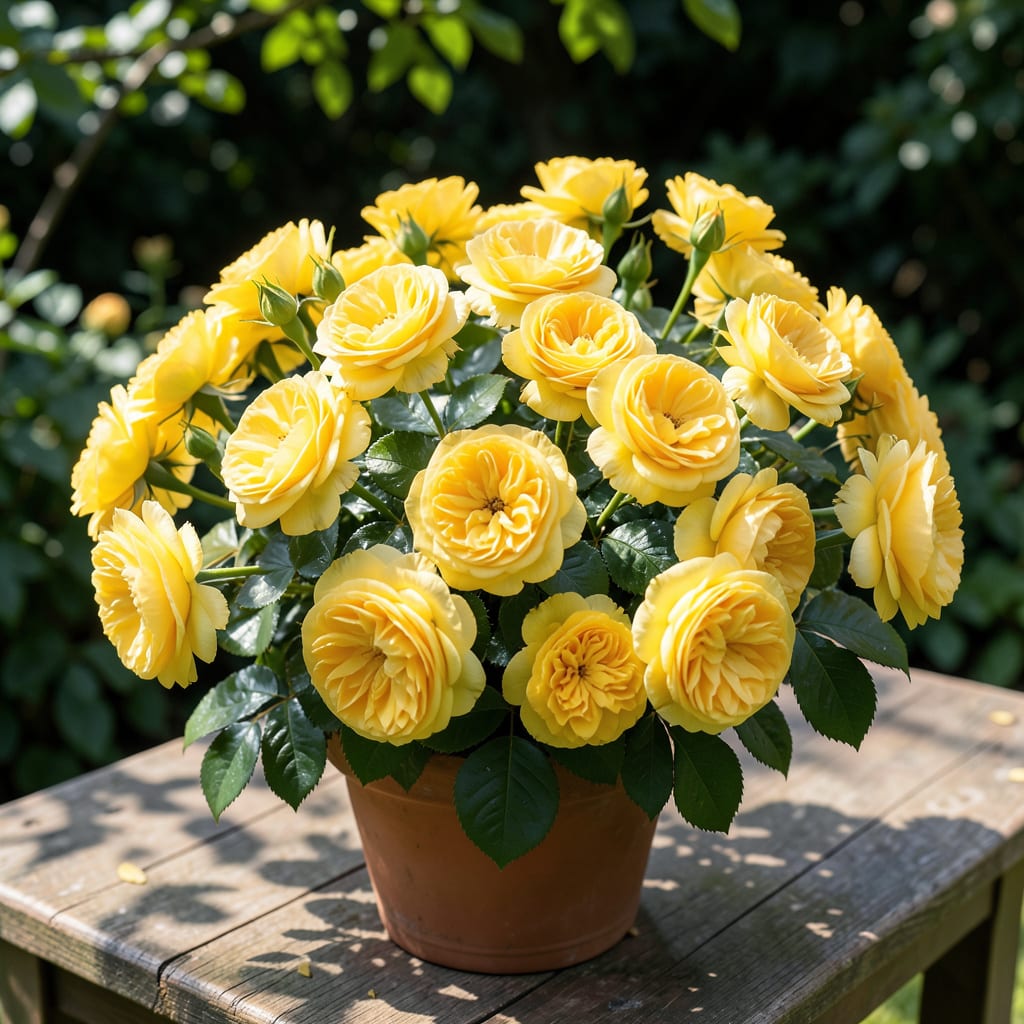
I planted my first yellow double knockout roses three springs ago and haven’t stopped smiling since. These disease-resistant beauties bloom continuously without the diva demands of other roses.
You get season-long color with minimal fuss—just plant in full sun, water weekly, and enjoy the show. Perfect for garden beds, borders, or even containers on your patio.
📚 In This Guide
Here’s my trusted method for establishing these vigorous shrubs that bloom relentlessly from spring to frost.
Choose a site receiving full sun (minimum 6-8 hours daily) with well-draining soil. These roses tolerate partial shade but produce significantly fewer blooms. I’ve found morning sun with afternoon shade works in hotter zones, though color intensity may soften slightly.
Test drainage by digging a 12-inch deep hole and filling it with water. If it drains completely within 1 hour, your soil is suitable. For heavy clay, amend with compost to improve structure – the roots need both moisture and oxygen to thrive.
Dig a hole twice as wide as the root ball but no deeper than the container. The loose soil around the hole encourages rapid root expansion. I always rough up the sides of the hole with my shovel to prevent glazing, which can repel water away from new roots.
If your soil is poor, mix in 1/3 compost with the native soil you removed. Avoid adding pure organic matter to the bottom of the hole – this creates a “bathtub effect” where water collects. The planting depth is critical: the graft union should sit 1-2 inches above soil level in cold climates.
Remove the rose from its container and gently loosen any circling roots. Position the plant so the bud union faces north if in a cold climate (this protects the graft from winter injury). Backfill with your soil mix, firming gently as you go to eliminate air pockets.
Create a 3-4 inch high water ring around the plant’s base to direct moisture to the roots. Water deeply with 5 gallons immediately after planting – you should see the soil settle slightly. This initial soaking ensures the root ball makes full contact with surrounding soil.
Apply a 2-3 inch layer of organic mulch (shredded bark works well) around the base, keeping it 6 inches away from the stems to prevent rot. This conserves moisture and suppresses weeds that would compete with your new rose.
For the first 2-3 weeks, check soil moisture daily by inserting your finger 2 inches deep. Water when it feels dry at that depth. I’ve lost more new plantings to underwatering than overwatering during establishment – the roots can’t seek moisture until they grow into surrounding soil.
Begin fertilizing after 4-6 weeks when new growth appears. Use a balanced rose fertilizer following package directions. These doubles are heavy bloomers and need regular feeding to maintain their spectacular flower production.
Deadhead spent blooms by cutting back to the first 5-leaflet leaf below the flower. This encourages continuous blooming throughout the season. Unlike some roses, Knockout varieties don’t require rigorous pruning – a light shaping in early spring is sufficient to maintain their compact habit.
These insights will help you establish thriving roses with minimal issues.
Sunlight Strategy: The 6-8 hours daily full sun requirement is non-negotiable for maximum blooms. In hotter climates, morning sun with afternoon shade prevents petal scorch while still meeting the minimum light needs. I’ve noticed color intensity fades slightly with afternoon shade, but the trade-off for plant health is worth it.
Drainage Test: That 12-inch deep hole test in Step 1 is your best insurance against root rot. If water doesn’t drain within 1 hour, amend with compost or consider raised beds. Glazed hole sides from shovels can repel water, so rough them up as mentioned in Step 2.
Planting Depth: The 1-2 inches above soil level rule for the graft union in cold climates protects against winter dieback. In warmer zones, planting at soil level is fine. Always face the bud union north to shield the graft from winter winds and temperature swings.
Watering Wisdom: The 5 gallons immediately after planting in Step 3 settles the soil and eliminates air pockets. For the first 2-3 weeks, that daily moisture check at 2 inches deep prevents the most common failure: underwatering. New roots can’t reach moisture until they establish in the surrounding soil.
These roses are repeat bloomers, producing vibrant yellow flowers every 5-6 weeks throughout the growing season (spring to frost). Deadheading spent blooms encourages faster reblooming.
Plant in early spring or fall, when temperatures are mild (60-70°F). This gives roots time to establish before extreme heat or cold. Avoid summer planting in hot climates.
Yes! They’re highly resistant to common issues like black spot and powdery mildew, making them low-maintenance. Still, ensure good airflow and avoid overhead watering for best results.
They thrive in full sun (6+ hours daily) but tolerate partial shade. More sun = more blooms! In hotter zones, afternoon shade can prevent petal scorch.
Try ‘Julia Child’ (similar golden-yellow blooms) or ‘Sunny Knockout’ (bright yellow, single petals). Both offer the same easy-care, repeat-blooming traits.
