
Beautiful Plants For Your Interior
Beautiful Plants For Your Interior
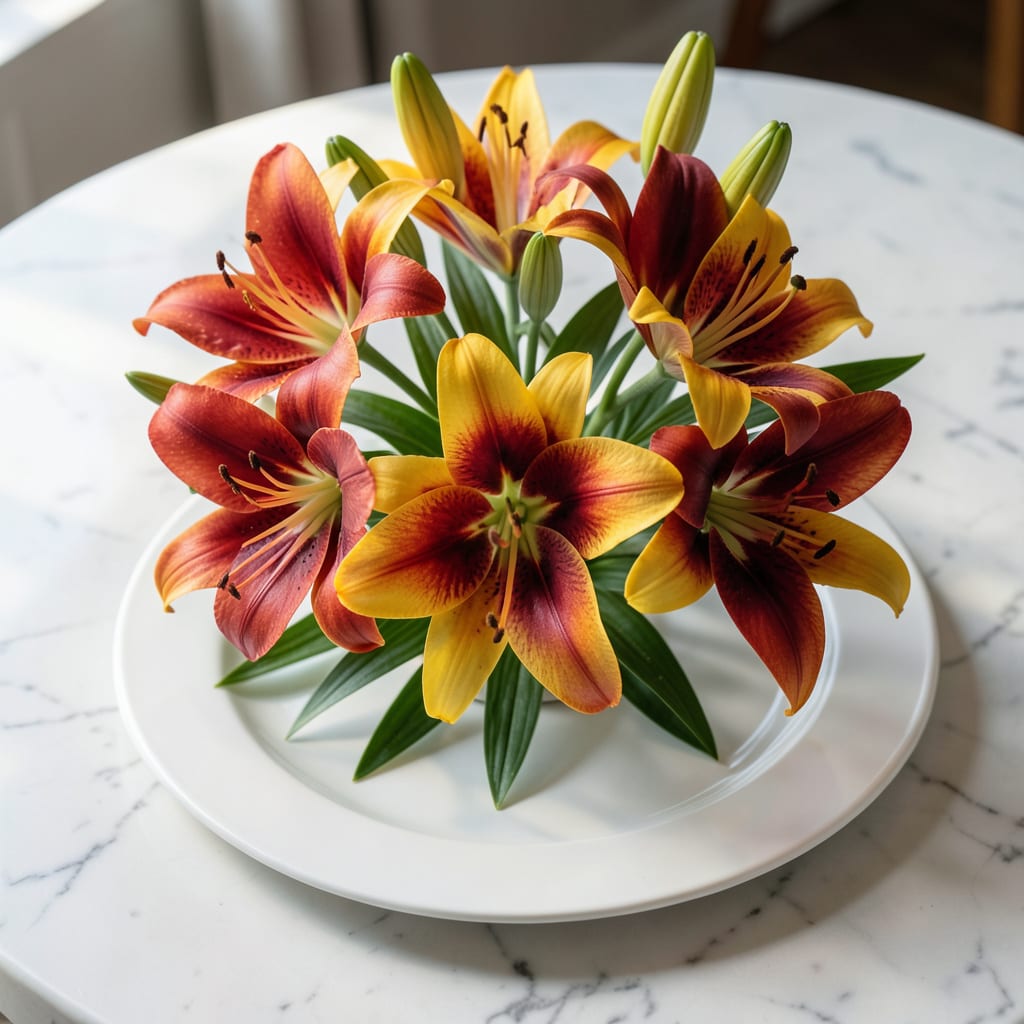
Bold color that stops traffic. These lilies deliver sunshine-yellow and fire-engine red blooms that demand attention from the first summer week they open.
I planted my first batch in a half-day sun spot with regular garden soil, and they came back stronger each year. The secret is good drainage—soggy roots are their only enemy.
You’ll get 3-5 feet of upright stems topped with clusters of upward-facing flowers. They multiply underground, so one planting gives you more every season.
Perfect for cutting, borders, or that one spot that needs a vibrant punch. Here’s how to make them thrive.
Understanding why Asiatic lilies lose their vibrant yellow and red hues is key to keeping them brilliant. Here’s what’s happening beneath the petals:
Excessive direct sunlight breaks down pigments like carotenoids (yellow) and anthocyanins (red). UV rays accelerate oxidation, dulling colors. Shade cloth or afternoon shade preserves vibrancy.
Inconsistent watering disrupts nutrient uptake, starving flowers of the compounds they need to maintain color. Drought stress triggers premature senescence, while overwatering causes root rot, both leading to faded blooms.
Asiatic lilies thrive in slightly acidic to neutral soil (pH 6.0–7.0). Alkaline soil (pH >7.5) locks out iron and other micronutrients, impairing pigment production. Test soil and amend with sulfur or peat moss if needed.
A lack of potassium or phosphorus weakens color intensity. Yellowing often signals nitrogen deficiency, but excess nitrogen can reduce red pigments by favoring leaf growth over flowers. Use a balanced fertilizer (10-10-10) for steady color.
Addressing these factors restores and sustains the bold yellow and red shades your Asiatic lilies are known for.
Keeping your yellow and red asiatic lilies thriving is simple with the right fixes. Below are practical solutions to common problems, paired with prevention tips to ensure vibrant blooms all season long.
If leaves turn yellow, the likely culprit is overwatering or poor drainage. Lilies hate soggy roots! Fix this by:
Prevent it: 💡 Use raised beds or containers if your garden soil retains too much moisture.
Aphids and lily beetles love asiatic lilies. Combat them without chemicals:
Prevent it: 🎯 Plant companion flowers like marigolds to repel pests.
Lack of flowers often means insufficient sunlight or nutrient imbalance. Try this:
Prevent it: ✨ Test soil annually and amend with compost for rich, fertile ground.
Tall asiatic lilies may flop under their own weight. Fix it by:
Prevent it: 🌡️ Space bulbs 8–12 inches apart to reduce competition for light and nutrients.
These lilies thrive with 6+ hours of direct sunlight daily. They can tolerate partial shade, but full sun produces the most vibrant blooms.
Plant bulbs in early spring or fall, 2-3 weeks before the ground freezes. This gives roots time to establish before extreme temperatures.
Excessive sun or nutrient deficiencies often cause color loss. Ensure proper drainage and use balanced fertilizer to maintain bright hues.
Water deeply 1-2 times per week, allowing soil to dry between sessions. Avoid soggy conditions to prevent root rot.
