
Beautiful Plants For Your Interior
Beautiful Plants For Your Interior
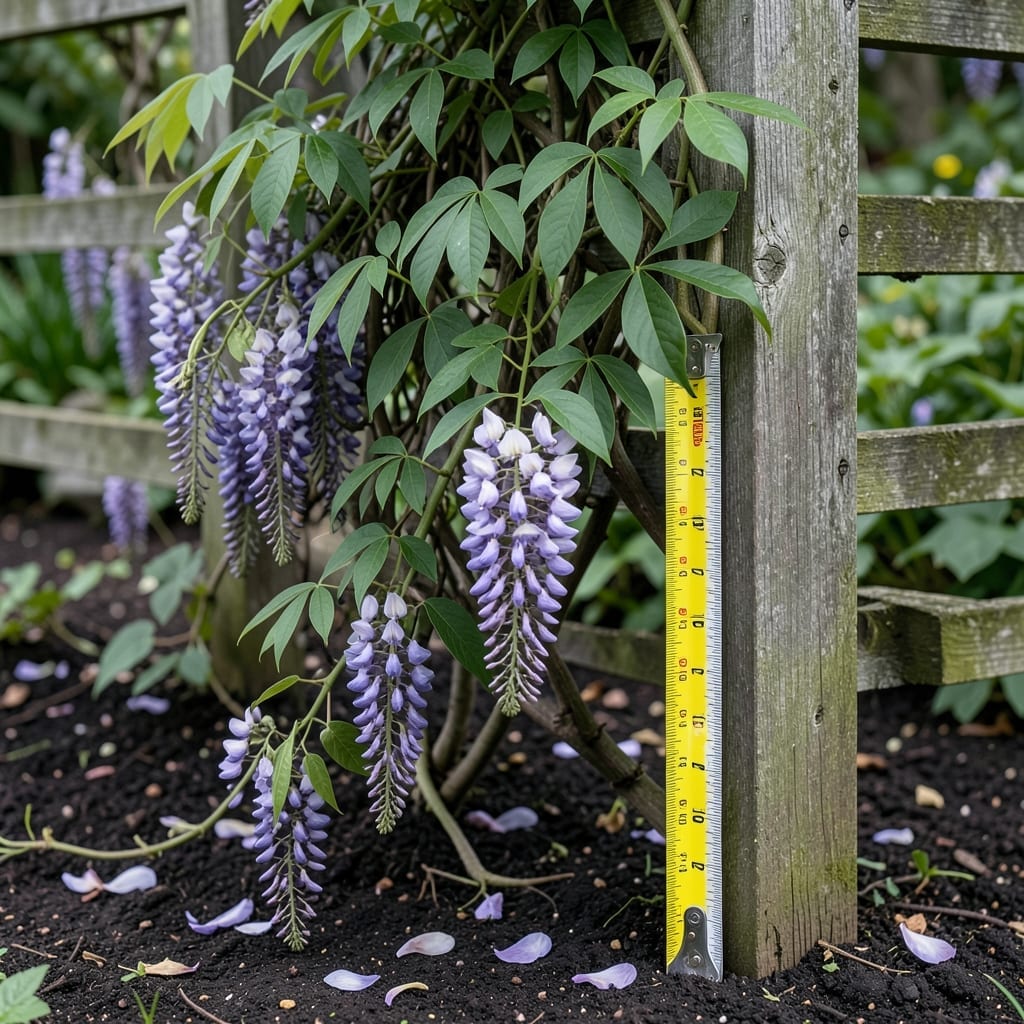
There’s something magical about watching a Wisteria 💜 transform your garden with its stunning blooms, but its size can catch even seasoned gardeners off guard. These vigorous climbers don’t stay small for long.
Understanding their mature dimensions is the key to proper placement and long-term care. Without this knowledge, you might find your Wisteria overwhelming its space in just a few years.
I’ve seen firsthand how quickly these plants can grow, reaching heights that rival 2-story houses. Their spread can be just as impressive, creating a canopy of green and purple.
Let me walk you through what to expect and how to manage it. You’ll discover practical tips for keeping your Wisteria at the perfect size for your garden.


If you’re considering adding a wisteria to your garden, understanding its mature size is crucial. These vigorous climbers can grow impressively large, with some varieties reaching 30 feet tall and spreading just as wide.
Different wisteria species have varying growth habits. Chinese wisteria tends to be the most aggressive, while Japanese wisteria is slightly more contained. American wisteria is often the most manageable for smaller spaces.
| Variety | Height Range | Spread Range | Growth Rate |
|---|---|---|---|
| Chinese Wisteria | 20-30 ft | 20-30 ft | Fast |
| Japanese Wisteria | 15-25 ft | 15-25 ft | Moderate |
| American Wisteria | 15-20 ft | 10-15 ft | Moderate |
I’ve found that Chinese wisteria can become quite overwhelming if not properly managed. Its fast growth rate means it can quickly cover a large arbor or pergola in just a few years.
Japanese wisteria is slightly more compact but still requires strong support due to its weight. Its moderate growth makes it a bit easier to control than the Chinese variety.
For those with limited space, American wisteria might be the best choice. It typically stays a bit smaller and is native to the southeastern U.S., making it a hardy option for many gardeners.
In my experience, even dwarf varieties can reach 10-15 feet in height and spread. Don’t let the term “dwarf” fool you—these plants still need plenty of room to thrive.
It’s important to note that these size estimates are for mature plants. Wisteria can take 5-10 years to reach its full potential, depending on growing conditions and care.
If you’re planting near a house or fence, be mindful of the potential size. I’ve seen wisteria damage structures when not given proper support or pruning. Always plan for the mature size, not just the young plant.
For the best results, provide a sturdy trellis or arbor that can handle the weight of a mature wisteria. These plants can become quite heavy, especially when in full bloom.
With proper care and pruning, you can enjoy the beautiful blooms of wisteria without it taking over your garden. ✂️
The final size of your wisteria isn’t just about the variety. Several key factors play a role in how large it will grow, from climate conditions to your pruning habits.
I’ve noticed that wisterias in warmer climates tend to grow more vigorously than those in cooler areas. The length of your growing season directly impacts how much your plant can expand each year.
Soil quality makes a huge difference. Wisteria thrives in fertile, well-draining soil. If your soil is poor, the plant may stay smaller, but it won’t bloom as well either.
Water availability is another crucial factor. While established wisteria is drought-tolerant, consistent moisture during the growing season will help it reach its maximum potential size more quickly.
Your pruning approach significantly affects growth. I recommend annual pruning to control size and encourage better blooming. Without it, wisteria can become unruly and overgrown in just a few seasons.
The support structure you provide matters too. A strong arbor or pergola allows wisteria to climb upward, while a weak trellis may cause it to sprawl and spread outward instead.
Finally, consider whether to plant in containers or ground. In-ground wisteria will always grow larger, while container-grown plants stay more compact. This makes containers a good option for smaller spaces. ☀️