
Beautiful Plants For Your Interior
Beautiful Plants For Your Interior
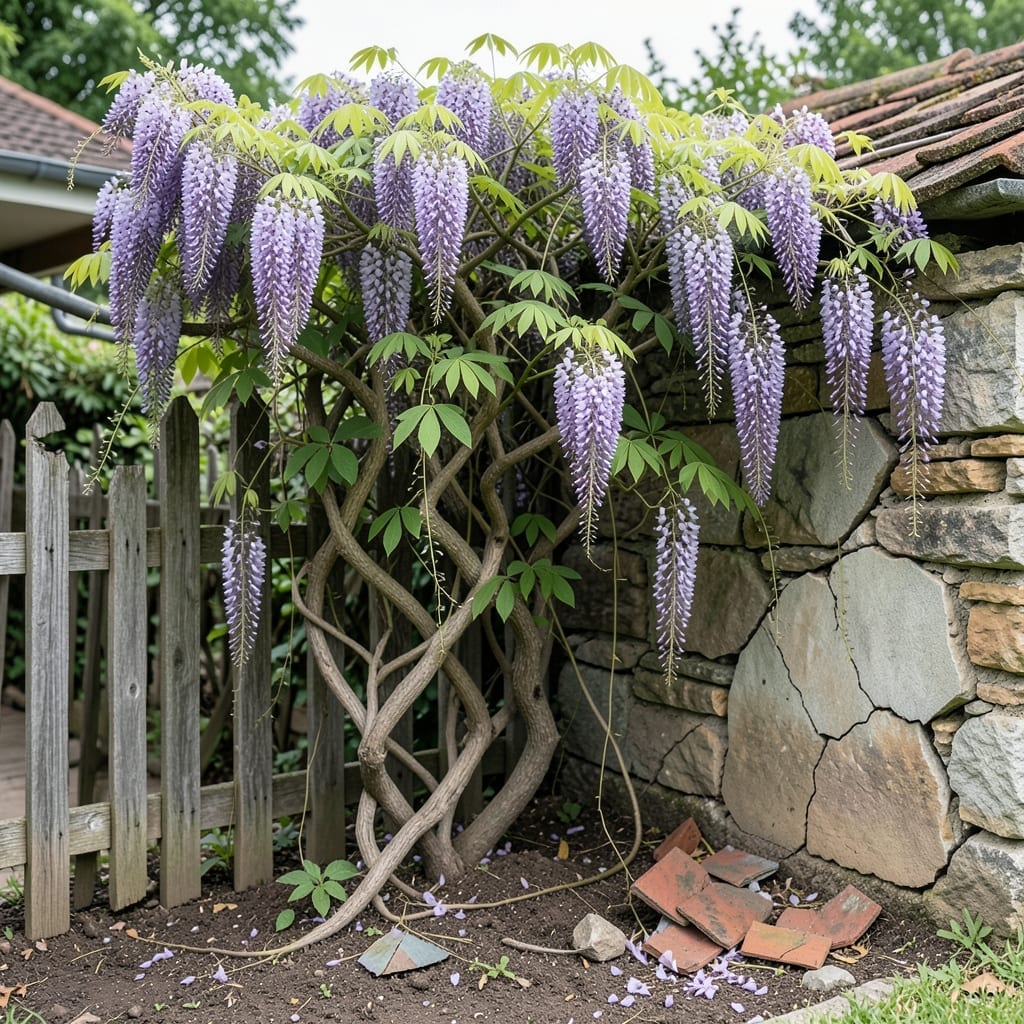
That picturesque 🌸 Wisteria climbing your trellis might be hiding a destructive secret. Its aggressive growth can crack foundations, warp fences, and even invade plumbing if left unchecked.
What starts as a beautiful vine can quickly turn into a maintenance nightmare. The good news? You can enjoy Wisteria’s stunning blooms without the property damage.
Discover how to contain its growth and protect your home with simple prevention strategies that work.
I’ve seen firsthand how wisteria’s aggressive growth can transform from a garden gem to a homeowner’s headache. This fast-growing vine doesn’t just climb—it invades and dominates, often with costly consequences for your property.
From cracked foundations to damaged roofs, wisteria’s strength lies in its ability to exploit even the smallest structural weaknesses over time.
| Structural Risk | How It Happens |
|---|---|
| Foundation Cracks | Powerful root systems expand under slabs |
| Gutter Damage | Heavy vine weight pulls gutters away |
| Roof Intrusion | Vines creep under shingles and tiles |
| Plumbing Issues | Roots infiltrate sewer lines and pipes |
| Fence Collapse | Wooden structures warp and rot under pressure |
The woody stems of mature wisteria can grow as thick as your wrist, exerting tremendous force as they twist around anything in their path. I’ve watched them slowly bend metal trellises and split wooden posts like kindling.
Wisteria’s root system spreads far wider than most realize, often 20-30 feet from the main plant. These roots seek out moisture, which means they’ll target your home’s foundation or underground pipes if planted too close.
Another often-overlooked danger is moisture retention. The dense foliage traps water against surfaces, leading to mold growth on siding and wood rot in fences. This gradual damage can go unnoticed until it’s severe.
The weight of mature vines becomes particularly problematic during heavy rains or after snowfall. A single established wisteria can weigh hundreds of pounds, enough to pull down weak structures or damage roof edges.
Even gutters and downspouts aren’t safe. As vines grow upward, they’ll use these as ladders, eventually causing clogs and water overflow that can damage your home’s exterior.
I always recommend inspecting your wisteria’s growth pattern monthly during the growing season. Look for vines creeping toward roof lines, window frames, or utility connections—these are the first places damage typically appears.
Remember, the longer you wait to address invasive growth, the more expensive the repairs become. Early intervention is always your best defense against wisteria damage.
I’ve learned the hard way that prevention is easier than repair when it comes to wisteria. The key is controlling its growth before it gets out of hand. With the right strategies, you can enjoy those beautiful blooms without the headache.
Start by planting at a safe distance from your home. I recommend keeping wisteria at least 20 feet away from any structure. This buffer zone gives you room to manage its sprawling nature.
For existing wisteria, root barriers are your best friend. These underground walls, typically made of HDPE plastic, prevent roots from spreading toward your foundation. Install them at least 18 inches deep for maximum effectiveness.
Regular pruning isn’t just about shaping—it’s about survival. I prune my wisteria after flowering in spring and again in mid-summer to control its size. Don’t be afraid to cut back hard; wisteria recovers quickly.
Consider alternative support structures like metal arbors or freestanding pergolas. These give wisteria a place to climb without endangering your home. Just ensure they’re sturdy enough to handle the weight.
I’ve found that monthly inspections during growing season catch problems early. Look for vines creeping toward roof edges or window frames. Remove these immediately to prevent structural damage.
Remember, the sooner you act, the easier it is to maintain control. A little effort each season saves you from costly repairs down the road.