
Beautiful Plants For Your Interior
Beautiful Plants For Your Interior
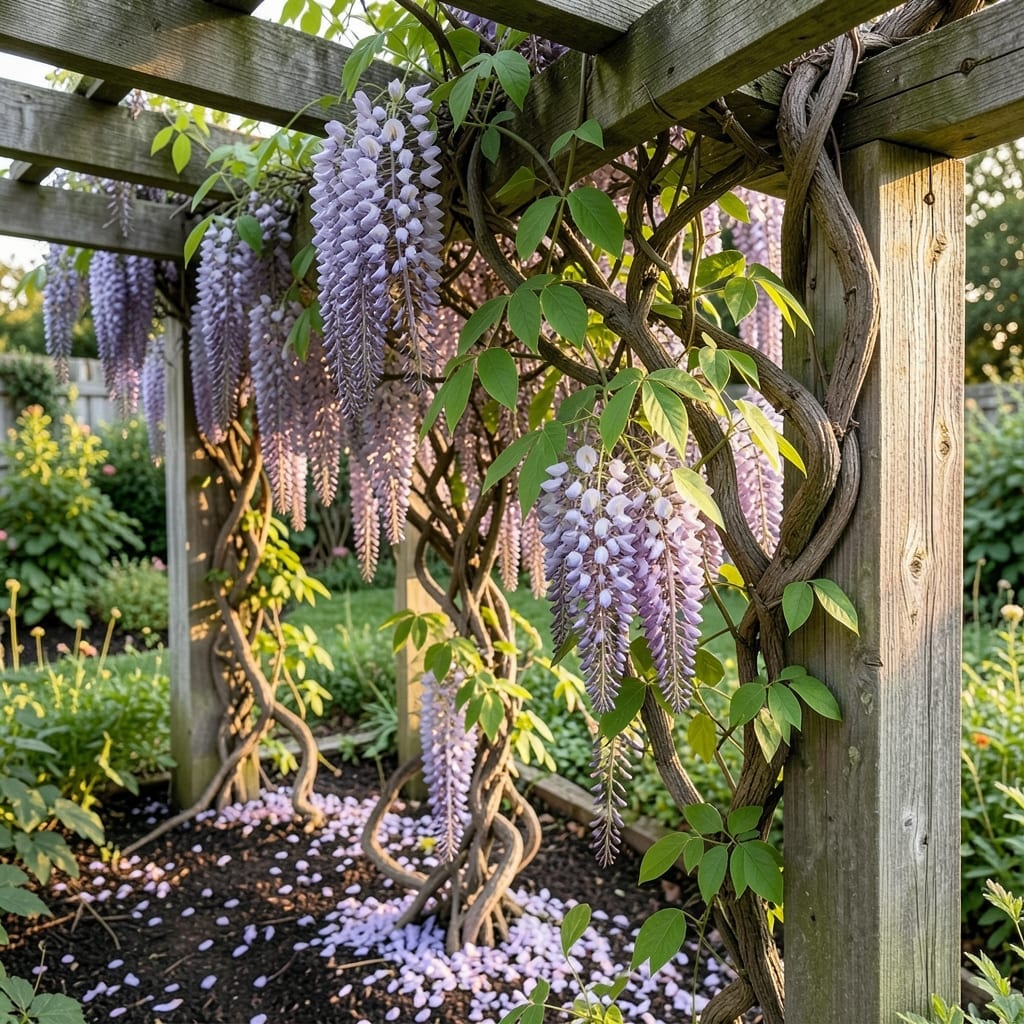
Wisteria’s breathtaking cascades of purple, pink, or white blossoms can turn any garden into a fairytale setting—but timing is everything.
Knowing when your 🌸 Wisteria will burst into bloom ensures you won’t miss nature’s spectacular show. Whether you’re in zone 5-9, the anticipation builds as spring approaches.
I’ve learned that the right conditions make all the difference in when those stunning flowers appear. From sunlight to soil, every detail plays a role.
Discover what influences your Wisteria’s bloom time and how to create the perfect environment for those stunning floral displays you’ve been dreaming of.
I’ve found that wisteria bloom time varies by species, but most varieties put on their show in spring. The timing can shift based on your climate zone and local weather patterns.
In my experience, Chinese wisteria tends to bloom earlier than Japanese types, often starting in late April. Meanwhile, American wisteria may wait until early June to flower.
| Variety | Bloom Time | USDA Zones | Notes |
|---|---|---|---|
| Chinese Wisteria | Late April to May | 5-9 | Early bloomer, fragrant |
| Japanese Wisteria | May to June | 5-9 | Slightly later, long racemes |
| American Wisteria | June to July | 5-9 | Native, less aggressive |
I always remind gardeners that warmer zones may see blooms 2-3 weeks earlier than cooler areas. A mild winter can also encourage earlier flowering.
For the best display, I recommend planting wisteria in full sun. These vines need 6+ hours of direct light daily to produce abundant blooms.
I’ve noticed that young wisteria plants may take 2-5 years to bloom. Patience is key! Once established, they’ll reward you with spectacular floral shows each year.
In my garden, I track bud development starting in early spring. The first sign of blooms is when flower buds begin to swell and take on color.
I also pay attention to last year’s pruning. Proper summer pruning helps set the stage for next year’s flowers by encouraging flower bud formation.
If your wisteria isn’t blooming, I’d check for over-fertilizing with nitrogen. This can promote leafy growth at the expense of flowers. A balanced fertilizer works better.
I love how wisteria’s bloom time signals the true start of spring. With the right care, these vines can produce fragrant, cascading flowers for decades. 🌷
To get those stunning wisteria blooms year after year, I focus on a few key practices. Full sun is non-negotiable—6+ hours daily ensures vibrant, abundant flowers. Without enough light, you’ll get more leaves than blossoms.
Next, I’ve found that well-draining soil with moderate fertility works best. Too much nitrogen promotes foliage over flowers. A balanced fertilizer like 5-10-10 in early spring gives just the right boost.
I always prune my wisteria in late winter to remove excess growth and shape the plant. This stimulates flower bud formation and keeps the vine manageable. Summer pruning helps too, but winter is critical.
Another tip: train the vines horizontally along a trellis or fence. This slows growth slightly, which paradoxically encourages more blooms instead of just leafy shoots. It’s a game-changer for flower production.
Watering deeply once a week is better than frequent shallow watering. This builds a strong root system that supports prolific blooming. Once established, wisteria is fairly drought-tolerant.
Finally, watch for late spring frosts in zones 5-6. A sudden cold snap can wipe out flower buds. If frost is forecasted, I drape frost cloth over my wisteria to protect the emerging blooms.
With these steps, I’ve seen my wisteria transform into a flower-covered spectacle every spring 🌿