
Beautiful Plants For Your Interior
Beautiful Plants For Your Interior
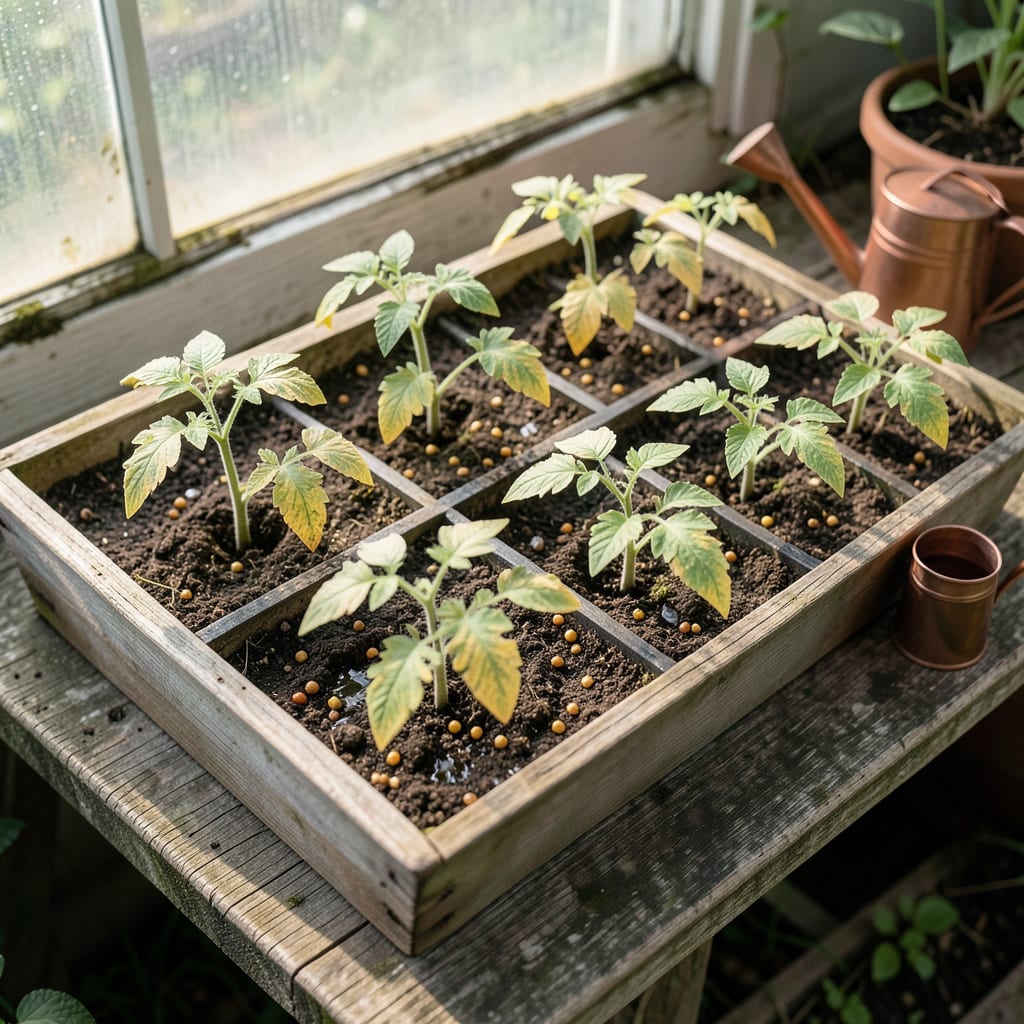
Yellow tomato seedlings always signal something’s wrong, but don’t panic yet. I’ve saved dozens of trays from this exact crisis by narrowing down the real culprit first.
Usually it’s overwatering, nutrient hunger, or temperature shock. The leaves turn pale almost overnight, and the stems get that weak, leggy look. But each cause has a different fix.
Once you match the symptom to the solution, you’ll see green returning in 3-5 days. The key is acting fast before the problem spreads to healthy plants.
We’ll walk through diagnosis step by step. Your seedlings aren’t lost yet.
Yellowing tomato seedlings often signal underlying issues that disrupt their growth. Here are the most common causes, explained scientifically and with actionable insights:
Tomatoes require a balanced diet of nitrogen, phosphorus, and potassium. A nitrogen deficiency often causes uniform yellowing of older leaves first, as the plant redirects nutrients to new growth. Magnesium deficiency (common in acidic soils) leads to yellowing between leaf veins, known as interveinal chlorosis. Test soil with a kit and amend with organic compost or a balanced fertilizer (10-10-10) to restore nutrients.
Excess water suffocates roots, reducing oxygen uptake and causing root rot. This stress manifests as yellow, wilted leaves. Check soil moisture 1–2 inches deep—it should feel damp but not soggy. Ensure pots have drainage holes and use a well-draining potting mix with perlite or vermiculite. Water only when the top inch of soil is dry.
Tomato seedlings are sensitive to temperature extremes. Below 50°F (10°C), phosphorus uptake slows, causing purplish-yellow leaves. Above 90°F (32°C), heat stress disrupts chlorophyll production, leading to yellowing. Maintain consistent temperatures (70–80°F) and use shade cloth or grow lights as needed.
Aphids, whiteflies, or spider mites sap nutrients from leaves, causing yellow speckling or curling. Fusarium or verticillium wilt (fungal diseases) block water flow, leading to yellowing and wilting. Inspect leaves for pests or dark streaks in stems (a sign of wilt). Treat pests with neem oil and rotate crops to prevent fungal buildup.
Seedlings need 12–16 hours of light daily for photosynthesis. Insufficient light (e.g., a dim windowsill) causes etiolation—weak, leggy growth with pale yellow leaves. Use full-spectrum grow lights 2–4 inches above seedlings if natural light is inadequate.
Once you’ve identified the cause, these targeted fixes will help restore your tomato seedlings to their vibrant green state. Act quickly for the best results!
Let the soil dry out slightly between waterings. Ensure your containers have drainage holes, and use a well-draining potting mix. Prevention tip 💡: Stick your finger an inch into the soil—if it feels damp, hold off on watering.
For nitrogen deficiency, apply a balanced organic fertilizer or compost tea. If yellowing appears between leaf veins (magnesium deficiency), use Epsom salt (1 tablespoon per gallon of water) as a foliar spray. Prevention tip ✨: Test your soil before planting and amend as needed.
Move seedlings to a spot with 12–16 hours of bright, indirect light daily. If growing indoors, use a grow light. For sunburnt leaves, provide shade cloth during peak afternoon hours. Prevention tip 🎯: Rotate seedlings weekly for even light exposure.
For aphids or whiteflies, spray with neem oil or insecticidal soap. Remove diseased leaves immediately to prevent spread. Prevention tip 🛡️: Keep your growing area clean and avoid overhead watering to reduce fungal risks.
Keep seedlings in a stable environment (70–80°F during the day, 60–70°F at night). Use a heat mat if nights are chilly. Prevention tip 🔥: Harden off seedlings gradually before transplanting outdoors.
With these adjustments, your seedlings should bounce back in no time!
Water when the top 1 inch of soil feels dry. Overwatering is a common cause of yellowing, so ensure pots have drainage holes.
Severely yellow leaves usually won’t recover, but new growth will be green once you fix the underlying issue. Focus on correcting care conditions.
Use full-spectrum grow lights for 12-16 hours daily, positioned 2-4 inches above plants. Rotate trays weekly for even exposure.
Yes, if the issue is magnesium deficiency. Mix 1 tablespoon per gallon of water and spray on leaves. Test soil first to confirm the deficiency.
