
Beautiful Plants For Your Interior
Beautiful Plants For Your Interior
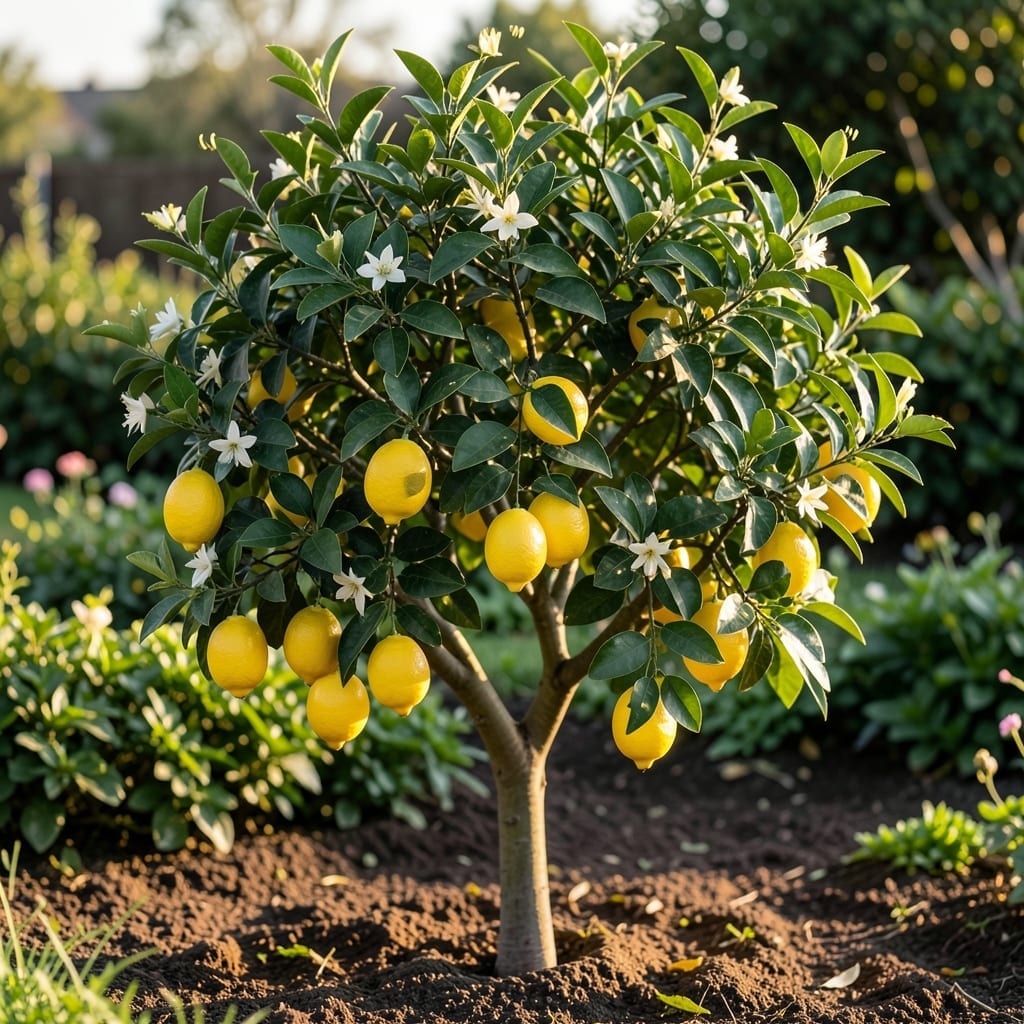
Lemons are yellow due to carotenoid pigments, primarily beta-cryptoxanthin and lutein, which develop as chlorophyll breaks down during ripening on the tree.
This natural color shift happens as the fruit matures and sunlight triggers chemical changes. Carotenoids emerge as the green chlorophyll fades, revealing that signature bright hue. I’ve noticed that lemons grown in warmer climates often develop richer color faster. 💫
What’s fascinating is how this process mirrors the ripening of other citrus fruits, though each has its own unique pigment profile. ✨
💡 In This Article
As lemons ripen, chlorophyll—the green pigment responsible for photosynthesis—begins to break down due to enzyme activity and reduced sunlight exposure. This degradation reveals the underlying carotenoids, which were present all along but masked by the dominant green. The process is temperature-sensitive, typically accelerating between 68-86°F. 🔥
Sunlight acts as a catalyst, triggering the production of beta-cryptoxanthin and lutein. These carotenoids absorb blue-green light, reflecting the yellow wavelengths our eyes perceive. Without sufficient light, lemons may remain partially green even when ripe. Commercial growers often use ethylene gas to speed up this natural transition. ✨
The shift from green to yellow isn’t just visual—it signals chemical changes inside the fruit. Chlorophyll breakdown reduces bitterness, while carotenoid development enhances the fruit’s characteristic citrus aroma. This is why unripe lemons taste more astringent, with higher acidity levels around 5-7%. 💫
What most people don’t realize is that some lemons never turn fully yellow. Varieties like the ‘Eureka’ often retain green streaks even at peak ripeness, while ‘Meyer’ lemons develop a deeper, almost orange hue due to higher beta-cryptoxanthin concentrations. These variations are influenced by genetic factors and growing conditions. ⚡
The entire transformation typically takes 4-6 weeks from the start of color change to full ripeness. During this period, the fruit’s sugar content gradually increases from about 1% to 3-4%, balancing the tartness that makes lemons so distinctive.
This biochemical dance between pigments and flavors is what gives ripe lemons their signature bright appearance and zesty character. 🌟
Chlorophyll breaks down as lemons ripen, revealing carotenoid pigments like beta-cryptoxanthin that were always present. This natural process is triggered by sunlight and temperature changes between 68-86°F.
Not always! Varieties like ‘Eureka’ often keep green streaks, while ‘Meyer’ lemons may develop orange hues. Color depends on genetics and growing conditions.
They’ll soften slightly but won’t develop more color off the tree. For best results, allow lemons to fully ripen on the branch where they’ll reach peak color and flavor.
Cooler climates or insufficient sunlight can slow carotenoid development. These lemons are still ripe and flavorful, just with less vibrant color.