
Beautiful Plants For Your Interior
Beautiful Plants For Your Interior
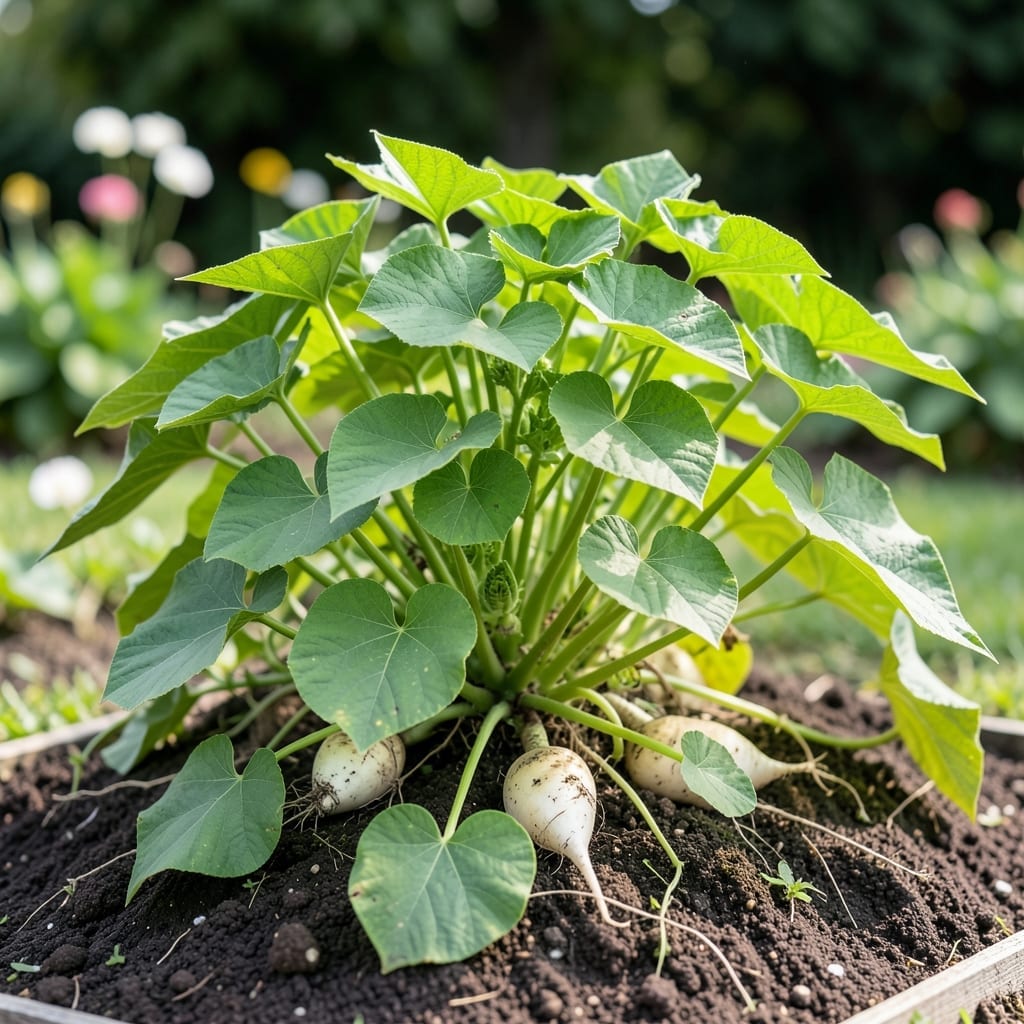
The white sweet potato is commonly called the boniatto, camote, or Japanese sweet potato, though its scientific name is Ipomoea batatas. It has a pale flesh and slightly nutty flavor.
I love how this variety stands out from its orange cousins with its cream-colored interior and delicate taste. Boniatto is especially popular in Latin American dishes, while Japanese sweet potatoes often appear in Asian cuisine. The subtle nuttiness pairs beautifully with both savory and sweet preparations, making it versatile for any kitchen. 🔥
What’s fascinating is how its texture stays moist even after baking, unlike some other potato types. This makes it ideal for roasting, mashing, or even frying. I always recommend trying it in gratins where its mild flavor can absorb other ingredients’ richness. ✨
💡 In This Article
The Ipomoea batatas family includes several white-fleshed cultivars that stand apart from their orange relatives. The Hannah variety, for example, offers a creamy texture with a mild, slightly sweet flavor that’s less pronounced than traditional sweet potatoes.
Its skin is a light tan color, making it visually distinct from the deep orange Beauregard or Garnet types we typically see in stores.
What sets white sweet potatoes apart is their lower beta-carotene content, which gives them their pale flesh. Instead, they contain more starch, resulting in a drier, fluffier texture when cooked—similar to a russet potato but with a subtle sweetness.
The O’Henry variety is another popular white-fleshed type, known for its firm texture that holds up well to baking or roasting. 🔥
In terms of growth habits, these varieties thrive in warm climates with well-drained soil, just like their orange counterparts. However, they often mature slightly faster, with some ready for harvest in as little as 90-100 days.
Their vines are equally vigorous, spreading up to 10 feet under ideal conditions, which makes them excellent for gardeners looking to maximize yield in limited space.
Nutritionally, white sweet potatoes offer a different profile too. They contain about 20% fewer calories than orange varieties per 100g serving, with a slightly higher protein content. This makes them a favorite among those watching their sugar intake while still wanting the comfort of a sweet potato dish.
The flavor is more earthy and less saccharine, which many find more versatile for both sweet and savory dishes. ✨
Chefs often prefer these for dishes where they want the sweet potato flavor to be more subtle. Their pale color also makes them ideal for presentations where you want other ingredients—like herbs, cheeses, or sauces—to take center stage visually.
I’ve found they work particularly well in gratins or as a base for loaded potato skins where their mild flavor can absorb other ingredients beautifully.
They’re often called boniatto, especially in Latin America, or Japanese sweet potatoes in Asian markets. These names reflect their regional popularity and distinct pale flesh.
The taste is milder and nuttier, with less sweetness. Their starchy texture is closer to a russet potato, making them great for savory dishes.
They have about 20% fewer calories and slightly more protein than orange types, but less beta-carotene. This makes them a good option for lower-sugar diets.
Yes! Plant slips in warm, well-drained soil with 6-8 hours of sunlight. Varieties like Hannah mature in 90-100 days.
Cure harvested potatoes at 85°F for 10 days, then store in a cool, dry place. They’ll keep fresh for 3-4 months.