
Beautiful Plants For Your Interior
Beautiful Plants For Your Interior
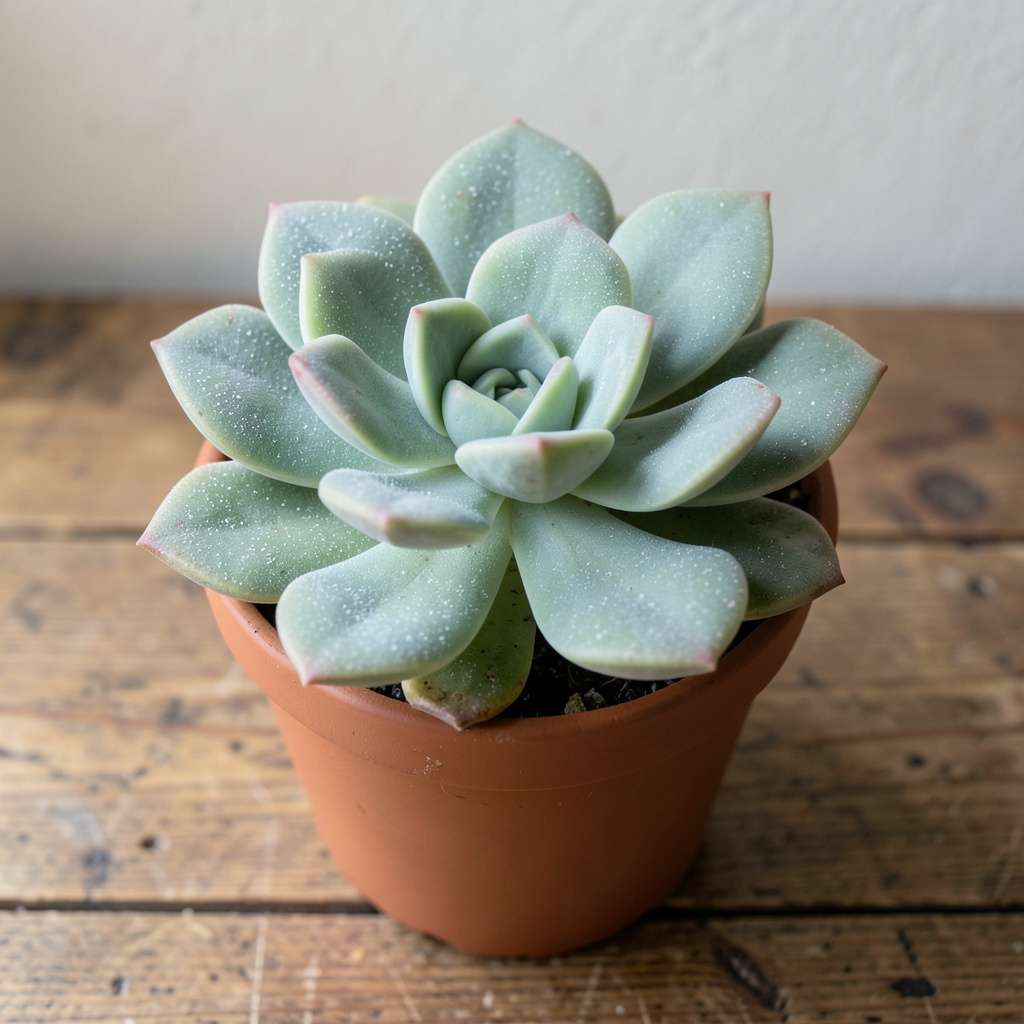
White spots on succulents are usually caused by powdery mildew, mealybugs, or mineral deposits from hard water. The spots may appear fuzzy, crusty, or speckled depending on the underlying issue and often require different treatments.
I’ve seen these white markings confuse even experienced gardeners because they can look so similar at first glance. 🌵 The fuzzy patches from powdery mildew often start on leaves and spread quickly in humid conditions, while mealybugs leave cottony clusters in leaf joints and stems. What many don’t realize is that hard water deposits create a completely different pattern—usually uniform white speckles that feel rough to the touch. Each case demands a tailored approach, from adjusting water quality to applying targeted treatments.
What’s particularly tricky is how these issues can overlap or mimic each other. I always recommend using a magnifying glass to examine the spots closely—this simple tool reveals whether you’re dealing with living pests, fungal threads, or just mineral residue. The location of the spots matters too: undersides of leaves often indicate pests, while top-surface patterns suggest environmental factors. 💫
💡 In This Article
The white spots you’re seeing on your succulents actually form through completely different biological and environmental processes. Powdery mildew develops when fungal spores land on moist leaf surfaces and germinate—this typically happens when humidity stays above 60% for extended periods.
The fungus creates thread-like structures called hyphae that spread across the leaf surface, producing the characteristic white, powdery coating. 🌱
Mealybugs, on the other hand, are living insects that secrete a waxy, cotton-like substance as they feed on plant sap. These pests cluster in protected areas like leaf axils and stem joints, where they can pierce plant tissues with their needle-like mouthparts.
A single female mealybug can produce up to 600 eggs in her lifetime, which is why infestations spread so rapidly. The white material you see isn’t just their bodies—it’s actually a protective coating they produce to shield themselves from predators and environmental stress.
Mineral deposits from hard water create a completely different pattern. When water with high calcium and magnesium content evaporates from leaf surfaces, it leaves behind microscopic crystals. These deposits typically appear as uniform white speckles that feel rough or gritty to the touch.
The concentration of minerals in water is measured in parts per million (ppm)—anything above 120 ppm is considered hard water and can lead to visible deposits over time. 💧
Sunburn can also manifest as white or bleached spots, though these usually appear as irregular patches rather than uniform speckles. This occurs when succulents receive intense sunlight without proper acclimation. The plant’s protective pigments break down under excessive UV exposure, leaving damaged tissue that appears white or translucent.
Unlike other causes, sunburn spots are typically flat with the leaf surface rather than raised or textured.
Here’s how to distinguish them through touch and location:
The location of spots provides crucial clues. Powdery mildew often starts on lower leaves where air circulation is poor, while mealybugs favor new growth points and protected crevices. Mineral deposits typically appear uniformly across all exposed surfaces, and sunburn naturally occurs on the side facing the most intense light.
Using a 10x magnifying glass reveals the true nature—you’ll see fungal threads, insect bodies, or crystal structures depending on the cause. ✨
What many gardeners miss is how these issues can compound each other. Stress from sunburn makes plants more susceptible to pest infestations, and overwatering (which causes mineral buildup) also creates ideal conditions for fungal growth. The key is addressing the root cause rather than just treating the visible symptoms.
I’ve found that keeping a garden journal with photos of spots and noting environmental conditions helps track patterns over time. 📖
Environmental factors play a bigger role than most realize. Succulents in terrariums or humid climates are 5 times more likely to develop powdery mildew than those in arid conditions. Similarly, plants watered with tap water in hard water regions show mineral deposits 3-4 weeks sooner than those watered with filtered or rainwater.
The type of succulent matters too—varieties with farina (like Echeverias) show water spots more prominently than glossy-leaved species. 🌵
Prevention starts with understanding your specific growing conditions. Test your water hardness with a simple kit (available at pool supply stores), monitor humidity levels with a hygrometer, and observe how sunlight patterns change with seasons. These small investments in knowledge pay off tremendously in keeping your succulents spot-free and thriving.
The most beautiful succulent collections I’ve seen belong to growers who combine keen observation with consistent care routines. 💫
Use a magnifying glass to examine the spots closely. Fungal spots (powdery mildew) look like fine white powder that rubs off easily, while pest spots (mealybugs) appear as cottony clusters that stick to stems and leaf joints. Mealybugs may move when disturbed, while fungal growth stays put.
Yes, both fungal issues and pests can spread quickly. Isolate affected plants immediately and check nearby succulents weekly. Powdery mildew spores travel through air, while mealybugs crawl or hitch rides on tools. Always clean your hands and tools after handling infected plants to prevent cross-contamination.
Start by removing heavily damaged leaves with clean scissors. For fungal issues, apply a baking soda spray (1 tsp per quart of water), and for pests, treat with 70% isopropyl alcohol. Move the plant to bright, indirect light and reduce watering until it recovers—most succulents bounce back within 4-6 weeks.
Check your plants every 7-10 days during active growing seasons (spring/summer). Pay special attention to new growth and leaf undersides where pests love to hide. A quick inspection after watering is ideal—wet spots make fungal growth and mineral deposits more visible against the green leaves.
Mix 1 part white vinegar with 3 parts water and gently wipe leaves with a soft cloth. Avoid scrubbing—succulent leaves bruise easily! For prevention, switch to distilled or rainwater. If spots persist, they’re likely mineral deposits that will gradually fade as new growth appears.
