
Beautiful Plants For Your Interior
Beautiful Plants For Your Interior
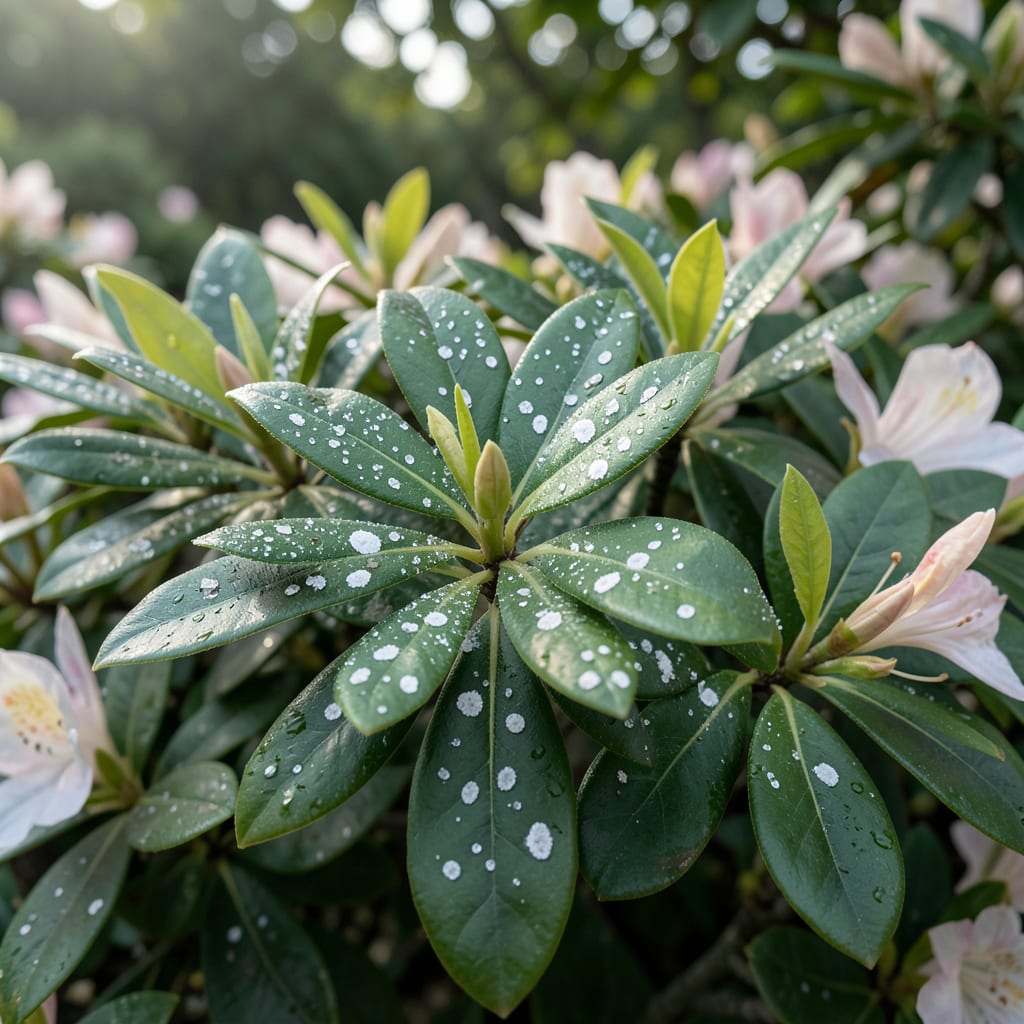
White spots on azalea leaves always catch my eye first thing in the morning. It’s that moment when you realize something’s wrong with your prized shrub, and you need to act fast.
I’ve dealt with this issue enough to know it’s usually fungal or pests throwing a wrench in your garden’s harmony. The good news? Both are fixable if you catch them early and respond with the right approach.
You’ll start by identifying the pattern—powdery mildew looks different from lace bug damage. Then, you’ll treat with either a foolproof fungicide or targeted pest control, depending on the culprit.
With consistent care and a few preventive tweaks, your azaleas will bounce back, looking lush and vibrant again in no time.
White spots on azalea leaves can stem from several underlying issues, each with distinct triggers. Understanding these causes helps you address the problem effectively.
Powdery mildew and leaf spot diseases are common fungal culprits. Powdery mildew thrives in high humidity and poor air circulation, forming a white, powdery coating. Leaf spot fungi, like Cercospora, create circular white or tan spots with dark borders. These fungi spread via moisture and overhead watering.
Azalea lace bugs and spider mites can cause white or stippled spots. Lace bugs pierce leaf cells to feed, leaving behind yellow-white speckling on the upper surface. Spider mites, thrive in hot, dry conditions, create fine webbing and tiny white or yellow dots as they suck out plant juices.
Overwatering or poor drainage leads to root stress, which can manifest as white or yellow patches. Similarly, excessive sun exposure (sunburn) may cause bleached, white spots, especially on tender new growth. Chemical burns from improper pesticide or fertilizer use can also create white, scorched areas.
Addressing white spots on your azalea leaves starts with identifying the cause. Below are targeted solutions for common culprits, along with prevention tips to keep your plants healthy.
Fix: Remove and destroy infected leaves to prevent spread. Apply a copper-based fungicide or neem oil every 7–10 days until the issue resolves. For severe cases, use a systemic fungicide like propiconazole.
Prevention: Improve air circulation by pruning dense foliage. Water at the base of the plant (not overhead) and avoid wetting the leaves, especially in the evening. Keep the area free of fallen debris.
Fix: Blast off pests like spider mites or lace bugs with a strong stream of water. For stubborn infestations, use insecticidal soap or horticultural oil, applying every 5–7 days until pests are gone.
Prevention: Regularly inspect the undersides of leaves for early signs of pests. Introduce beneficial insects like ladybugs or lacewings to your garden as natural predators.
Fix: Let the soil dry out slightly between waterings. Repot azaleas in containers with drainage holes if they’re waterlogged. For in-ground plants, amend heavy soil with compost or sand to improve drainage.
Prevention: Use a moisture meter to monitor soil conditions. Water only when the top inch of soil feels dry, and ensure pots have saucers to catch excess water.
Fix: Move potted azaleas to a spot with dappled shade if they’re exposed to harsh sunlight. Protect them from extreme temperatures with mulch or shade cloth.
Prevention: Maintain consistent moisture and temperature. Azaleas thrive in partial shade and well-draining, acidic soil (pH 4.5–6.0). Test soil pH annually and amend as needed.
💡 Pro Tip: Always sterilize pruning tools with rubbing alcohol between cuts to avoid spreading disease.
Powdery mildew appears as a white, powdery coating on leaves, while lace bugs create stippled white or yellow spots. Check leaf undersides for tiny black lace bug nymphs.
Yes! Neem oil is effective against powdery mildew and soft-bodied pests like spider mites. Apply every 7-10 days in the evening for best results.
Overwatering leads to root stress, which can manifest as white or yellow patches. Always let soil dry slightly between waterings.
Remove infected leaves immediately and isolate affected plants. Then treat with appropriate fungicide or insecticidal soap based on the cause.
