
Beautiful Plants For Your Interior
Beautiful Plants For Your Interior
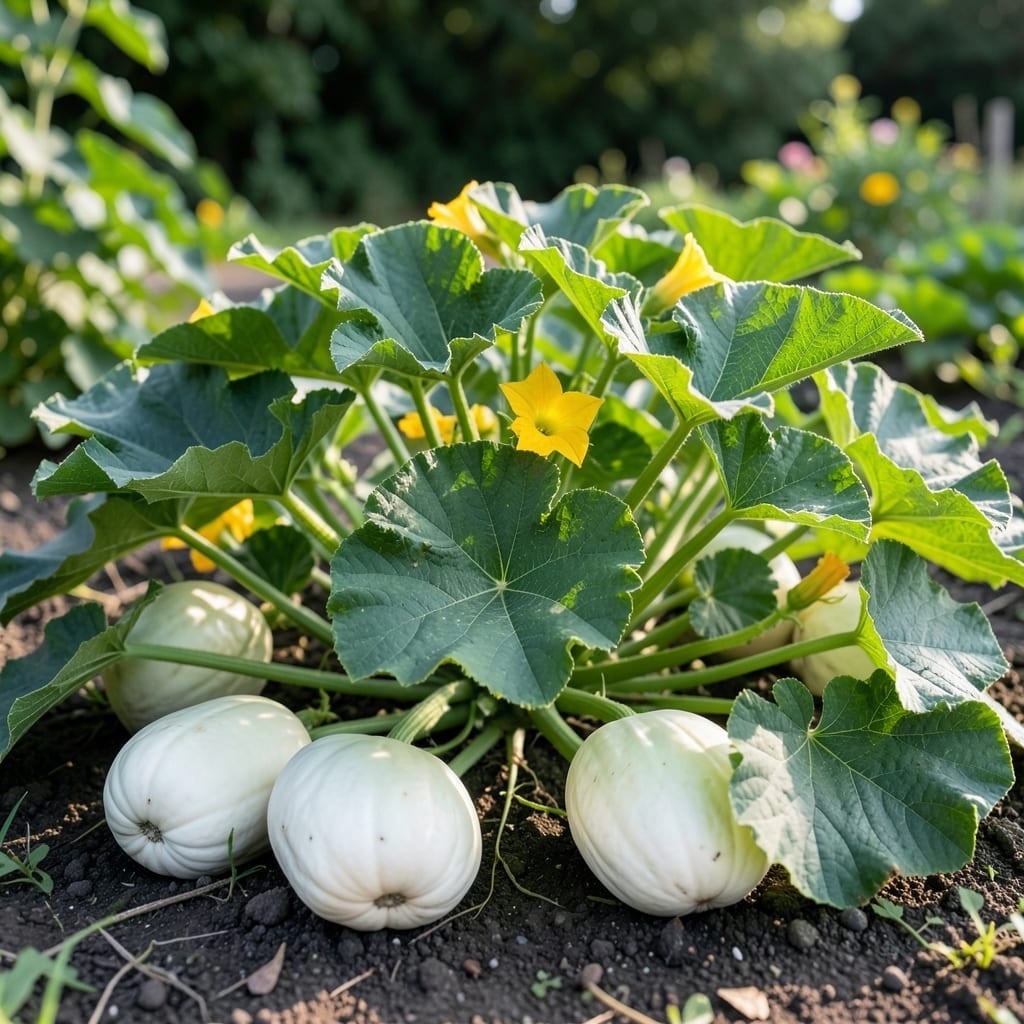
There’s something satisfying about watching white squash vines spread across the garden. I planted my first patch three seasons ago and haven’t looked back since.
They thrive in warm soil with 6-8 hours of sunlight daily, and the pale skin makes it easy to spot when they’re ready to pick. You’ll get tender, flavorful squash that grows faster than you expect.
📚 In This Guide
Here’s the method I use to get reliable, productive plants every growing season.
Select a white-skinned variety suited to your climate—some tolerate heat better, while others prefer cooler conditions. I always check the seed packet for days to maturity and match it to my growing season length. Start seeds indoors 3-4 weeks before the last frost or direct sow after soil warms to 60°F.
Planting too early in cold soil causes seeds to rot before they sprout. You’ll see the first sign of trouble when seeds fail to emerge after 10 days in consistently damp soil. I use a soil thermometer to confirm the temperature—it’s the only reliable way to know.
White squash thrives in well-draining soil enriched with compost. Work the soil to a depth of 12-18 inches, removing rocks and breaking up clumps. I mix in a 2-3 inch layer of aged compost to provide nutrients without overwhelming the plants.
Create mounds or hills 3-4 feet apart with 3-4 seeds per hill. This improves drainage and warms the soil faster in spring. Once seedlings emerge, thin to the 2 strongest plants per hill—crowding leads to smaller yields and disease spread.
Keep soil evenly moist but not waterlogged, especially during the first 4-6 weeks as plants establish. I water deeply at the base in the early morning, avoiding wetting the leaves to prevent mildew. You’ll know it’s time to water when the top inch of soil feels dry to the touch.
Watch for the first true leaves—these appear after the initial seed leaves and signal the plant is ready for a light feeding. I use a balanced fertilizer at half strength to avoid burning tender roots. Yellowing leaves often mean overwatering, while wilting in hot afternoons usually indicates thirst.
White squash requires full sun (at least 6-8 hours daily) to produce well. If space is limited, train vining types up a sturdy trellis to save ground space. I use soft ties to secure vines without damaging stems, checking weekly as plants grow.
Bush varieties don’t need support but benefit from 2-3 feet of space between plants. You’ll see vines spreading rapidly once the weather warms—this is normal. Mulch around plants with straw to retain moisture and suppress weeds, which compete for nutrients.
Check plants daily once fruits start forming—white squash can grow from blossom to harvest size in under a week. I harvest when the skin is firm and fully white, using a sharp knife to cut the stem cleanly. Leaving fruits on the vine too long causes the skin to harden and seeds to mature.
Pick in the morning when the plants are hydrated and fruits are crisp. You’ll notice the stem dries slightly where it attaches to the vine—that’s a good sign it’s ready. Store harvested squash in a cool, dry place and use within 1-2 weeks for best flavor and texture.
Took me a few seasons to figure these out, so here goes.
The Heat Factor: That 60°F soil temperature in Step 1 isn’t just a suggestion—it’s critical. Planting in colder soil means seeds will rot before they even sprout. I learned this the hard way after losing an entire first planting. A soil thermometer is your best friend here.
Spacing Matters: In Step 2, those 3-4 feet apart hills with 3-4 seeds per hill might seem like a lot of space, but trust me on this. Crowded plants compete for nutrients and sunlight, leading to smaller yields. Once seedlings emerge, thin to the 2 strongest plants per hill without hesitation.
Watering Wisdom: During those first 4-6 weeks mentioned in Step 3, consistency is key. The top inch of soil should feel dry before you water again, but don’t let it get bone dry. Early morning watering at the base prevents mildew and gives plants time to absorb moisture before the heat of the day.
Sunlight Check: The 6-8 hours daily of full sun in Step 4 isn’t negotiable for productive plants. If your garden doesn’t get that much, consider container growing where you can move pots to follow the sun. Even partial shade will significantly reduce your harvest.
Look for a firm, glossy rind and a stem that’s dry and woody. Most varieties are ready 50-60 days after planting. Harvest when the skin resists light pressure from your fingernail.
Yes! Young, tender squash can be eaten raw, sliced thinly for salads or snacks. For mature squash, cooking (roasting, steaming, or sautéing) enhances flavor and digestibility.
Store uncut squash in a cool, dry place (50-55°F) for up to 3 months. Refrigerate cut squash in an airtight container for 5-7 days. Freezing is an option for long-term storage if blanched first.
Yellowing can indicate overripeness, nutrient deficiencies (like nitrogen), or pests. Harvest promptly and ensure consistent watering. If pests are the issue, use organic neem oil or insecticidal soap.