
Beautiful Plants For Your Interior
Beautiful Plants For Your Interior
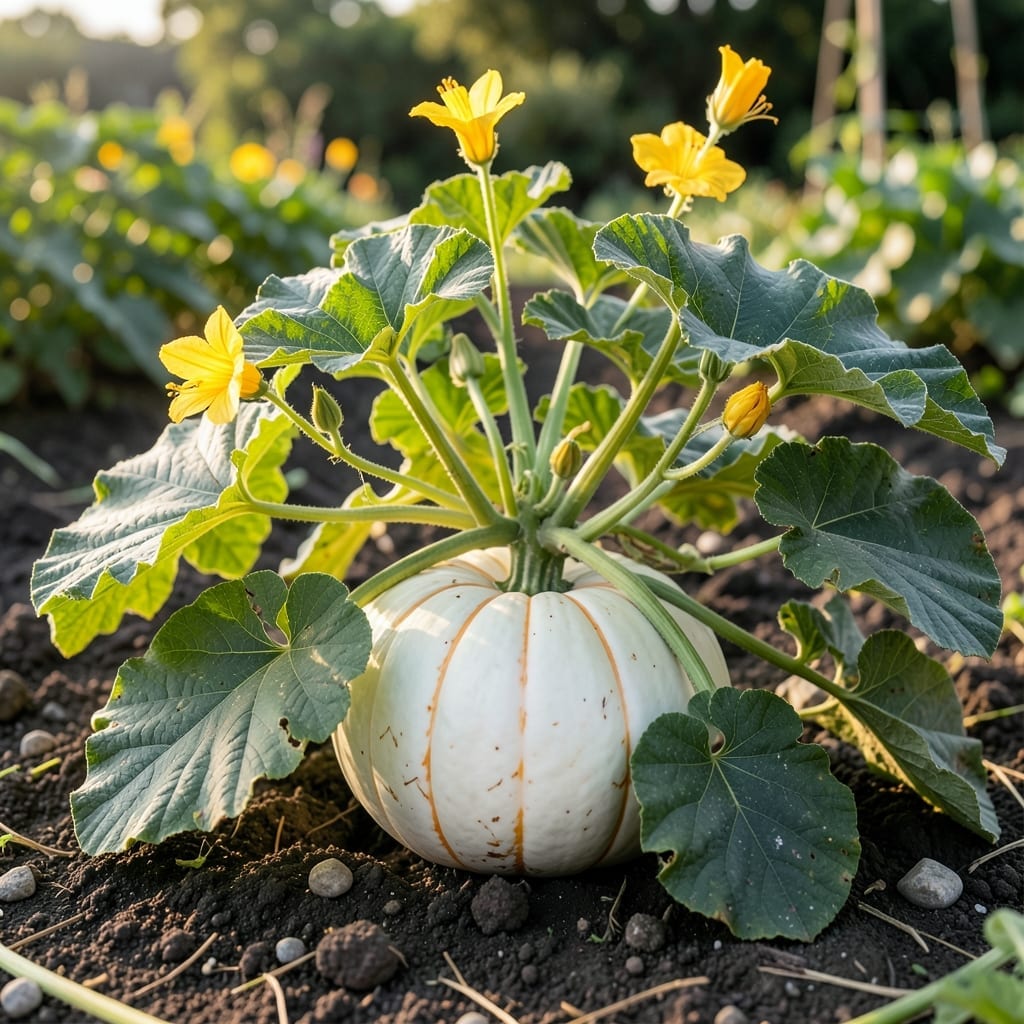
White pumpkins with orange veins are typically heirloom varieties like ‘Lumina’ or ‘Valencia’, prized for their striking color contrast and smooth, pale rinds with vibrant orange streaks or web-like patterns.
I love how these unique pumpkins stand out in any garden or display. 🌟 The orange veining often appears due to genetic traits that cause localized pigment concentration, especially under full sun exposure. Growers can enhance this effect with consistent watering and well-drained soil, which helps the vibrant patterns develop fully before harvest.
💡 In This Article
The orange veining you see is caused by localized concentrations of carotenoids, the same pigments that make carrots orange. In white pumpkins, these pigments cluster in the vascular system—where nutrients travel—creating those bold streaks.
The genetic trait that causes this uneven distribution is most prominent in heirloom varieties like ‘Lumina’ or ‘Valencia’, where the white base skin makes the orange pop dramatically. ✨
Sunlight exposure plays a huge role in intensifying these patterns. Pumpkins grown in full sun (6-8 hours daily) develop deeper, more defined veining because UV light stimulates carotenoid production. Shaded areas often stay pale, creating natural contrast.
Temperature swings during maturation can also enhance color definition, with cooler nights (50-60°F) helping the orange pigments stand out against the white rind. 🔥
What’s fascinating is how the vascular system acts like nature’s paintbrush. As the pumpkin grows, nutrients flow through these channels, and in certain varieties, the carotenoids hitch a ride, coloring only those pathways. This is why you often see the veins form web-like or streaked patterns rather than solid blocks of color.
The thickness of these veins can vary from 1/8 inch to over 1/2 inch depending on the variety and growing conditions.
The white background itself comes from a genetic mutation that suppresses most carotenoid production in the skin. But in these special varieties, the mutation isn’t complete—some carotenoids still express, particularly in the vascular tissue.
This partial suppression is what creates the striking contrast that makes these pumpkins so visually appealing compared to solid orange or white varieties. 💫
You’ll notice the most vibrant examples typically come from plants that weren’t over-fertilized. Too much nitrogen can cause excessive leaf growth that shades the fruit, muting the color development.
The best specimens often grow on vines with just the right balance of moderate watering and well-drained soil, allowing the natural color patterns to develop fully before harvest.
Local carotenoid concentrations in the vascular system create these bold patterns. Heirloom varieties like Lumina develop them naturally when grown in full sun.
Plant in full sun with 6-8 hours of daily light and reduce watering in the final 3-4 weeks. Well-drained soil helps pigments develop fully before harvest.
Start in late spring when soil reaches 60°F. Varieties like Valencia need 85-100 days to mature, with cooler nights enhancing the orange contrast.
Yes! These are completely edible and often sweeter than standard orange varieties. The striking coloration only affects the rind, not the flesh inside.
Genetic traits and growing conditions both play roles. Pumpkins with consistent sun exposure and moderate watering develop the most dramatic web-like patterns.