
Beautiful Plants For Your Interior
Beautiful Plants For Your Interior
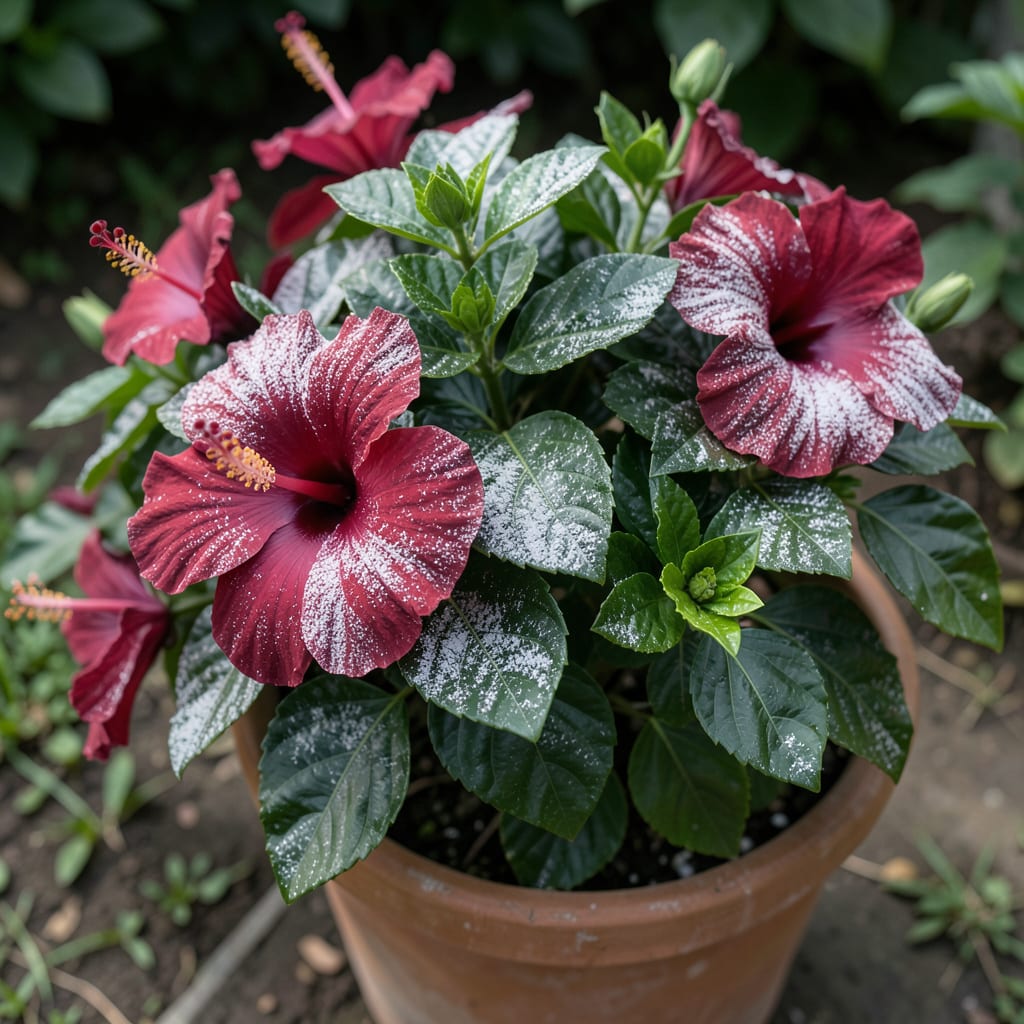
White powder on hibiscus leaves means trouble. I spotted it on my tropical hibiscus last summer and knew I had to act fast to save the plant.
The good news is this fungal issue responds well to treatment if you catch it early. A simple spray of baking soda and water can stop it in its tracks, while improving air circulation prevents it from coming back.
Within a week of treatment, you’ll see the white coating disappear and new growth emerging clean. The plant recovers quickly when you address both the fungus and its causes.
Works for all hibiscus varieties, from tropical to hardy types. Here’s how to handle it without harsh chemicals.
White powdery mildew on hibiscus thrives under specific conditions, often tied to environmental factors and plant health. Understanding these causes helps you prevent and manage outbreaks effectively.
Podosphaera or Erysiphe fungi, the primary culprits, flourish in humidity levels above 60% combined with stagnant air. Hibiscus leaves packed too closely or grown in shaded, low-ventilation areas create a perfect breeding ground. The spores germinate when moisture lingers on foliage, especially in evenings or after watering.
Wetting the leaves during watering or rain leaves residual moisture that fuels fungal growth. Hibiscus plants watered from above—rather than at the soil level—are far more susceptible. This practice not only promotes mildew but can also stress the plant, weakening its natural defenses.
A deficiency in phosphorus or potassium, or an excess of nitrogen, can compromise the hibiscus’s ability to resist disease. Over-fertilizing with nitrogen encourages lush, soft growth that’s highly vulnerable to powdery mildew. Balanced feeding strengthens cell walls, making it harder for fungi to penetrate.
Cool nights (below 60°F/15°C) paired with warm days and high humidity—common in spring and fall—accelerate spore production. Hibiscus plants stressed by temperature swings or sudden weather changes are more prone to infection. Early detection during these seasons is key to containment.
Tackling white powdery mildew on your hibiscus starts with identifying the cause and applying targeted fixes. Below are practical solutions mapped to common triggers, plus prevention tips to keep your plants thriving.
Powdery mildew loves damp, stagnant air. Improve airflow by spacing plants at least 3 feet apart. Prune dense foliage to let sunlight and breezes reach inner leaves. Use a small fan on low to circulate air if your garden lacks natural wind.
Wet leaves invite spores. Switch to drip irrigation or water at soil level early in the day so foliage dries quickly. Avoid evening watering, as cool nights prolong moisture on leaves.
Stressed hibiscus are more vulnerable. Fertilize lightly with a balanced, water-soluble formula (10-10-10) to boost vigor. Remove heavily infected leaves and dispose of them in sealed bags—not compost—to stop the spread.
For active infections, spray leaves with a mix of 1 teaspoon baking soda, 1 quart water, and a few drops of dish soap. Apply weekly until mildew clears. For stubborn cases, use a neem oil or sulfur-based fungicide, following label instructions.
Prevention Tips:
Yes, powdery mildew spores spread easily through air and water. Isolate affected hibiscus immediately and avoid water splashing between plants.
With proper care, you’ll see improvement in 3-7 days. Baking soda or neem oil sprays typically clear mild cases within 2 weeks.
Yes, mix 2 tablespoons apple cider vinegar with 1 quart water. Test on a few leaves first as vinegar can burn sensitive plants.
Remove heavily infected leaves and dispose in sealed bags. This prevents spores from spreading to healthy foliage.
