
Beautiful Plants For Your Interior
Beautiful Plants For Your Interior
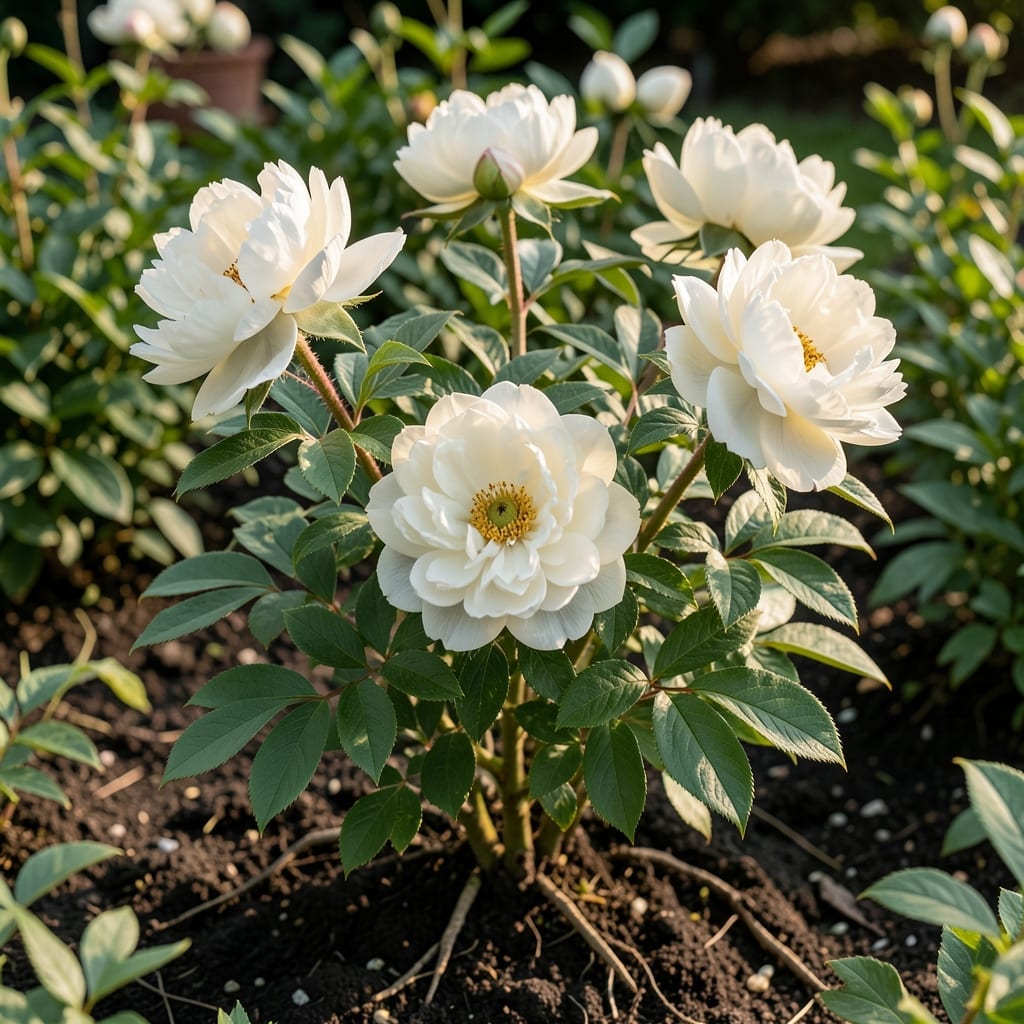
White peony roses turned my garden from ordinary to breathtaking. Their lush fragrant blooms demand attention, yet they’re surprisingly low-maintenance once established.
I learned the hard way that they need full sun, well-draining soil, and space to grow—give them 3-4 feet between plants. In return, they’ll reward you with years of stunning, disease-resistant blossoms.
📚 In This Guide
Here’s the method I rely on to cultivate these stunning blooms with consistent success.
Choose a location with full sun exposure, providing at least 6-8 hours of direct sunlight daily. White peony roses thrive in well-draining soil with a pH between 6.5 and 7.0. I always test my soil first—these plants won’t tolerate soggy roots or heavy clay.
Avoid low-lying areas where cold air settles, as late frosts can damage new growth. The site should also offer some protection from strong winds, which can break the heavy flower stems. A spot near a fence or building often works perfectly.
Amend the planting area with plenty of organic matter like compost or well-rotted manure, working it into the soil to a depth of 12-18 inches. This improves drainage while providing the rich, fertile conditions peonies love.
I dig a hole about 2 feet wide and 18 inches deep for each plant. This gives the roots plenty of room to establish. If your soil is particularly poor, consider adding a handful of bone meal to the bottom of the hole for extra phosphorus.
Place the peony root in the hole with the buds (or “eyes”) facing upward, positioned no deeper than 2 inches below the soil surface. Planting too deep is the most common mistake—it prevents blooming for years or indefinitely.
Backfill with the amended soil, gently firming it around the roots. Water thoroughly to settle the soil and eliminate air pockets. I always mark the spot with a stake so I don’t accidentally disturb it while the plant establishes.
Water deeply once or twice weekly during the first growing season, ensuring the soil stays consistently moist but never waterlogged. After establishment, peonies are quite drought-tolerant, but you’ll get the best blooms with regular 1-2 inches of water per week.
Apply a 2-3 inch layer of mulch around the base in late fall to protect the roots from winter temperature fluctuations. Remove it in early spring as new growth emerges. I’ve found that straw or shredded bark work particularly well.
Fertilize lightly in early spring with a balanced 10-10-10 fertilizer, and again after blooming. Avoid high-nitrogen fertilizers, as they promote leafy growth at the expense of flowers.
Install supports like peony rings or stakes in early spring as the stems begin to elongate. The large, heavy blooms often need this support to prevent them from flopping over. I place mine when the stems are about 12 inches tall.
Deadhead spent blooms by cutting back to a strong leaf or bud, but leave the foliage intact until fall. This allows the plant to store energy for next year’s blooms. In autumn, cut back the stems to 2-3 inches above the ground after the first frost.
These insights will help you avoid the pitfalls that prevent most gardeners from achieving spectacular blooms.
Sunlight Requirement: The 6-8 hours of daily direct sunlight in Step 1 isn’t just a suggestion—it’s critical for strong stems and abundant flowers. I’ve seen peonies in partial shade produce weak, floppy stems that can’t support their blooms. If your garden has limited sun, consider container growing so you can move the plants to follow the light.
Planting Depth Precision: In Step 3, that 2 inches below the soil surface measurement for the eyes is non-negotiable. Planting just an inch too deep can delay blooming for years. I learned this the hard way after wondering why my first peony never flowered—turns out it was planted at 3 inches. Use a ruler if you need to be exact.
Soil Preparation Secret: When following Step 2, don’t skimp on the 12-18 inches of amended soil. Peony roots grow deep, and shallow preparation means they’ll hit unamended soil too quickly. I once tried cutting corners with just 6 inches of compost—resulted in stunted growth that took twice as long to establish.
Support Timing: For Step 5, installing supports when stems reach 12 inches tall is perfect timing. Wait too long and you risk breaking stems while trying to position rings. I use soft plant ties rather than wire to avoid damaging the stems as they grow thicker.
The ideal time to plant white peony roses is in early fall, about 6 weeks before the first frost. This allows roots to establish before winter. Spring planting is also possible but may delay blooming.
White peony roses thrive in full sun, needing at least 6-8 hours of direct sunlight daily. Partial shade is tolerable in hotter climates, but too much shade can reduce blooming.
Common issues include botrytis blight (gray mold), powdery mildew, and leaf spots. Ensure good airflow, avoid overhead watering, and remove infected foliage to prevent spread.
Yes, but choose a large container (at least 2-3 feet deep) with drainage holes. Use well-draining soil and water regularly. Potted peonies may need winter protection in colder zones.
Lack of blooms can result from insufficient sunlight, improper planting depth, or young plants (they may take 2-3 years to flower). Over-fertilizing with nitrogen can also delay blooming.