
Beautiful Plants For Your Interior
Beautiful Plants For Your Interior
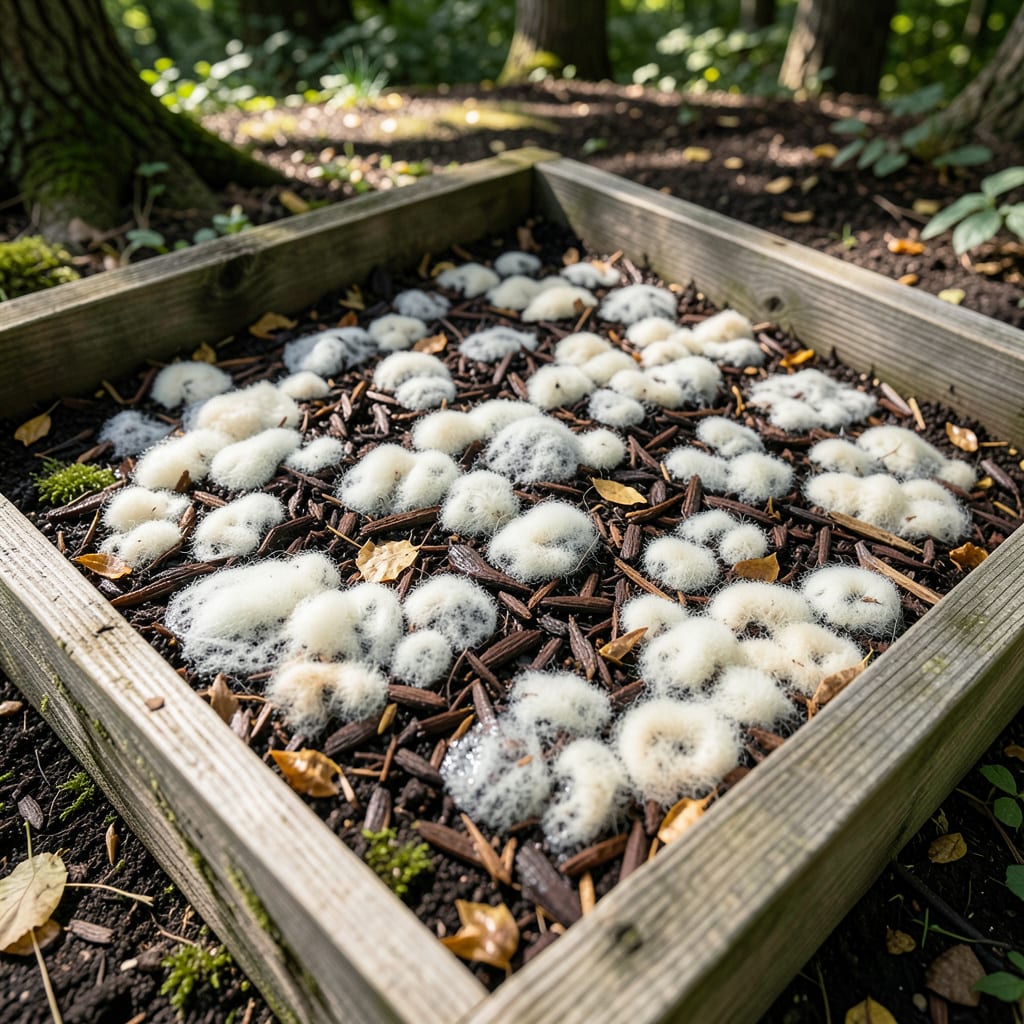
White fuzz under your mulch isn’t just ugly—it’s stealing nutrients from your soil. I first spotted this in my vegetable beds last spring, and it spread faster than I expected.
The problem starts with too much moisture trapped under organic mulch. Wood chips, straw, or leaves can create the perfect dark, damp home for white mold to thrive. It’s not dangerous to touch, but it’s a sign your garden’s balance is off.
Catching it early means you can fix it without chemicals. A rake, some sunlight, and a simple adjustment to your mulching routine often does the trick. I’ve tested this on my own raised beds and flower borders.
Left unchecked, it weakens plants and ruins your mulch’s benefits. Here’s how to spot it, stop it, and prevent it from coming back.
White mold under mulch thrives due to specific environmental and biological conditions. Understanding these causes helps prevent its growth and spread.
White mold, often caused by Sclerotinia or other fungi, flourishes in damp environments. Overwatering, poor drainage, or heavy rainfall can create excessively moist conditions under mulch, promoting fungal spores to germinate and spread.
Mulch made from organic materials (e.g., wood chips, straw) breaks down over time, providing a rich food source for fungi. As decomposition occurs, heat and moisture build up, creating an ideal breeding ground for white mold.
Fungal growth accelerates in warm (60–80°F), humid climates. Mulch retains heat and moisture, especially in thick layers, encouraging white mold development. Poor air circulation exacerbates the problem.
If mulch contains fungal spores (e.g., from improperly composted materials), it can introduce white mold directly to your garden. Always use high-quality, properly aged mulch to minimize risk.
White mold thriving under mulch can be tackled with simple, effective solutions. Below are targeted fixes for common causes, along with prevention tips to keep your garden healthy.
If mulch is packed too tightly, it traps moisture and encourages mold growth. Rake the mulch to loosen it and allow air to circulate. For severe cases, reduce the layer to 2–3 inches. Consider switching to coarse mulch (like wood chips) that doesn’t compact easily.
Prevention tip: 💡 Fluff mulch regularly and avoid piling it against plant stems or tree trunks.
Overwatering or poor drainage creates a damp environment perfect for white mold. Adjust your watering schedule to let the top inch of soil dry between sessions. If the area is waterlogged, improve drainage by amending soil with compost or installing a French drain.
Prevention tip: 🌧️ Use a moisture meter to avoid overwatering and ensure mulch isn’t holding excess water.
Decaying leaves or grass clippings under mulch can feed mold. Rake out old, matted mulch and replace it with fresh material. For a quick fix, turn the mulch to expose the underside to sunlight and air.
Prevention tip: ✨ Keep garden beds clean by removing fallen leaves and debris before they decompose under mulch.
Mold loves cool, dark areas. Trim nearby plants to allow more sunlight to reach the mulch. For persistent shade, use reflective mulch (like straw) or switch to gravel in problem areas.
Prevention tip: 🎯 Rotate mulch types seasonally—darker mulches absorb heat, while lighter ones reflect it.
With these steps, you can eliminate white mold and create a thriving, mold-resistant garden bed.
While not directly toxic to plants, it can weaken them by competing for nutrients. The mold itself won’t kill healthy plants, but severe cases may indicate poor soil conditions that need addressing.
Removing mulch temporarily helps, but you’ll need to address the root cause. Replace old mulch with fresh, and improve drainage or airflow to prevent recurrence.
Coarse, chunky mulches like cedar chips allow better airflow and dry faster. Avoid fine, dense materials that retain moisture, such as fresh grass clippings.
Inspect under mulch every 2-3 weeks, especially after heavy rain or in humid weather. Catching it early makes removal much easier.
