
Beautiful Plants For Your Interior
Beautiful Plants For Your Interior
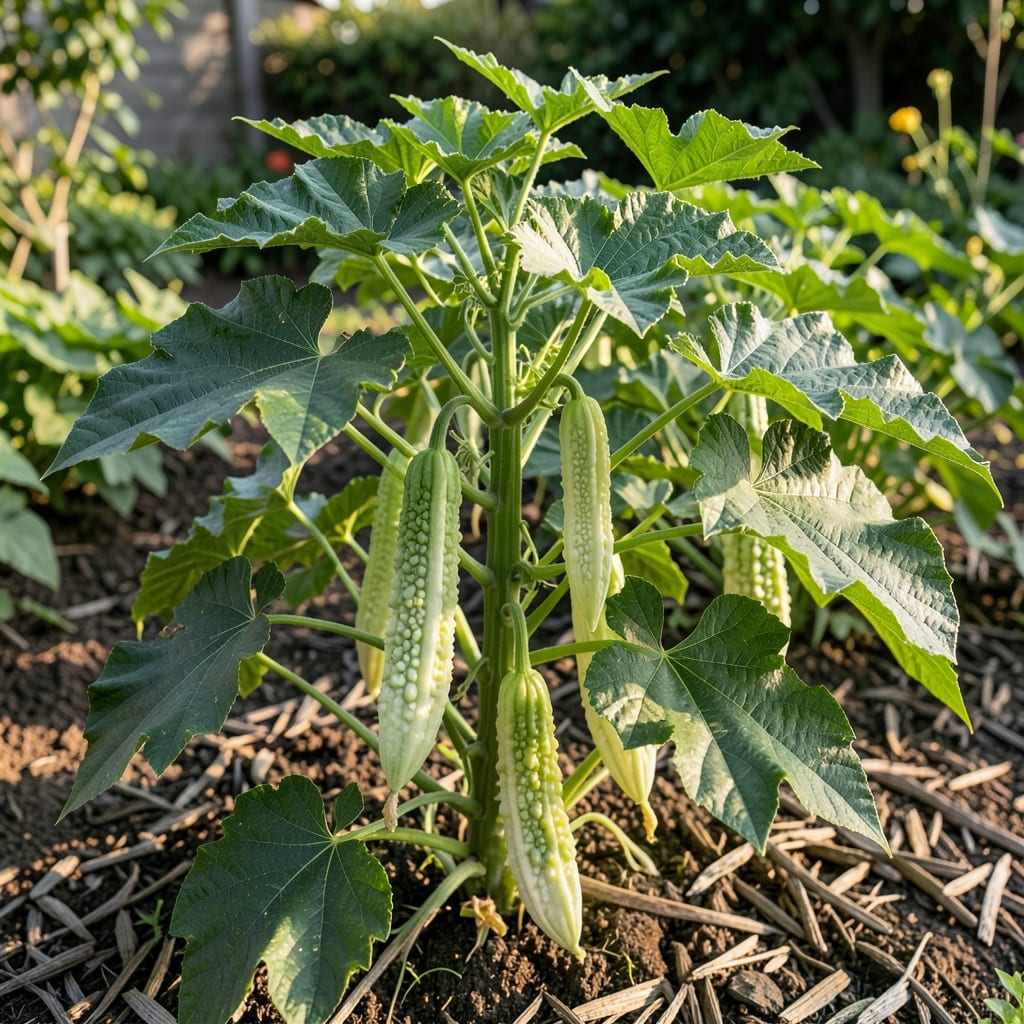
White bitter gourd adds a unique twist to any garden. I’ve grown both standard and white varieties, and the white ones stand out with their milder flavor and striking appearance.
The key is giving them the right conditions: warm soil, plenty of sun, and consistent moisture. With these basics, you’ll get healthy vines loaded with crisp, pale fruits that keep producing all season.
📚 In This Guide
Here’s the method I rely on for vigorous vines and abundant, healthy harvests every season.
Choose a location with full sun exposure, as this plant thrives with at least 6-8 hours of direct sunlight daily. The soil should be well-draining and rich in organic matter. I always work in a generous layer of compost to provide the nutrients needed for strong growth.
Test the soil pH—white bitter gourd prefers a slightly acidic to neutral range of 6.0-6.8. If the soil is too alkaline, amend it with sulfur or peat moss. The ideal soil temperature for planting is 70-80°F, so wait until the danger of frost has passed and the ground has warmed.
Plant seeds ½ to 1 inch deep and space them 18-24 inches apart, with rows 3-4 feet apart. If you’re transplanting seedlings, dig holes slightly larger than the root ball and space them the same distance apart. Gently firm the soil around the base to eliminate air pockets.
Water immediately after planting to settle the soil. I’ve found that soaking the seeds overnight in lukewarm water speeds up germination, which typically takes 7-14 days under ideal conditions. Keep the soil consistently moist but not waterlogged during this period.
Water the plants deeply once or twice a week, ensuring the soil stays evenly moist but not soggy. I check the top 1-2 inches of soil—if it feels dry, it’s time to water. Drip irrigation works best to keep leaves dry and prevent fungal diseases.
Fertilize every 2-3 weeks with a balanced, water-soluble fertilizer to encourage healthy growth. Once the vines start running, switch to a fertilizer higher in potassium and phosphorus to support flowering and fruiting. This ensures the plants have the energy they need to produce abundantly.
White bitter gourd vines grow rapidly and need sturdy support. Install a trellis or sturdy stakes at planting time so the vines have something to climb. I use a 5-6 foot tall trellis to accommodate their vigorous growth. Tie the vines loosely to the support as they grow to prevent damage.
Watch for the first flowers, which typically appear 50-60 days after planting. The vines will produce both male and female flowers—you’ll recognize the female flowers by the tiny fruit at their base. Healthy vines should be deep green and free of pests or disease spots.
Harvest the gourds when they are 4-6 inches long for the best flavor and texture. At this stage, the skin should be smooth and light green to white, depending on the variety. I check the vines every 2-3 days during peak production, as they grow quickly and can become overripe fast.
Use a sharp knife or pruning shears to cut the fruit from the vine, leaving a short stem attached. Regular harvesting encourages the plant to produce more fruit. If you notice the vines slowing down, a light application of fertilizer can give them a boost to extend the growing season.
Small adjustments in your approach can make a big difference in your harvest.
The Soil Factor: In Step 1, don’t skip testing your soil pH—white bitter gourd thrives in that 6.0-6.8 range. If your soil is too alkaline, amending with sulfur or peat moss will give you much better results. I learned this the hard way after a lackluster first season.
Germination Boost: Soaking seeds overnight in lukewarm water, as mentioned in Step 2, genuinely speeds up germination. I’ve seen seeds sprout in as little as 7 days with this method, versus the full 14 days without it. Just remember to keep the soil consistently moist but not soggy during this period.
Support Strategy: For Step 4, install that trellis or sturdy stakes right at planting time. These vines grow fast and need support early. I use a 5-6 foot tall trellis and tie the vines loosely as they grow—this prevents damage and makes harvesting much easier.
Harvest Timing: In Step 5, checking every 2-3 days during peak production is crucial. These gourds grow quickly and can become overripe fast. I aim to harvest when they’re 4-6 inches long for the best flavor and texture.
White bitter gourd typically matures in 60-90 days after planting. Harvest when the fruit is firm, glossy, and 4-6 inches long for the best flavor and texture.
Yes! Use a large container (at least 12-15 inches deep) with well-draining soil. Ensure it gets full sunlight and support like a trellis for vertical growth.
Lack of pollination, insufficient sunlight, or over-fertilization (especially nitrogen-heavy) can delay fruiting. Hand-pollinate flowers or adjust care to encourage production.
Try green bitter melon, zucchini, or cucumber for similar textures. Each has a unique taste but works well in stir-fries or curries.
Store uncut in a cool, dry place for 1-2 weeks or refrigerate in a paper bag for up to 10 days. Avoid washing until ready to use to prevent spoilage.