
Beautiful Plants For Your Interior
Beautiful Plants For Your Interior
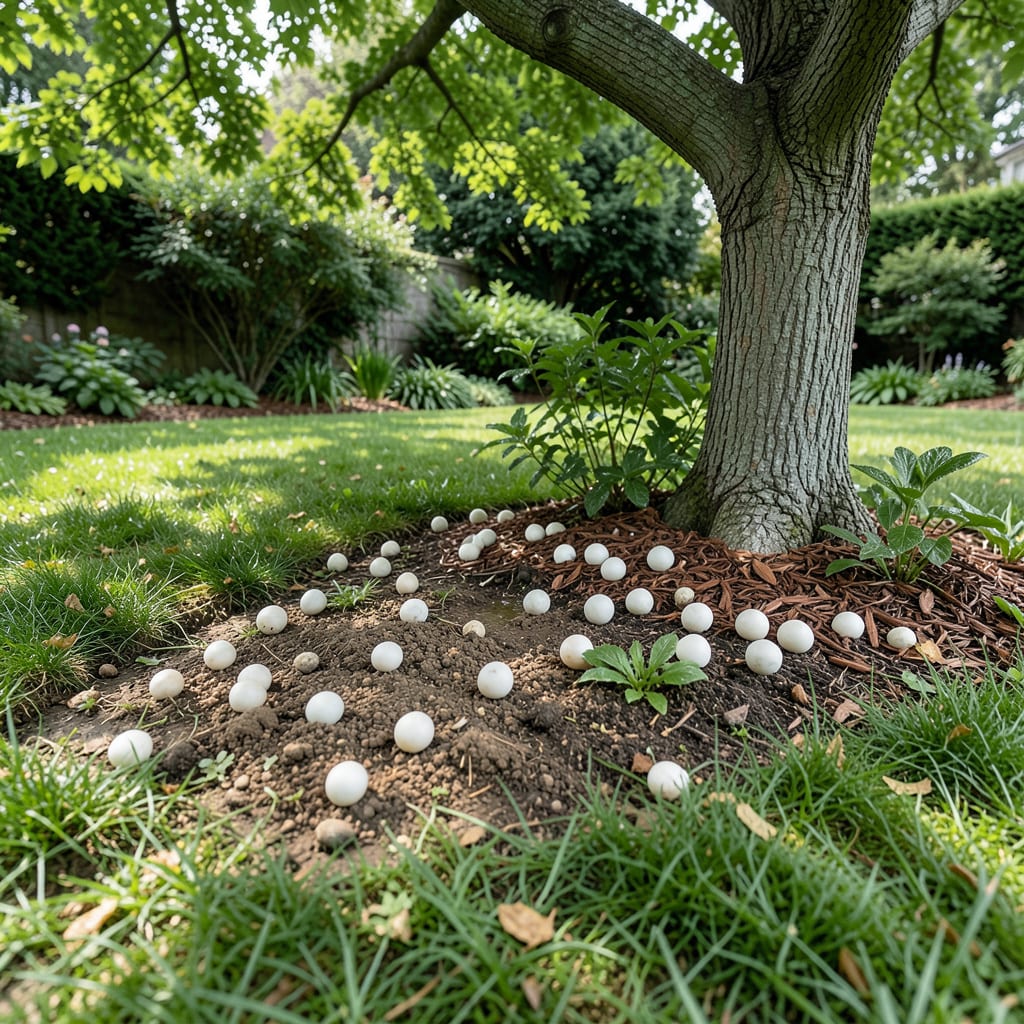
Those mysterious white balls in your yard aren’t random—they’re trying to tell you something. I’ve seen them pop up overnight, and each time, it’s either a sign of life (fungal or insect) or the first warning of a bigger problem.
Identifying them is simpler than it looks. Shape, size, and location give away whether you’re dealing with puffball mushrooms, insect eggs, or something else entirely. The fix is usually quick and permanent once you know what you’re up against.
📚 In This Guide
Use this systematic approach to identify and address the issue before it spreads further.
Begin by examining the white balls closely with a magnifying glass. Note their size, texture, and location in your yard. I’ve found that these are often eggs or pupae from pests like termites, ants, or even certain beetle species. Check if they’re clustered in soil, under mulch, or attached to plant stems.
If the balls are soft and squishy, they’re likely insect eggs. Hard, smooth spheres may indicate pupal casings. Document where you find them—near tree roots, in garden beds, or along foundations—as this helps narrow down the pest type. Don’t disturb the area yet; just observe and take notes for now.
Compare your findings to known pest signs. Termite eggs, for example, are tiny, white, and often found in mud tubes near wood. Ant larvae, which can resemble small white grains, are usually tucked in underground chambers. Beetle pupae might look like small, white, oval capsules in the soil.
I use a small trowel to gently dig around the affected area, checking for tunnels, nests, or additional clusters. If you see winged insects nearby, that’s a red flag for termites. For ants, look for worker trails leading to and from the site. The goal is to confirm whether this is an isolated incident or a full-blown infestation.
Once identified, treat the area with precision. For termites, I apply a liquid termiticide to the soil around the nest, following the product’s instructions for dilution and application rates. Ant infestations often respond well to bait stations placed near the mound—workers carry the bait back, eliminating the colony.
If beetle pupae are the culprit, remove them manually or treat the soil with beneficial nematodes, which target grubs and pupae without harming plants. Always wear gloves and a mask when handling chemicals or disturbed nests. Reapply treatments as directed, especially after rain, which can wash away residues.
After treatment, monitor the area daily for 1-2 weeks. Look for new white balls, increased pest activity, or signs of damage to plants or structures. I place sticky traps near the site to catch any stragglers and confirm the infestation is under control.
Prevent future issues by addressing the root causes. Reduce moisture by fixing leaky hoses or improving drainage. Remove woodpiles, leaf litter, and other organic debris that pests use for shelter. For long-term protection, consider applying diatomaceous earth around garden beds or using pest-repellent plants like marigolds or mint.
Small details in pest identification and treatment make all the difference.
Inspection Precision: In Step 1, use a magnifying glass to distinguish between soft, squishy insect eggs and hard pupal casings. I’ve found that noting whether the white balls are clustered in soil, under mulch, or attached to plant stems helps pinpoint the pest type without disturbing the area prematurely.
Identification Strategy: For Step 2, focus on the location and appearance of the white balls. Termite eggs often appear in mud tubes near wood, while ant larvae resemble small white grains in underground chambers. Beetle pupae, on the other hand, look like small, oval capsules in the soil. This specificity ensures accurate identification.
Safety First: In Step 3, always wear gloves and a mask when handling chemicals or disturbed nests. I learned the hard way that even natural treatments like beneficial nematodes or diatomaceous earth can irritate skin and lungs if proper precautions aren’t taken.
Monitoring Diligence: During Step 4, daily monitoring for 1-2 weeks is critical. Sticky traps placed near the site help catch stragglers, and watching for new white balls or increased pest activity confirms whether the treatment worked. Don’t skip this step—it’s how you catch recurrences early.
These are likely eggs or pupae from pests like grubs, mealybugs, or pill bugs. Grub eggs (from beetles) often appear as tiny white spheres in soil, while mealybugs leave cottony clusters on plants. Identify the source to choose the right treatment.
Try neem oil, diatomaceous earth, or beneficial nematodes for grubs. For mealybugs, a mix of water and dish soap can smother them. Remove debris and maintain yard hygiene to prevent reinfestation.
Early morning or late evening is ideal, as pests are most active and treatments (like sprays) won’t evaporate quickly. For grubs, treat in late summer or early fall before they hatch.
Yes! Fungal growths like puffball mushrooms or slime mold can resemble white balls. If they’re not attached to plants or moving, they’re likely fungal. Avoid touching them—some can be toxic.
Recurring infestations often mean untreated breeding grounds (e.g., damp soil, decaying wood). Address moisture issues, aerate soil, and reapply treatments as needed. Persistence is key!
