
Beautiful Plants For Your Interior
Beautiful Plants For Your Interior
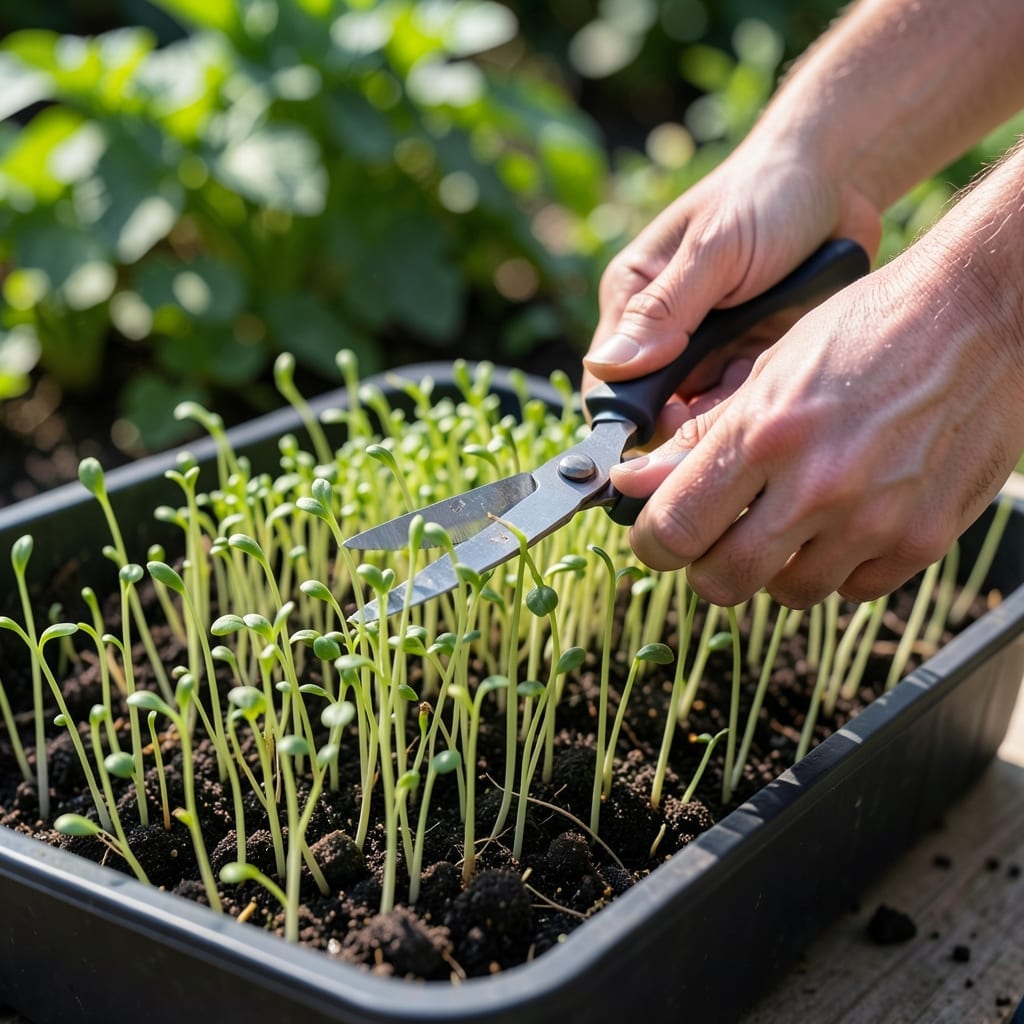
Thinning seedlings can feel like a tough decision – you’re removing plants you’ve nurtured from the start. But here’s what I’ve learned: overcrowded 🌱 General Seedlings will struggle to thrive.
When those first true leaves appear, it’s your signal. This is when competition for light and nutrients begins in earnest. Waiting too long can stunt their growth permanently.
Discover the most important timing clues and techniques to give your seedlings the space they need to flourish this summer.
I know it feels counterintuitive to remove healthy seedlings, but thinning is essential for strong plant development. The first sign is when you see the first true leaves emerge, usually 2-3 weeks after germination.
At this stage, seedling competition begins for light and nutrients. You’ll notice leggy growth as plants stretch toward the sun, or yellowing leaves from nutrient deficiency.
| Sign | What It Means |
|---|---|
| First true leaves | Time to thin immediately |
| Leggy growth | Plants stretching for light |
| Yellowing leaves | Nutrient competition beginning |
| Crowded roots | Roots entangled in tray |
Another clear indicator is uneven germination. When some seedlings are significantly larger than others, they’re outcompeting their neighbors for resources. This size disparity is nature’s way of telling you it’s thinning time.
I always check the root development too. If roots are circling the container or visible through drainage holes, your seedlings are root-bound and need space immediately.
For leafy greens like lettuce, thin when plants are 2 inches tall. With root crops like carrots, wait until they’re 3 inches tall for best results.
The soil surface can also reveal problems. When you see mold growth or algae between seedlings, it’s a sign of poor air circulation from overcrowding.
I’ve found that morning observations work best. Check your seedlings when they’re turgid (full of water) to accurately assess their health and spacing needs.
Remember, the ideal time varies by plant. Fast growers like radishes may need thinning in 10 days, while slow growers like parsley might wait 3-4 weeks. Always check your seed packet for specifics.
When in doubt, thin sooner rather than later. It’s easier to remove a few extra seedlings than to nurse back stunted plants.
Lastly, watch for pest pressure. Overcrowded seedlings attract aphids and fungus gnats that thrive in dense, moist conditions.
Thinning seedlings properly ensures strong plant development and healthy growth. I always start by gathering the right tools: sharp scissors or pruning snips for clean cuts.
The best time of day is in the early morning when plants are turgid (full of water). This helps them recover quickly from the stress of thinning.
For delicate roots, I avoid pulling seedlings as this can disturb the remaining plants. Instead, I snip at soil level to keep neighbors intact.
Spacing guidelines vary by plant. For lettuce, leave 6-8 inches between plants. Carrots need 2-3 inches, while tomatoes require 18-24 inches.
After thinning, I water lightly to help plants recover. Avoid heavy watering, which can dislodge newly exposed soil.
For flower seedlings like marigolds, thin to 8-10 inches apart. This gives them room to branch out and produce more blooms.
Remember, the goal is healthy competition, not elimination. Proper thinning leads to stronger stems, larger yields, and disease resistance.
I always save thinned seedlings when possible. Many can be transplanted to other areas of the garden if they have healthy roots.☀️