
Beautiful Plants For Your Interior
Beautiful Plants For Your Interior
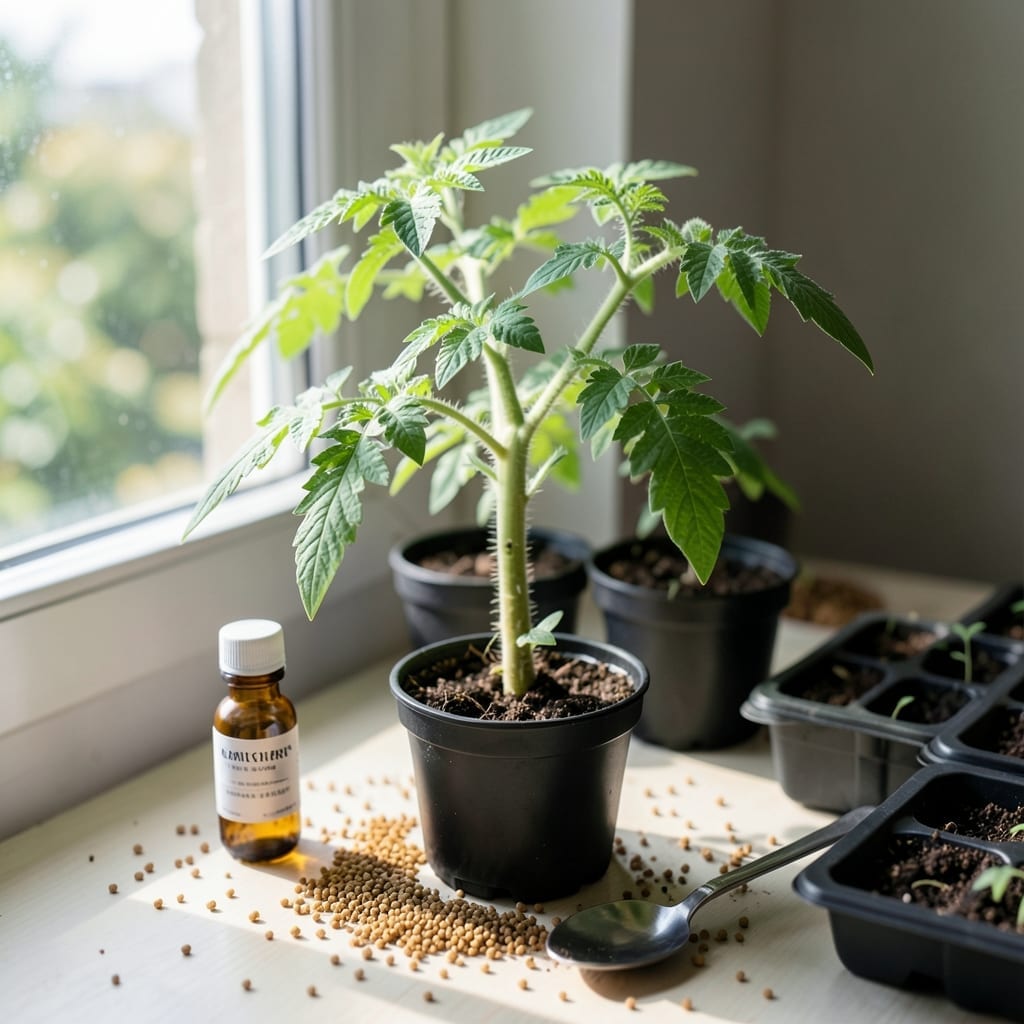
Timing your fertilizer application can make or break your 🍅 Tomato seedlings’ growth. Start too early, and you risk burning tender roots; wait too long, and they’ll struggle to thrive.
I’ve learned the hard way that these delicate plants need a precise approach. The difference between healthy growth and stunted development often comes down to just a few days.
Discover the exact moment to begin fertilizing and watch your Tomato seedlings transform. Let me show you how to get this timing perfect every time.
Getting the timing right for fertilizing tomato seedlings is crucial for robust growth. I’ve seen many gardeners struggle because they either start too early or wait too long. The key is watching for specific growth stages rather than just calendar dates.
Your seedlings need different nutrients at different times. Early fertilizer can damage tender roots, while delayed feeding may stunt development. The sweet spot is when they show their first true leaves, not the initial seed leaves.
| Growth Stage | When to Fertilize | Nutrient Focus |
| Germination | Not yet | None needed |
| Seed Leaves (Cotyledons) | Wait | Avoid fertilizer |
| First True Leaves | Start here | Balanced NPK (5-5-5) |
| 2-3 True Leaves | Continue feeding | High nitrogen for leaf growth |
| Pre-Transplant (4-6 weeks) | Increase frequency | High phosphorus for roots |
| After Transplanting | Resume feeding | Balanced or high potassium |
At the first true leaves stage, your seedlings are ready for their first light feeding. I recommend using a half-strength liquid fertilizer to avoid shocking their delicate systems. This is when they start needing more than just the nutrients from the seed.
As they develop 2-3 true leaves, you can switch to a regular strength balanced fertilizer. This stage is critical for building strong stems and healthy foliage. Watch for pale leaves or slow growth, which often signal it’s time to feed.
About 4-6 weeks in, just before transplanting, switch to a high-phosphorus formula. This encourages root development, which is essential for the shock of moving to their permanent home. I’ve found this makes a noticeable difference in transplant success.
After transplanting, give them a week to recover, then resume fertilizing. At this point, a balanced or high-potassium fertilizer supports both growth and future fruiting. Remember, consistency is more important than heavy feeding.
For organic gardeners, compost tea or fish emulsion work wonderfully at these stages. They provide gentle nutrition without the risk of chemical burn. I prefer these for my own seedlings, especially in the early stages.
The frequency depends on your fertilizer type. Liquid fertilizers typically need weekly applications, while slow-release granules can last several weeks. Always follow package instructions, but err on the side of caution with young plants.
Remember that over-fertilizing can be just as harmful as under-fertilizing. If you notice leaf burn or excessively lush but weak growth, you may need to dial back your feeding schedule.
🌱Knowing when your tomato seedlings need fertilizer isn’t just about timing—it’s about reading the visual cues your plants give you. I’ve learned that pale leaves or stunted growth often scream for nutrients, while dark green, sturdy stems usually mean they’re well-fed.
However, not all signs are obvious. Sometimes slow growth can indicate a fertilizer need, but it might also signal other issues like poor light or overwatering. That’s why I always check multiple factors before reaching for the fertilizer.
If you notice pale leaves on your seedlings, this is often the first sign they need more nitrogen. I’ve found that a light application of balanced fertilizer usually perks them right up within a few days.
Stunted growth can be tricky. Before fertilizing, check that your seedlings are getting enough light (6-8 hours daily) and that the temperature is consistently above 60°F. Only then should you consider feeding.
Be cautious of over-fertilizing. If you see leaf burn (brown tips or edges), this means you’ve likely applied too much. In this case, flush the soil with water and hold off on fertilizer for at least a week.
Remember that healthy seedlings should have deep green leaves and strong stems. If yours look vibrant and are growing steadily, you might not need to fertilize as often as you think.
🌱