
Beautiful Plants For Your Interior
Beautiful Plants For Your Interior
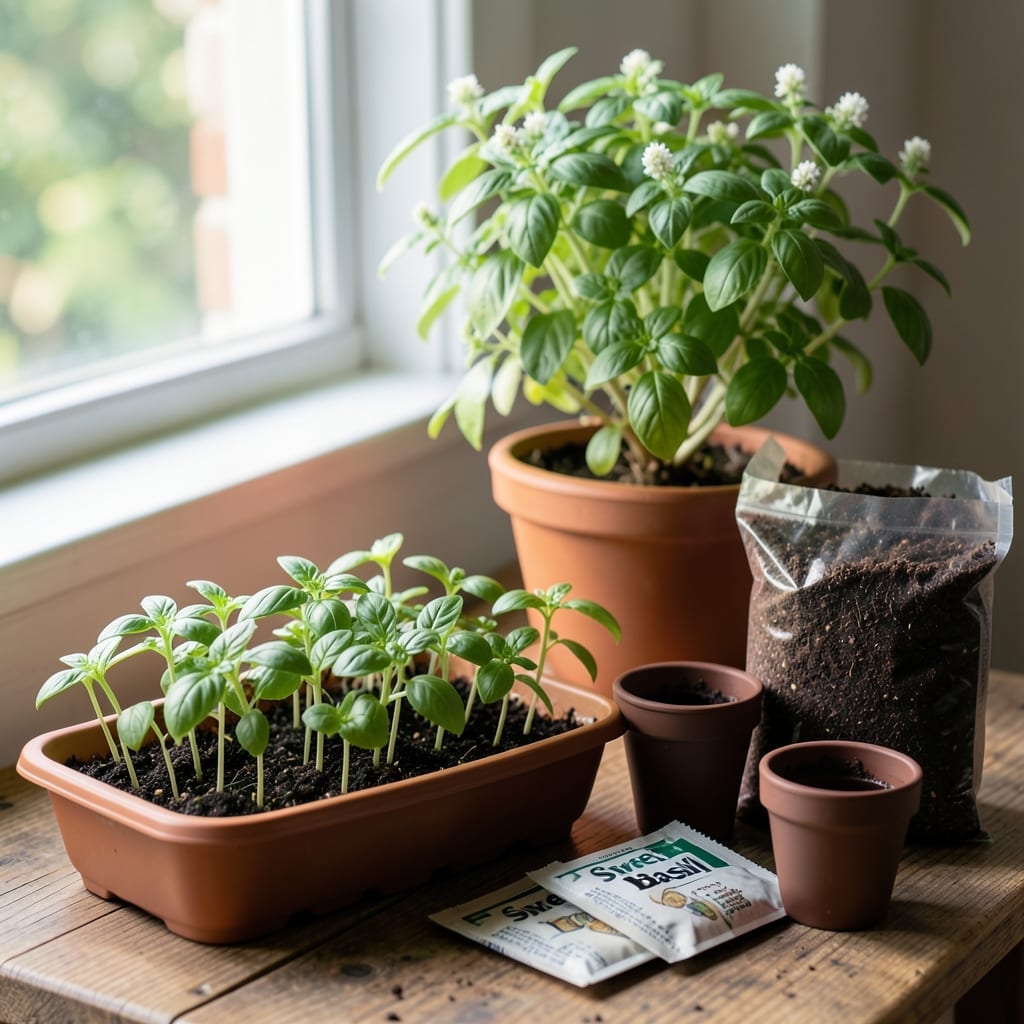
Timing can make or break your basil harvest. Start those seeds too early indoors, and you’ll end up with weak, spindly plants. Wait too long, and you might miss your window for a bountiful spring crop.
Getting the timing right for 🌿 Basil means understanding your zone’s last frost date. For most of us in zone 6a, that sweet spot is 6-8 weeks before the final chill passes.
I’ll show you exactly when to begin and how to create the perfect indoor conditions for strong, healthy seedlings ready for transplanting.
Getting your basil seeds started indoors at the right time is crucial for a strong harvest. The key is working backward from your area’s last frost date, which varies by region.
For most gardeners, 6-8 weeks before the last frost is the sweet spot. This gives seedlings enough time to develop without becoming leggy or root-bound in their containers.
| USDA Zone | Last Frost Date | Start Indoors |
|---|---|---|
| 3-4 | April 15 – May 15 | Feb 15 – Mar 15 |
| 5-6 | March 30 – April 30 | Feb 1 – Mar 15 |
| 7-8 | March 15 – April 15 | Jan 15 – Feb 28 |
| 9-10 | Feb 15 – March 15 | Dec 15 – Jan 30 |
In cooler zones like 3-4, I start my seeds indoors in early February to ensure they’re ready after the late spring frosts. This timing helps avoid the risk of cold snaps damaging tender seedlings.
For warmer zones such as 9-10, you can begin as early as December. The longer growing season allows for multiple basil crops if you stagger your plantings.
I always recommend checking your local weather patterns as well. Microclimates can shift these dates by a week or two. A soil thermometer is a handy tool to confirm your indoor temps are consistently above 70°F.
Remember, basil hates cold. If you’re in a zone with unpredictable springs, err on the side of starting seeds a bit later. It’s better to have strong, compact seedlings than rushed, weak ones.
Once your seedlings have 2-3 true leaves, they’re ready for transplanting. This usually aligns perfectly with your calculated start date if conditions are ideal.
If you’re unsure about your zone, the USDA Plant Hardiness Zone Map is an excellent resource. Simply enter your ZIP code for precise local data.
I’ve found that Genovese basil and Sweet Thai basil respond particularly well to this schedule, giving me robust plants ready for the garden by transplant time.
While timing is crucial, other indoor conditions can make or break your basil seedlings. I’ve learned that temperature is the first factor to nail down.
Basil seeds germinate best at 70-80°F. Anything cooler slows growth, while warmer temps speed it up. A heat mat can help maintain consistent warmth.
I always use grow lights for my basil starts. Even a bright windowsill often doesn’t provide enough intensity for stocky, healthy growth.
Overwatering is a common mistake. I check soil moisture daily with my finger—water only when the top inch feels dry. A spray bottle helps keep moisture even without disturbing seeds.
If you notice leggy seedlings, they’re likely stretching for light. Move them closer to your light source or increase duration. Thin seedlings to one per cell to prevent competition.
For best results, I recommend bottom watering once seedlings emerge. This encourages deep root growth and prevents fungal issues on delicate leaves.