
Beautiful Plants For Your Interior
Beautiful Plants For Your Interior
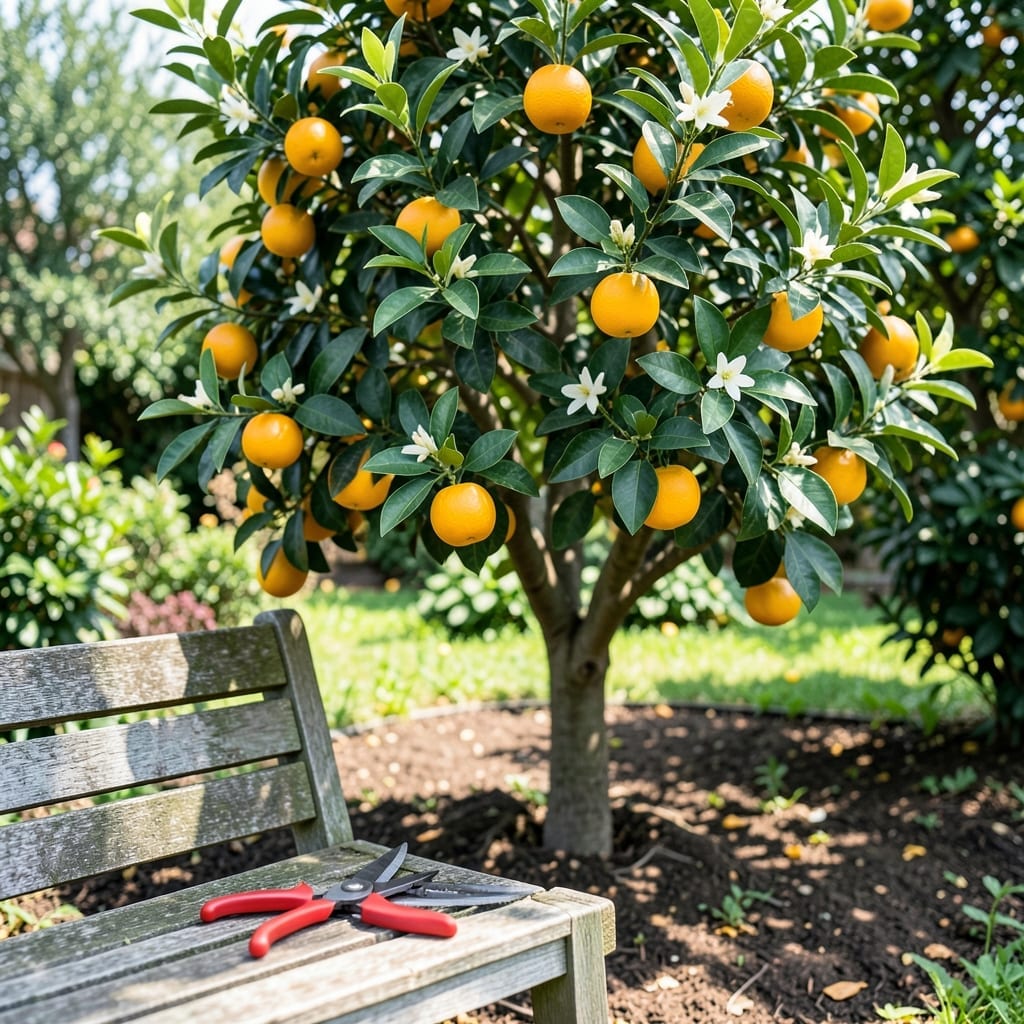
Timing your orange tree pruning correctly in California can mean the difference between a bountiful harvest and a season of missed potential.
The Golden State’s unique climate demands a strategic approach to maximize fruit yield and tree health. I’ve seen firsthand how proper timing transforms struggling 🍊 Orange Trees into thriving producers.
Whether you’re in coastal fog zones or inland heat, knowing when to make those cuts is the key to success. The right schedule prevents frost damage and encourages vigorous new growth.
Discover the precise windows that work best for California’s USDA zones 9b-10a, and learn how to align your pruning with the tree’s natural cycles for optimal results.
California’s diverse climate zones mean pruning timing varies. In coastal areas, mild winters allow pruning from February to April, after harvest but before new growth starts.
For inland regions, where frost risk lingers, wait until late February or March to avoid cold damage to fresh cuts. The goal is to prune before spring flush but after the last frost.
| Region | Best Months | Key Consideration |
|---|---|---|
| Coastal | Feb-Apr | Mild winters, early pruning |
| Inland | Late Feb-Mar | Avoid frost damage |
| Desert | Jan-Feb | Hot summers, prune early |
| All Zones | Avoid Dec-Jan | Tree is dormant |
In desert climates, I recommend pruning in January or early February. The extreme summer heat makes early pruning crucial to prevent stress on the tree during its active growth phase.
Remember, never prune during active harvest (October-January) or when temperatures drop below 32°F. Open wounds from pruning are vulnerable to frost damage and disease.
Pruning at the right time stimulates fruit production by redirecting the tree’s energy. Late winter pruning, just before spring growth, gives the tree time to heal and focus on new blossoms.
For young orange trees, light pruning in the first 2-3 years shapes the structure. Focus on removing crossing branches and suckers to establish a strong framework.
Mature trees benefit from annual pruning to maintain airflow and sunlight penetration. This reduces pest risks and improves fruit quality and yield size.
If you miss the ideal window, light pruning can still be done in May, but avoid heavy cuts. Late pruning may reduce next year’s harvest, as it removes fruit-bearing wood.
Always use clean, sharp tools to make precise cuts. I prefer bypass pruners for smaller branches and a pruning saw for thicker limbs to prevent tearing the bark.
After pruning, sterilize your tools with rubbing alcohol to prevent spreading diseases between trees. This simple step can save your entire citrus grove from infection ☀️
Proper pruning ensures your orange trees stay productive and healthy. I always start by examining the tree for dead or diseased branches, which should be removed first to prevent further spread.
Next, focus on thinning out crowded areas to improve air circulation and sunlight penetration. This step is crucial for reducing pest issues and promoting even fruit ripening.
For heading cuts, I make the cut just above a bud or branch to encourage new growth in the desired direction. This technique helps shape the tree and promotes fruit-bearing branches.
Thinning cuts involve removing entire branches back to their point of origin. This opens up the tree’s center and allows light to reach inner branches, which boosts overall productivity.
Always make clean cuts at a 45-degree angle to allow water to run off, preventing rot. I find that bypass pruners work best for branches under 1 inch thick, while a pruning saw handles larger limbs.
After pruning, I apply a thin layer of mulch around the base to retain moisture and protect the soil. This also helps the tree recover faster from the stress of pruning ✂️