
Beautiful Plants For Your Interior
Beautiful Plants For Your Interior
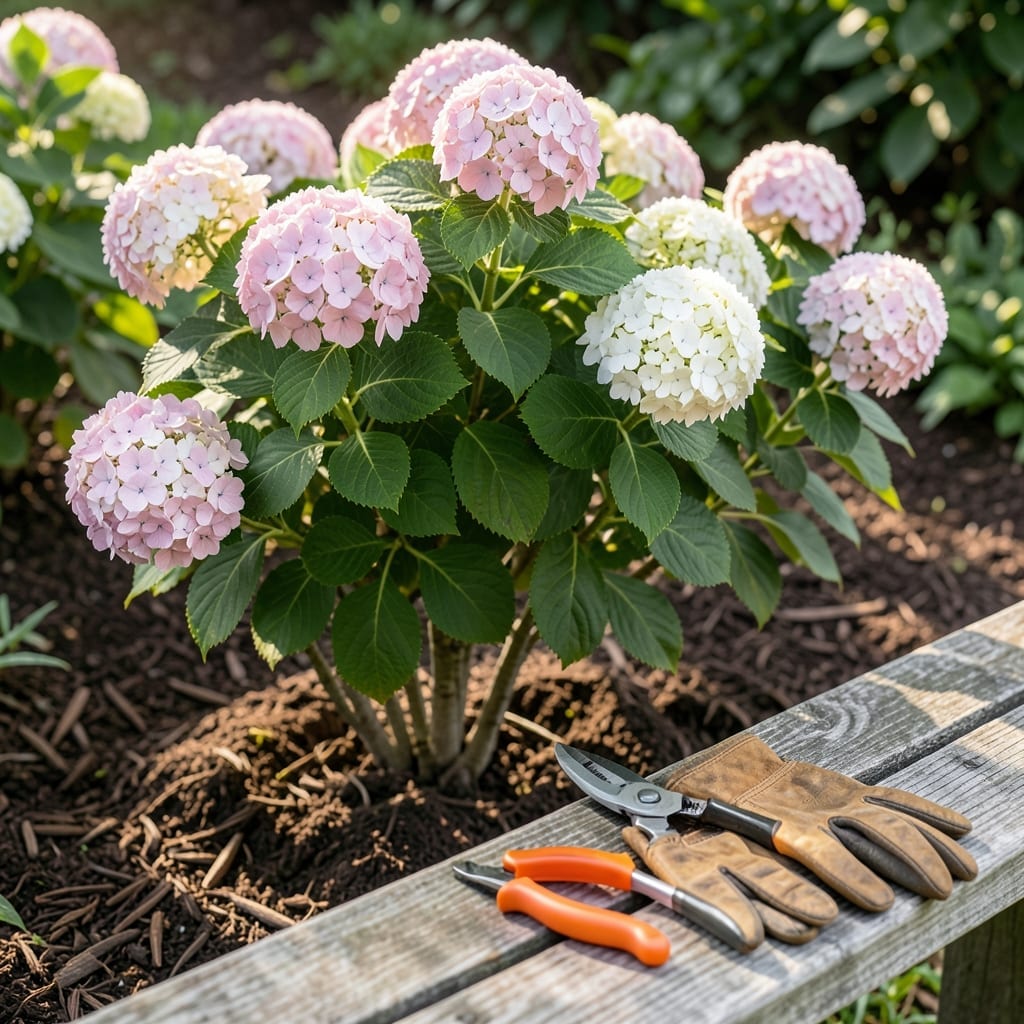
Pruning your 🌸 Hydrangea at the wrong time can mean a summer without those gorgeous blooms you love. I learned this the hard way after cutting mine back too late one year.
What I discovered is that timing depends entirely on your variety. Some Hydrangeas bloom on old wood, while others flower on new growth, and getting this right is the key to abundant flowers.
I’ll walk you through how to identify which type you have and when to reach for those pruners. It’s easier than you might think once you know the simple rules.
Find out exactly when to prune your specific Hydrangea so you never miss a blooming season again.
Timing your hydrangea pruning correctly ensures a season filled with vibrant blooms. The key is understanding whether your hydrangea variety flowers on old wood or new wood. Prune at the wrong time, and you might snip off next year’s flowers entirely.
I’ve seen many gardeners accidentally remove flower buds by pruning in early spring. This happens most often with bigleaf hydrangeas and oakleaf hydrangeas, which bloom on old wood from the previous year.
| Variety | Wood Type | Pruning Time |
|---|---|---|
| Bigleaf | Old Wood | After flowering |
| Oakleaf | Old Wood | After flowering |
| Panicle | New Wood | Late winter |
| Smooth | New Wood | Late winter |
| Climbing | Old Wood | After flowering |
Bigleaf hydrangeas (Hydrangea macrophylla) and oakleaf hydrangeas (Hydrangea quercifolia) set their flower buds in late summer on the previous year’s growth. Prune these right after they finish blooming, typically in mid to late summer.
If you wait until spring to prune these varieties, you’ll likely cut off the developing buds. I always mark my calendar right after the last bloom fades to ensure I don’t forget. This timing allows the plant to produce new growth and set buds for the next season.
Panicle hydrangeas (Hydrangea paniculata) and smooth hydrangeas (Hydrangea arborescens) are more forgiving. These varieties bloom on new wood, meaning they produce flowers on the current year’s growth. You can prune them in late winter or early spring without risking the blooms.
For panicle hydrangeas, I recommend pruning in February or March, just before new growth starts. This gives the plant plenty of time to develop strong stems and abundant flowers. Smooth hydrangeas can be cut back similarly, and they’ll reward you with large, showy blooms.
Climbing hydrangeas (Hydrangea petiolaris) are a bit different. They also bloom on old wood, so the same rule applies: prune immediately after flowering. This variety can grow quite large, so I often thin out older stems to keep it manageable and encourage better air circulation.
If you’re unsure about your hydrangea type, observe when it blooms. Early summer bloomers are likely old wood varieties, while late summer bloomers are often new wood. When in doubt, prune lightly and immediately after flowering to stay safe.
Remember, the goal is to enhance blooming, not hinder it. A little research and observation go a long way in keeping your hydrangeas thriving and flower-filled year after year ✂️
I always start by identifying whether my hydrangea blooms on old wood or new wood. This simple check prevents me from accidentally cutting off next season’s flower buds. For old wood varieties, I look for plump buds along last year’s stems.
For new wood bloomers like panicle hydrangeas, I prune in late winter before new growth starts. This timing ensures I don’t remove potential flowering stems that will emerge in spring.
When pruning bigleaf hydrangeas, I wait until right after blooming in summer. This gives the plant time to develop new flower buds for next year. I use sharp bypass pruners for clean cuts that heal quickly.
For oakleaf hydrangeas, I follow the same post-bloom pruning rule. These varieties are more forgiving, but timing still matters for optimal flower production. I always check for disease signs while pruning.
I’ve found that smooth hydrangeas respond well to hard pruning in late winter. Since they bloom on new wood, I can cut them back to 12-18 inches without losing flowers. This also helps control their size.
Remember, climbing hydrangeas need minimal pruning. I only remove damaged stems or those growing in unwanted directions. They bloom on old wood, so I’m extra cautious with my cuts ✂️