
Beautiful Plants For Your Interior
Beautiful Plants For Your Interior
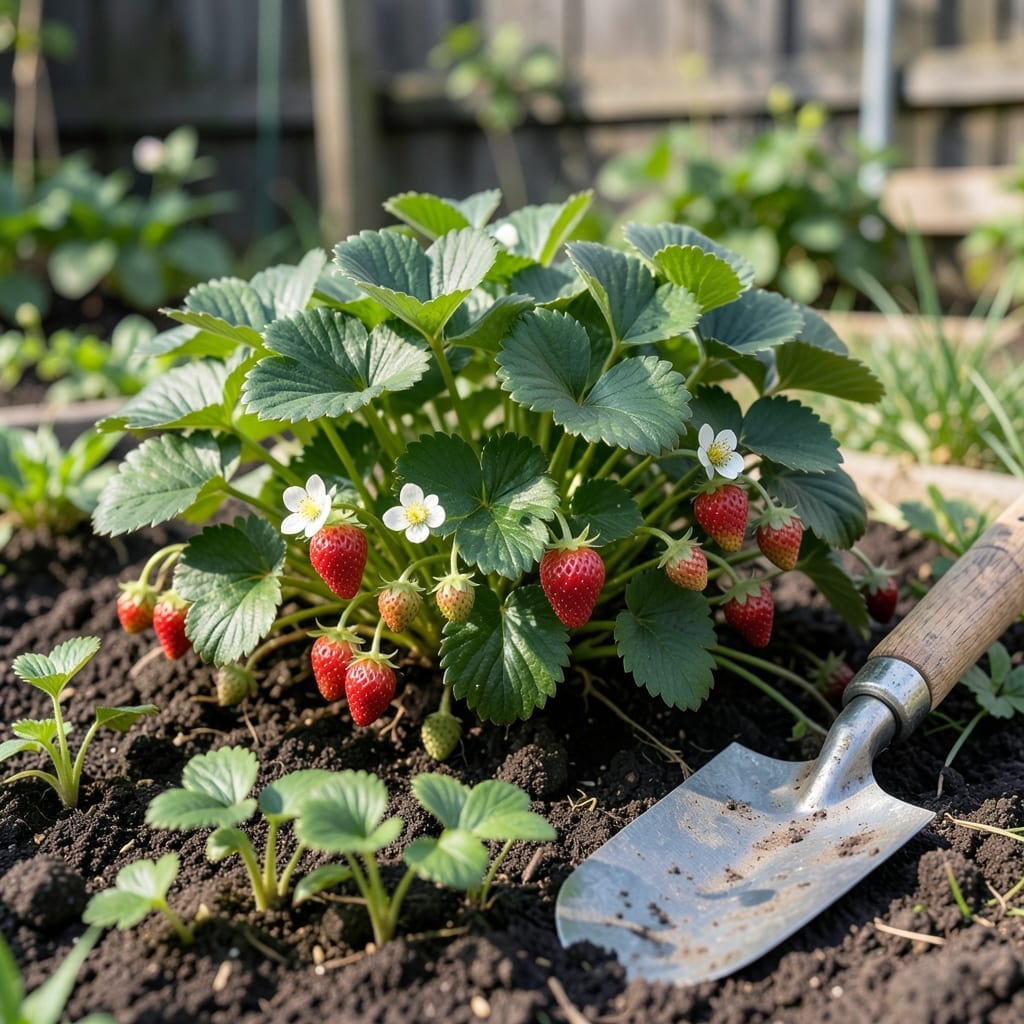
Timing is everything when growing 🍓 Strawberry plants in Massachusetts. One misstep in scheduling could expose your crop to damaging frost or summer heat waves.
Our climate in zones 5b-7a creates a narrow window where conditions are just right. Too early, and late frosts will wipe out your plants. Too late, and the summer heat stress will stunt their growth.
I’ve learned through experience that proper timing makes all the difference. The spring planting window is April – May, after the last frost when soil reaches 60°F.
Let me walk you through the precise schedule that ensures thriving Strawberry plants and a bountiful harvest come June and July.
In Massachusetts, timing your strawberry planting is crucial for a bumper crop. The spring window typically runs from mid-April to early May, right after the last frost when soil temps hit 60°F. This gives plants time to establish before summer heat.
For fall planting, aim for late August to early September. This allows roots to develop before winter dormancy, leading to earlier harvests next year. June-bearing varieties do best with spring planting, while everbearing and day-neutral types can handle fall planting too.
| Strawberry Type | Best Planting Time | Key Notes |
|---|---|---|
| June-bearing | Mid-April to early May | Largest harvest in June |
| Everbearing | April or August | Produces 2-3 harvests per year |
| Day-neutral | April to early September | Continuous fruiting until frost |
I always check the USDA zone for my specific area in MA. Zones 5b-7a cover the state, with coastal areas being warmer. In Zone 5b (western MA), I wait until May 1st for spring planting to avoid late frosts.
Soil temperature is just as important as air temperature. I use a soil thermometer to confirm it’s consistently 60°F or warmer at a 4-inch depth before planting. Cold soil can stunt growth and delay fruiting.
For fall planting, I
The coastal regions of Massachusetts often have a slightly longer growing season. Here, I can push spring planting to early April and fall planting to late September. But I always watch the weather forecasts closely.
I’ve found that day-neutral varieties like ‘Albion’ or ‘Seascape’ are most forgiving for MA gardeners. They produce fruit throughout the season and can handle both spring and fall planting windows well.
Remember that mulching is essential in MA’s climate. I apply 2-3 inches of straw around plants in late fall to protect from freeze-thaw cycles. This also helps retain moisture during our sometimes dry summers.
Lastly, I always water deeply after planting, regardless of the season. The goal is to keep soil consistently moist but not waterlogged, especially during the first few weeks as plants establish.
☀️Preparing your Massachusetts soil properly is the foundation for thriving strawberry plants. I always start by testing the pH level, aiming for a slightly acidic range of 5.5 to 6.5. This is especially important in New England where soil tends to be more acidic.
Our clay-heavy soil in many parts of MA can be a challenge. I improve drainage by mixing in compost and aged manure at a ratio of about 3 inches worked into the top 12 inches of soil. This creates the loose, fertile bed strawberries love.
For areas with poor drainage, I recommend building raised beds. These warm up faster in spring and prevent waterlogging. I make mine about 8 inches high and 3 feet wide for easy access to plants.
I’ve found that adding pine needle mulch helps maintain acidity while suppressing weeds. In coastal areas, I sometimes use seaweed as a natural fertilizer, but I rinse it well first to remove excess salt.
Remember that organic matter is key. I mix in 1 part compost to 2 parts native soil for the perfect balance. This provides nutrients while maintaining good structure for root development.
Finally, I always water the prepared bed a day before planting. This helps settle the soil and ensures good contact between roots and earth when I add my strawberry plants.
🌱