
Beautiful Plants For Your Interior
Beautiful Plants For Your Interior
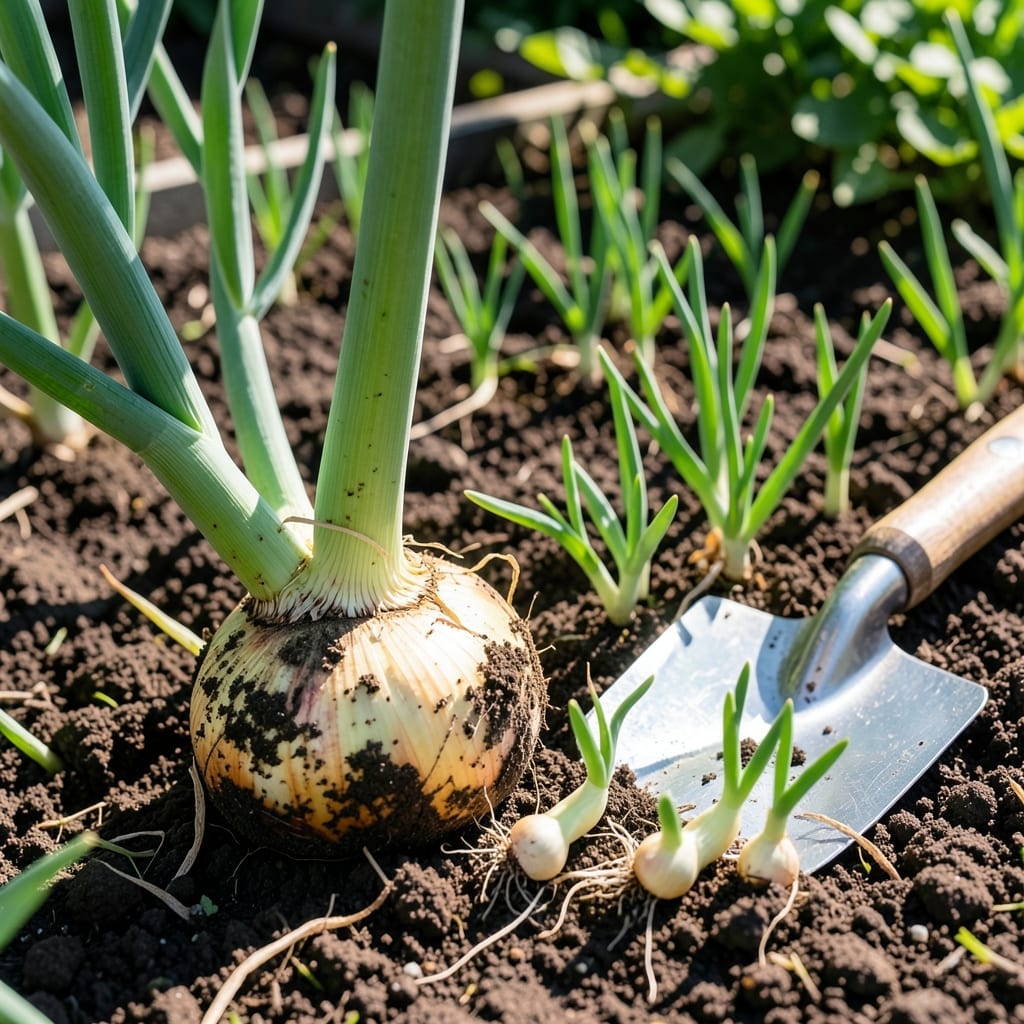
Timing is everything when it comes to growing bigger bulbs of 🧅 Onion in Victoria, Australia. Plant too early or too late, and you risk stunted growth or poor yields.
Victoria’s unique climate in zones 9a-10a demands precision, but the reward is worth it. I’ve tested the seasonal windows, and the results speak for themselves.
Whether you’re a beginner or a seasoned gardener, knowing the most effective planting times can make all the difference. Let me guide you through the exact windows that work best.
Discover how to align your planting with Victoria’s conditions for onions that thrive. The secret lies in working with the seasons, not against them.
Victoria’s temperate climate offers multiple windows for planting onions. I’ve found that autumn and winter are ideal for most varieties, as they allow bulbs to mature before summer heat arrives. This timing helps avoid bolting, which can ruin your crop. 🌱
For short-day onions, aim to plant in February to April. These varieties thrive in Victoria’s milder autumn temperatures. Long-day onions prefer March to May planting, benefiting from increasing daylight as they grow. 🌿
| Season | Variety | Planting Months | Harvest Time |
| Autumn | Short-day | Feb – Apr | Aug – Oct |
| Winter | Long-day | Mar – May | Sep – Nov |
| Spring | Intermediate | Aug – Sep | Dec – Jan |
In Melbourne’s urban areas, microclimates can affect planting times. I recommend starting onion sets in late autumn for a winter harvest. This approach works well in cooler suburbs where frost is rare but possible. ☀️
For rural Victoria, where temperatures can drop lower, March planting is often safer. This gives plants time to establish before winter chill sets in. Remember, onions need well-drained soil to prevent rot in wetter regions. 💧
I’ve noticed that daylight length significantly impacts bulb formation. Short-day varieties require 10-12 hours of daylight to form bulbs, making them perfect for Victoria’s autumn and winter months. 🌡️
Long-day onions, needing 14-16 hours of daylight, are better suited for spring planting in Victoria. They’ll produce larger bulbs when days are longer, typically from September to November. ✂️
If you’re unsure which variety to choose, intermediate-day onions offer flexibility. These can be planted in both autumn and spring, adapting well to Victoria’s varied conditions. They’re my go-to for beginners. 🌱
For the best results, I always test soil temperature before planting. Onions prefer 10-20°C (50-68°F) soil temperatures. In Victoria, this typically means waiting until late winter for spring planting. 🌿
Finally, consider succession planting for a continuous supply. I plant a new batch every 4-6 weeks from February to September. This ensures I have fresh onions year-round, no matter Victoria’s unpredictable weather. 🪴
Victoria’s diverse soil types demand careful preparation for onions. I always start by testing soil pH, aiming for 6.0-7.0 for optimal growth. This prevents nutrient lockout and ensures strong bulb development. 🌱
For clay-heavy soils common in Melbourne, I mix in compost and sand to improve drainage. Onions hate waterlogged roots, so this step is non-negotiable in Victoria’s wetter regions. 🌿
When planting onion sets, I space them 4-6 inches apart in rows 12 inches apart. This gives each plant room to develop full-sized bulbs without competition. ☀️
For planting depth, I place sets 1 inch deep with the tip just visible. Too deep and they’ll rot; too shallow and they’ll Dry out in Victoria’s summer heat. 💧
I always mulch between rows to retain moisture and suppress weeds. In Victoria, straw or sugarcane mulch works best, breaking down slowly to feed the soil. ✂️
For container growing, I use deep pots (at least 12 inches) with well-draining mix. This is perfect for balcony gardeners in Melbourne’s urban areas. 🪴