
Beautiful Plants For Your Interior
Beautiful Plants For Your Interior
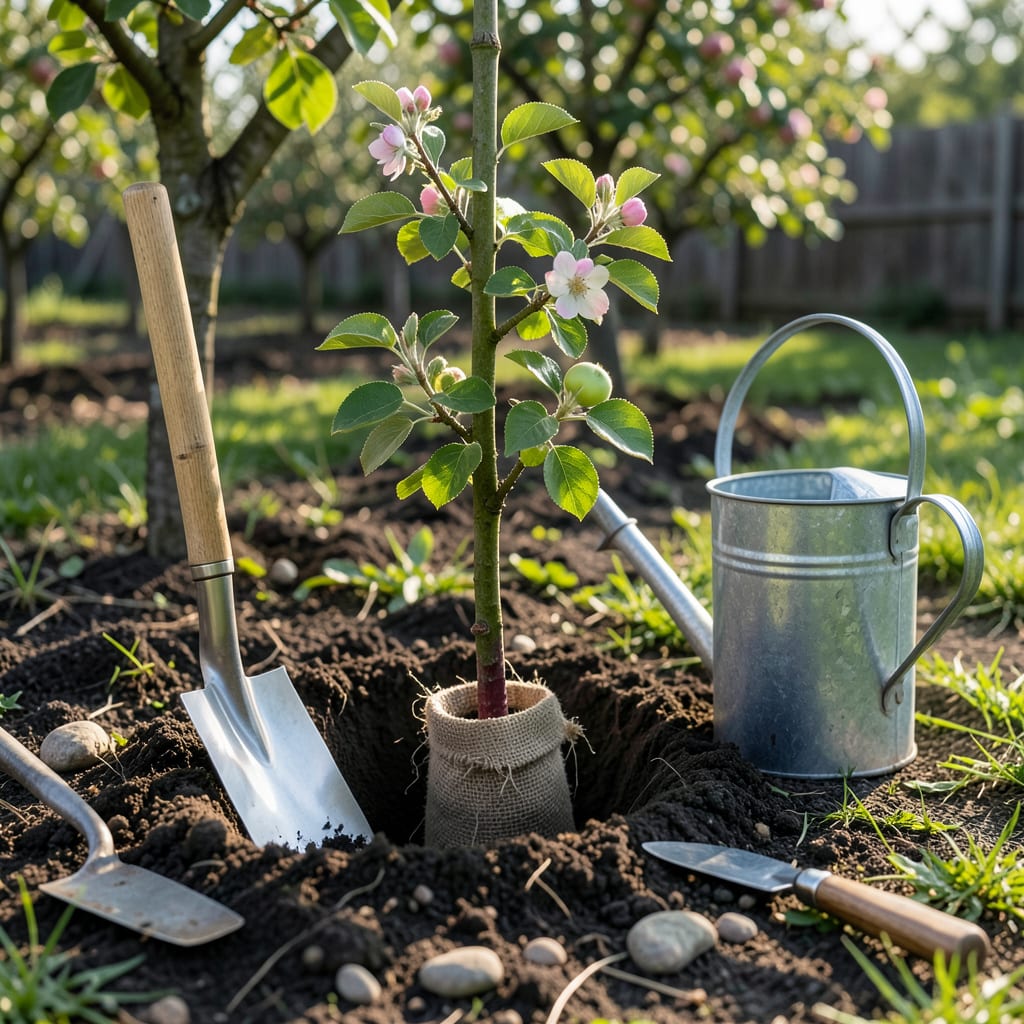
Timing is everything when growing 🍎 Apple trees in Texas—plant too early, and frost might wipe out your young saplings; wait too long, and the brutal summer heat could stress them beyond recovery. I’ve seen both scenarios play out, and let me tell you, the difference is night and day.
But here’s the good news: with the right schedule tailored to your Texas zone, you can set your trees up for decades of success. We’ll break down the exact windows for North, Central, and South Texas, so you can plant with confidence—and avoid the costly mistakes most beginners make.
If you’re dreaming of homegrown Texas apples, timing is everything. Our state’s diverse USDA zones (6a-9a) mean planting windows vary dramatically from the Panhandle to the Gulf Coast. I’ve found that fall planting (October-November) works best for most regions, giving roots time to establish before summer heat arrives.
For North Texas (Zones 7-8), aim for late fall after the first frost but before soil freezes. In South Texas (Zone 9), you can push planting into early winter. The key is avoiding both summer heat stress and spring late frosts that can damage young trees.
| USDA Zone | Texas Region | Best Planting Window | Soil Temp Range |
|---|---|---|---|
| 6a-6b | Panhandle | Oct 15 – Nov 15 | 50-60°F |
| 7a-7b | North Texas | Nov 1 – Dec 1 | 55-65°F |
| 8a-8b | Central Texas | Nov 15 – Dec 15 | 60-70°F |
| 9a | South Texas | Dec 1 – Jan 15 | 65-75°F |
💡 Pro Tip: Use a soil thermometer to verify temperatures at 6″ depth before planting.
I always recommend checking your local frost dates – they’re more reliable than calendar dates. In Austin (Zone 8b), our average first frost is November 28, so I plant my trees 4-6 weeks before that. This gives roots enough time to establish but avoids triggering new top growth that could be damaged by frost.
For container-grown trees, you have slightly more flexibility. I’ve successfully planted as late as early January in Central Texas by using mulch blankets to protect roots. Bare-root trees are different – they need to go in during complete dormancy, typically December through February depending on your zone.
The soil preparation window is just as important as planting time. I start amending my planting sites 2-3 months ahead with compost and expanded shale. This improves drainage – critical in our clay-heavy Texas soils – and gives beneficial microbes time to establish before the tree goes in.
Remember that chill hour requirements affect timing too. Low-chill varieties like ‘Anna’ can handle later planting in warmer zones, while traditional varieties need earlier planting to meet their chill needs. I use the Texas A&M AgriLife Extension’s chill hour maps to match varieties to my exact location.
Watering after planting is where many Texas gardeners go wrong. I set up drip irrigation on a timer for new trees – 5 gallons weekly for the first month, then tapering to 2-3 gallons weekly. The goal is deep root encouragement without waterlogging, especially important in our heavy clay soils.
If you’re in West Texas with its extreme temperature swings, consider planting in early spring (February) instead. The milder spring temperatures there reduce transplant shock compared to winter planting. Just be prepared to provide wind protection and extra water as winds dry out soil quickly.
For all regions, avoid planting during summer months – the heat stress is simply too much for young trees. I’ve seen even established trees struggle with Texas summers, so giving new plantings a cool-season start is non-negotiable for success.
Planting apple trees in Texas comes with unique challenges that can trip up even experienced gardeners. I’ve seen too many well-intentioned gardeners make costly mistakes that stunt growth or even kill young trees. The good news? These pitfalls are completely avoidable with the right knowledge.
One of the biggest errors I encounter is ignoring chill hour requirements. Texas gardeners often choose varieties based on flavor alone, not realizing that traditional apples like ‘Granny Smith’ need 800+ chill hours – something most of Texas simply can’t provide. This leads to poor fruiting or no fruit at all.
💡 Quick Fix: Test your soil’s drainage by digging a 12″ hole, filling with water, and timing how long it takes to drain. Ideal: 1″ per hour.
The second critical mistake is planting at the wrong depth. I see gardeners bury the graft union (that visible bump near the base) thinking it protects the tree. This actually causes root suffocation and invites disease. The graft union should always sit 2-3 inches above soil level to allow proper air circulation.
Watering errors rank as the third most common issue. Many Texas gardeners either overwater (leading to root rot in our clay soils) or underwater (causing drought stress). My rule: 5 gallons weekly for the first month, then 2-3 gallons weekly thereafter, delivered via drip irrigation to encourage deep root growth.
Another often-overlooked factor is wind exposure, especially in West Texas. Young apple trees can be permanently damaged by our strong winds. I always recommend installing windbreaks or planting on the east side of structures. Even a simple burlap screen can reduce wind stress by 50% during those critical first two years.
Finally, many gardeners forget about pollination requirements. Most apple varieties need a different variety nearby for cross-pollination. In my Central Texas orchard, I plant ‘Anna’ and ‘Dorsett Golden’ together – they bloom at the same time and pollinate each other beautifully. Without proper pollinators, you might get lovely blossoms but zero fruit.
Remember that container size matters for bare-root trees. I see people trying to plant bare-root trees in holes that are too small. The planting hole should be twice as wide as the root spread and just deep enough to accommodate the roots without bending them. This gives the roots room to establish properly in our compacted Texas soils.
Not all apple trees thrive in Texas’ unique climate, but I’ve found several low-chill varieties that produce beautifully. The secret is matching varieties to your specific zone and planting them during their ideal window. In my Central Texas orchard, I focus on varieties needing 300 or fewer chill hours.
For North Texas (Zones 7-8), I recommend ‘Mollie’s Delicious’ and ‘Ein Shemer’—both handle our occasional hard freezes while still producing sweet fruit. These do best when planted in late October through November, giving them time to establish before winter.
| Variety | Chill Hours | Best Zones | Planting Window |
|---|---|---|---|
| Anna | 200-300 | 7-9 | Nov 1 – Jan 15 |
| Dorsett Golden | 250-300 | 7-9 | Oct 15 – Dec 30 |
| Fuji | 400-600 | 6-8 | Oct 1 – Nov 15 |
| Ein Shemer | 250-350 | 8-9 | Nov 15 – Jan 10 |
💡 Pro Tip: Pair early-blooming ‘Anna’ with mid-season ‘Dorsett Golden’ for extended harvests.
In South Texas (Zone 9), I’ve had great success with ‘Ein Shemer’ and ‘Anna’—both handle our mild winters and hot summers. These varieties need planting in December through early January when soil temps are cooler but not frozen. The later planting helps avoid triggering new growth during unexpected warm spells.
For drought-prone areas, consider ‘Black Diamond’—it’s one of the most drought-tolerant varieties I’ve grown. I plant these in late November and use deep mulching (4-6 inches of wood chips) to conserve moisture. This variety also resists fire blight better than most, which is crucial in our humid summers.
Remember that pollination partners matter. I always plant at least two different varieties that bloom simultaneously. In my orchard, ‘Anna’ and ‘Dorsett Golden’ work perfectly together—they bloom within days of each other and cross-pollinate reliably. Without proper pollination, you’ll get beautiful blossoms but no fruit.
If you’re in East Texas with higher humidity, focus on disease-resistant varieties like ‘Mollie’s Delicious’. I plant these in early November to avoid spring’s wet conditions that promote fungal diseases. Proper spacing (15-20 feet apart) is also crucial for air circulation in our humid climate.
For container growing, I recommend ‘Columnar’ varieties like ‘Urban Apple’. These can be planted year-round in containers but do best when transplanted to their permanent pots in fall or early winter. Just be sure to move containers to a sheltered location during extreme cold snaps.
For Texas apple trees, aim for soil temperatures between 50-70°F at 6″ depth. Use a soil thermometer to check—this is more reliable than calendar dates. In North Texas, I target 55-65°F, while South Texas can handle slightly warmer soils.
Yes, but only in West Texas where spring temperatures are milder. For most regions, fall planting is ideal as it gives roots time to establish before summer heat. If spring planting, finish by early February and provide extra water during establishment.
Install windbreaks or plant on the east side of structures. Even simple burlap screens can reduce wind stress by 50%. In my orchard, I use 4-foot tall mesh barriers for the first two years—this prevents permanent damage to young trunks.
Choosing varieties with high chill hour requirements! Many pick traditional apples like ‘Granny Smith’ needing 800+ chill hours, but most Texas zones only provide 200-400. Stick with low-chill varieties like ‘Anna’ or ‘Dorsett Golden’ for reliable fruit production.
Use drip irrigation for best results: 5 gallons weekly for the first month, then 2-3 gallons weekly thereafter. The goal is deep root growth without waterlogging—critical in our clay-heavy soils. Morning watering before 10 AM reduces evaporation loss.
