
Beautiful Plants For Your Interior
Beautiful Plants For Your Interior
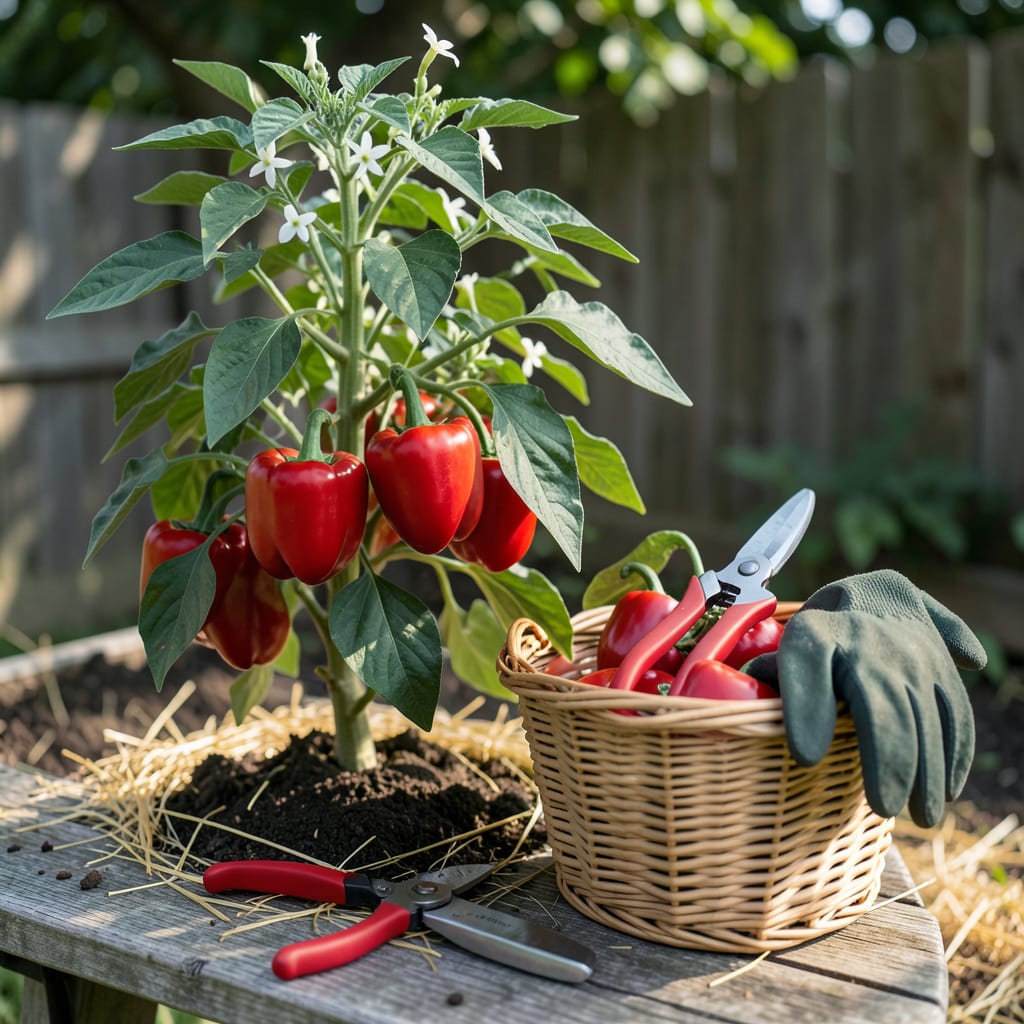
There’s nothing more disappointing than cutting into a homegrown 🫑 Red Bell Pepper only to find it lacking that signature sweetness. I’ve been there—watching my plants for weeks, wondering if today’s the day or if I should wait just a little longer.
The difference between a perfectly ripe pepper and one that’s just okay comes down to three key signs most gardeners miss. Let me show you exactly what to look for—so you’ll never second-guess your harvest timing again. Your taste buds (and your summer recipes) will thank you.


Timing is everything when harvesting red bell peppers. Picking too early means missing out on that signature sweetness, while waiting too long risks overripe fruit. I’ve found that color depth and firmness are the two most reliable indicators—but there’s more to it.
Most red bell peppers take 70–90 days from transplanting to reach full maturity. However, if you started from seed, add another 20–30 days. Climate plays a role too—hotter regions speed up ripening, while cooler areas may slow it down. 🌡️
| Ripeness Sign | Green Pepper | Red Pepper (Ready!) |
|---|---|---|
| Color | Dull green or pale | Deep, glossy red (no green patches) |
| Size | Under 3 inches | 3–4 inches long, plump shape |
| Texture | Soft or wrinkled skin | Firm to touch, smooth surface |
| Stem | Hard to bend | Snaps cleanly when gently bent |
| Days to Maturity | 60–70 days | 75–90 days from transplant |
First, check the color transition. A fully ripe red bell pepper will be uniformly red, with no green streaks. If you see hints of green, give it 2–3 more days in warm weather or 5–7 days if it’s cooler. Pro tip: Use sunlight to your advantage—hold the pepper up to the light to spot hidden green areas.
Next, test the firmness. Gently squeeze the pepper—it should feel solid but slightly springy, like a firm tomato. If it’s rock-hard, it’s not quite ready. If it’s mushy, you’ve waited too long. The skin should also have a glossy sheen, not a dull finish.
Size matters too. Most red bell peppers reach 3–4 inches in length and 2–3 inches in width when mature. Smaller peppers may still be green inside, while oversized ones can turn bitter. I like to compare them to the size of my palm—if it fits snugly, it’s likely ready.
The stem test is my secret weapon. Bend the stem slightly near the fruit—if it snaps easily, the pepper is ripe. If it resists or bends without breaking, leave it for another 3–5 days. This trick works better than pulling, which can damage the plant.
Don’t forget to consider the weather. If a heatwave is forecasted (temps above 90°F), peppers ripen faster and may need picking sooner. Conversely, cool spells (below 60°F) slow ripening, so extend your timeline by a week or more. ☀️
If you’re growing multiple varieties, note that some (like ‘California Wonder’) turn red faster than others (such as ‘Big Bertha’). Always refer to your seed packet for variety-specific timelines. When in doubt, pick one test pepper, slice it open, and check the seeds—white seeds mean it’s not ready; tan or light brown seeds signal ripeness.
Finally, trust your instincts. If most peppers on the plant are red but one lingers green, it might be a late bloomer. I’ve had success leaving stragglers for an extra week, but if frost threatens, harvest all peppers—even green ones can ripen indoors on a sunny windowsill. 🪴
Harvesting red bell peppers the right way ensures you get the sweetest fruit while keeping your plant healthy for future yields. I’ve learned that gentle handling and the right tools make all the difference—no torn stems or bruised fruit!
First, gather your supplies: clean pruning shears or sharp scissors, a small basket, and gloves if you’re sensitive to pepper plants. Avoid pulling peppers by hand—this can damage branches or even uproot shallow roots. Morning is the best time to harvest when plants are hydrated. 💧
Start by locating the main stem where the pepper connects. Position your shears ½ inch above the fruit and make a clean, angled cut. This prevents water from pooling on the stem. If using your hands, grasp the pepper gently and snip the stem—never yank!
For stubborn peppers, support the branch with your free hand to avoid snapping it. I like to harvest from the bottom up, working my way to the top of the plant. This prevents accidentally knocking off unripe peppers higher up. Check each fruit’s stem condition—if it’s dry or cracked, the pepper is overdue for picking.
After harvesting, inspect the plant for new flower buds or tiny peppers forming. These are your next harvest! Remove any yellowing leaves to improve airflow, but avoid heavy pruning—pepper plants need foliage for photosynthesis. A light fish emulsion spray (1 tbsp per gallon) can boost post-harvest growth.
Store your peppers in a cool, dry place (50–55°F is ideal) or refrigerate in a paper bag for up to 10 days. For longer storage, freeze whole peppers after removing stems. To encourage more production, water deeply after harvesting and add a balanced fertilizer (5-10-10) within a week. ✅
Harvesting red bell peppers at the wrong time doesn’t just affect flavor—it can impact your entire plant’s productivity. I’ve seen gardeners lose weeks of growth by picking too soon or letting peppers linger past their prime. The sweet spot is narrower than you might think.
Picking underripe peppers (still green or pale red) means missing out on up to 50% more vitamin C and that signature sweetness. These peppers often taste bitter or grassy because their sugars haven’t fully developed. They’ll also store poorly, turning soft within 3–5 days instead of the usual 10–14 days. 🌱
On the flip side, overripe peppers develop a mushy texture and may start wrinkling or softening at the stem. Their flavor becomes less vibrant, and they lose crispness quickly. I once left peppers on the plant 10 days past prime—they turned mealy and attracted fruit flies within 48 hours of picking.
Here’s how to salvage mistimed peppers: Underripe green peppers can ripen indoors if placed in a paper bag with a banana (the ethylene gas speeds ripening). Overripe peppers? Use them immediately—they’re perfect for roasting or freezing to preserve flavor. Never compost soft peppers; they’re great for homemade pepper flakes if dehydrated quickly.
Your plant reacts to harvest timing too. Picking too early forces the plant to redirect energy to ripening remaining fruit, potentially stunting new flowers. Wait too long, and the plant may stop producing altogether, thinking its job is done. I aim to harvest every 3–5 days during peak season to keep production steady. ☀️
Watch for stress signals after harvesting: Yellowing leaves or dropped flowers mean you’ve disrupted the plant’s rhythm. If this happens, give it a balanced fertilizer (5-10-10) and reduce watering for 3 days to help it recover. Remember, a healthy pepper plant can produce 10–15 fruits per season—but only if you time your harvests right!
Most varieties transition from green to red in 10–20 days once they reach full size. Hotter climates speed this up, while cooler temps may extend it. Check daily once peppers hit 3 inches—they ripen quickly at this stage!
Partially red peppers will continue ripening indoors if placed in a paper bag with a banana. However, their flavor won’t be as sweet as vine-ripened ones. For best results, wait until at least 80% of the surface is fully red.
Early morning is ideal—plants are fully hydrated and peppers are crispest. Avoid harvesting during midday heat (above 85°F) as peppers may wilt. Evening works too, but morning-harvested peppers store 2–3 days longer.
Regular harvesting signals the plant to produce more flowers. I remove ripe peppers every 3–5 days during peak season. Just leave a few to mature fully for seed saving if desired. This practice can extend your harvest by 2–3 weeks.
