
Beautiful Plants For Your Interior
Beautiful Plants For Your Interior
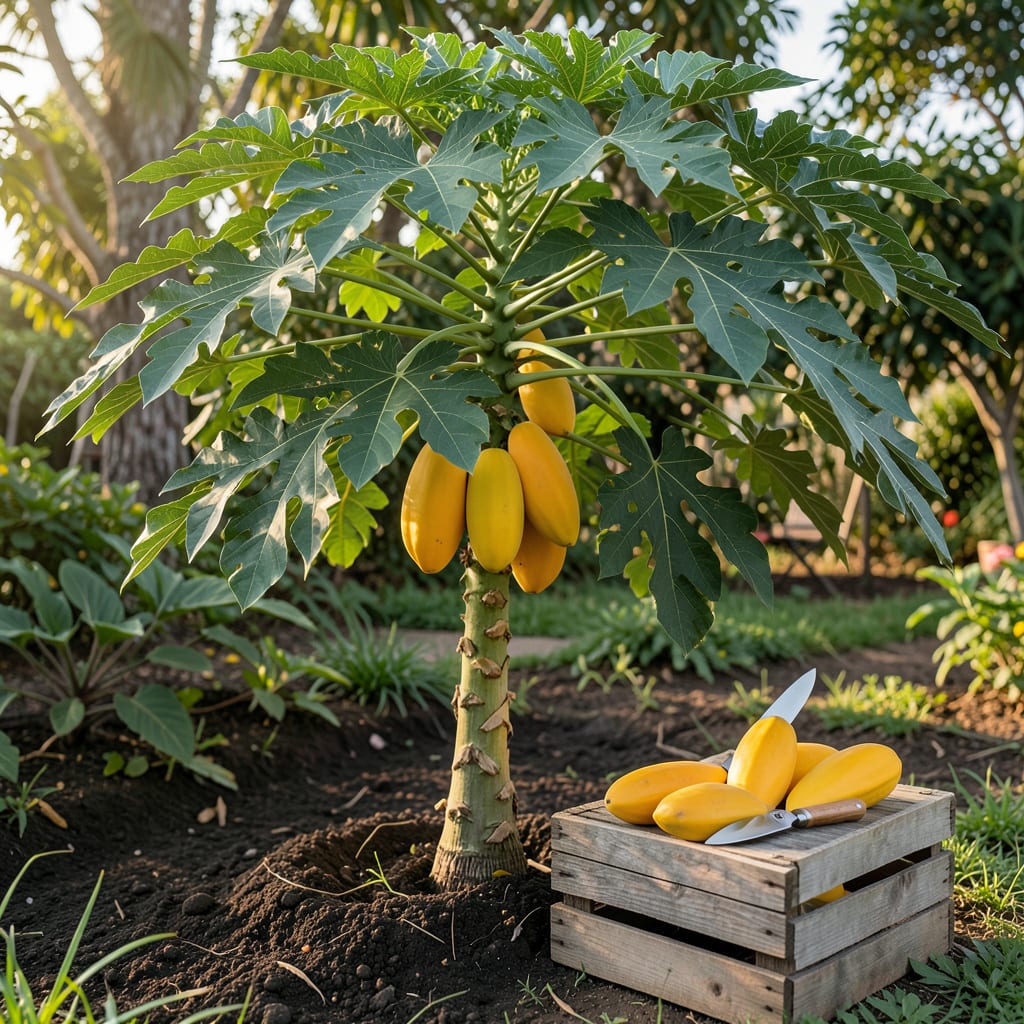
Ever cut into a Papaya 🍈 and found it rock-hard or mushy? Timing your harvest perfectly makes all the difference between a sweet reward and a bitter disappointment.
I’ll show you the exact color and stem clues to look for. With these simple signs, you’ll know precisely when your tropical fruit is at peak ripeness, ready to enjoy.


I’ve found that color change is the first big clue. Your papaya fruit will shift from deep green to a yellow-orange hue as it ripens, especially near the base.
Another telltale sign is the stem area. When it starts to soften slightly and develop a sweet aroma, your papaya is nearly ready for picking.
| Ripeness Sign | What to Look For |
|---|---|
| Color Change | Green to yellow-orange |
| Stem Softening | No longer hard, slight give |
| Sweet Aroma | Noticeable near stem end |
| Fruit Give | Slight softness when pressed |
| Sugar Spots | Yellow speckles near base |
The sugar spots are my favorite indicator. These yellow speckles appear near the fruit base as natural sugars develop, signaling peak sweetness.
I always check for a slight give when gently pressing the fruit skin. It shouldn’t be mushy, just slightly soft like a ripe avocado.
Remember that papaya varieties can differ slightly. Some Hawaiian types turn more yellow, while Mexican varieties may show orange streaks.
The stem end often develops a hollow sound when tapped when ripe. This is because the fruit separates internally from the tree.
I’ve noticed that cool weather can slow ripening, while hot temperatures speed it up. Always check your local climate conditions.
For best results, harvest in the early morning when temperatures are cooler. This helps preserve the fruit’s freshness and flavor.
If you’re growing dwarf papayas, they may ripen faster than standard trees. Watch them closely as they approach maturity.
Finally, trust your senses. The combination of color, aroma, and texture will never steer you wrong with papayas 🌱
I always start with the scratch test. Gently scratch the fruit surface – if it’s green underneath, it needs more time.
Next, I check the stem separation. A ripe papaya will detach easily with a gentle twist, leaving a clean break.
The aroma assessment is crucial. A ripe papaya will have a strong sweet scent near the stem that you can smell before seeing.
For Hawaiian papayas, I look for more yellow than orange. These varieties often ripen faster than others.
With Mexican papayas, the orange streaks are more pronounced. They’re larger and may take a bit longer to mature.
I’ve found that early morning is the best time to test. The cooler temperatures make it easier to detect subtle changes.
I’ve seen many gardeners make the critical error of picking papaya while it’s still fully green. This leads to a starchy taste that’s far from the sweet reward you expect.
On the other end, waiting until the fruit is overripe results in a mushy texture that’s unpleasant to eat. Timing is truly everything with papayas.
⚠️ Warning: Picking too early or too late ruins both texture and flavor. Always check multiple ripeness signs before harvesting.
Another common mistake is ignoring weather impacts. Cool temperatures can significantly slow the ripening process, while hot weather speeds it up unexpectedly.
I always remind gardeners to check their local climate. A sudden heatwave might mean your papayas ripen 2-3 days earlier than usual.
Don’t forget that fruit position matters too. Lower hanging papayas often ripen faster due to more direct sunlight exposure.
Finally, resist the urge to harvest all fruit at once. Stagger your picking to enjoy fresh papayas over several weeks rather than all at once 🌱
Look for a yellow-orange hue replacing green near the base. A ripe fruit will also have a sweet aroma at the stem and give slightly when pressed.
No, picking while fully green results in a starchy taste. Wait until you see color change and feel slight softness. Early harvesting ruins flavor and texture.
Hawaiian types often turn more yellow and ripen faster. Mexican varieties show more orange streaks and may take longer to mature.
Hot temperatures speed up ripening, while cool weather slows it. Check your local climate and adjust your timing accordingly.
