
Beautiful Plants For Your Interior
Beautiful Plants For Your Interior
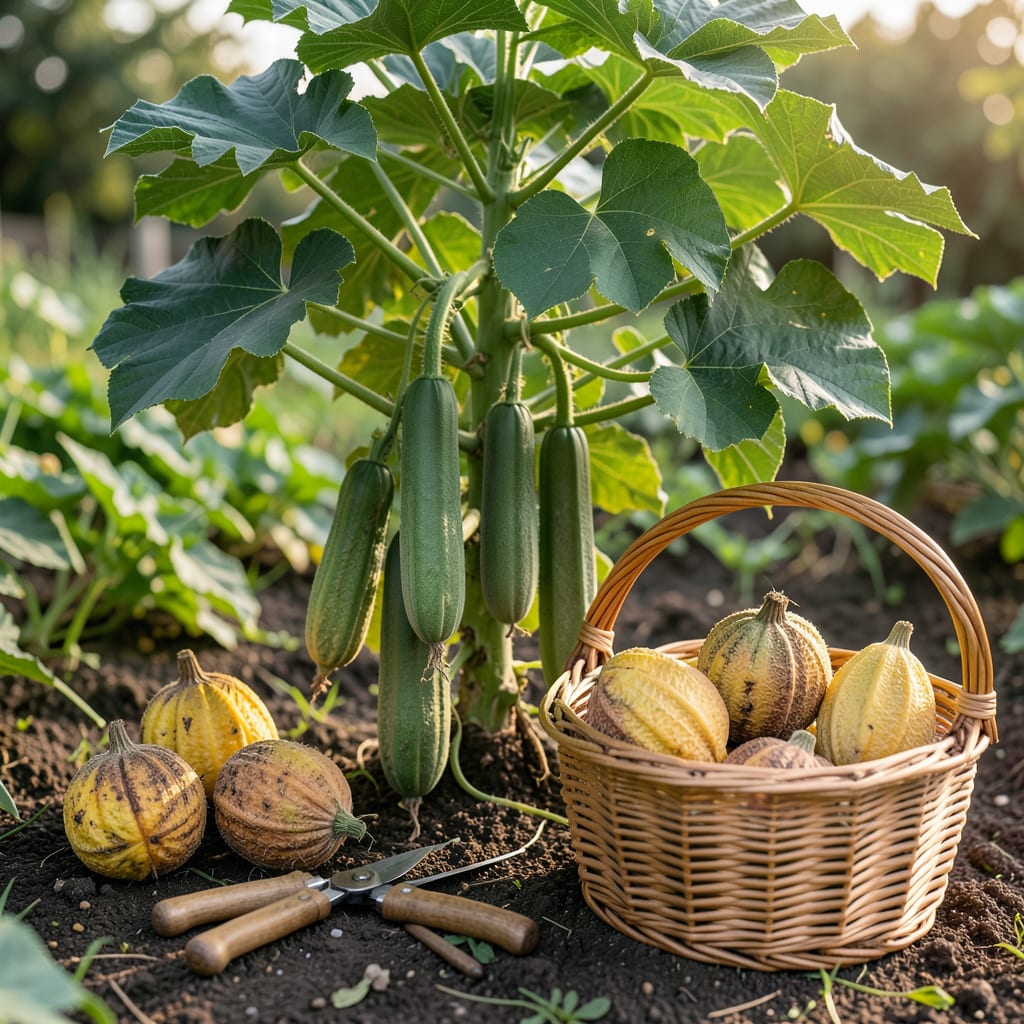
Harvesting Luffa Gourd 🎃 at the right moment transforms it from garden fruit to perfect natural sponge. Timing is everything—too soon and it rots, too late and it loses its fiber integrity.
I’ll show you the exact visual cues and key signs that signal your luffa is ready to pick. These simple checks ensure you get the best quality sponge every time.


Timing your luffa gourd harvest perfectly ensures a high-quality natural sponge. I’ve found that watching for visual changes in the gourd is the most reliable method to determine readiness.
The skin color shift from green to yellow or brown is your first major clue. This transformation signals the gourd is maturing and the fibers inside are developing properly.
| Sign | What to Look For |
|---|---|
| Skin Color | Turns yellow or brown |
| Weight | Lightweight and feels dry |
| Sound | Seeds rattle when shaken |
| Stem Condition | Dry and withered |
Another key indicator is the weight of the gourd. When it’s ready, it will feel surprisingly light and hollow, unlike the heavier, solid feel of an immature luffa.
I always give my luffas a gentle shake test. If you hear the seeds rattling inside, it’s a sure sign the fibers have developed enough for sponge use.
The stem and vine also provide clues. As the gourd matures, the stem turns brown and begins to dry out, which is nature’s way of telling you it’s almost time.
For the best results, I recommend checking these signs in combination. A yellow luffa with a dry stem that rattles when shaken is almost always ready for harvest.
If you’re growing in warmer climates, your luffas may mature faster. In these cases, start checking for readiness signs about 120 days after planting.
Remember, the goal is a fully mature but not overripe gourd. Overripe luffas can become brittle, making them less ideal for sponge use.
With these signs in mind, you’ll be able to confidently harvest your luffa gourds at the perfect time for the best natural sponges. 🌱
Harvesting your luffa gourds at the wrong time can ruin your sponge plans. I’ve learned the hard way that early picking leads to gourds that won’t dry properly and may rot.
An immature luffa stays green and heavy, with seeds that don’t rattle. These won’t develop the fibrous network needed for a good sponge.
On the other hand, overripe luffas become brittle and brown. The fibers lose their strength, making them crumble when used as sponges.
If you catch it slightly early, you can try drying indoors in a warm, ventilated space. For overripe gourds, the fibers may still work but will be less durable.
I recommend checking daily once your luffas start turning yellow. The window between perfect and overripe can be just a few days in warm weather. ☀️
The ideal harvest time is when the skin is yellow, the stem is dry, and you hear that telltale seed rattle. This ensures the best fiber quality for your sponges.
With practice, you’ll recognize the perfect moment to pick every time. 🌿
Once you’ve harvested your luffa gourds at the perfect time, the next steps turn them into natural sponges. I always start by peeling off the skin, which comes away easily when fully dry.
After peeling, give your luffas a thorough washing to remove any sap or debris. A gentle scrub under running water works best for this step.
For a brighter sponge, you can soak the peeled luffa in a diluted bleach solution for about 10 minutes. This step is optional but gives a cleaner look.
After any bleaching, rinse thoroughly and let the luffas dry completely in a well-ventilated area. This prevents mold and ensures longevity.
Finally, you can cut your luffas into desired sizes. I prefer 6-inch lengths for easy handling, but the choice is yours. 🌿
Check for a yellow or brown skin and a lightweight feel. The seeds should rattle inside when shaken, and the stem will appear dry and withered.
No. Green luffas are immature and won’t dry properly for sponge use. They’ll stay heavy and moist, leading to rot instead of forming the fibrous network you need.
Overripe gourds turn brittle and brown. The fibers lose strength, making them crumble when used as sponges. Aim for the sweet spot between yellow skin and seed rattle.
Typically 120-200 days from planting. In warmer climates, start checking at 120 days. The exact time depends on growing conditions and variety.
