
Beautiful Plants For Your Interior
Beautiful Plants For Your Interior
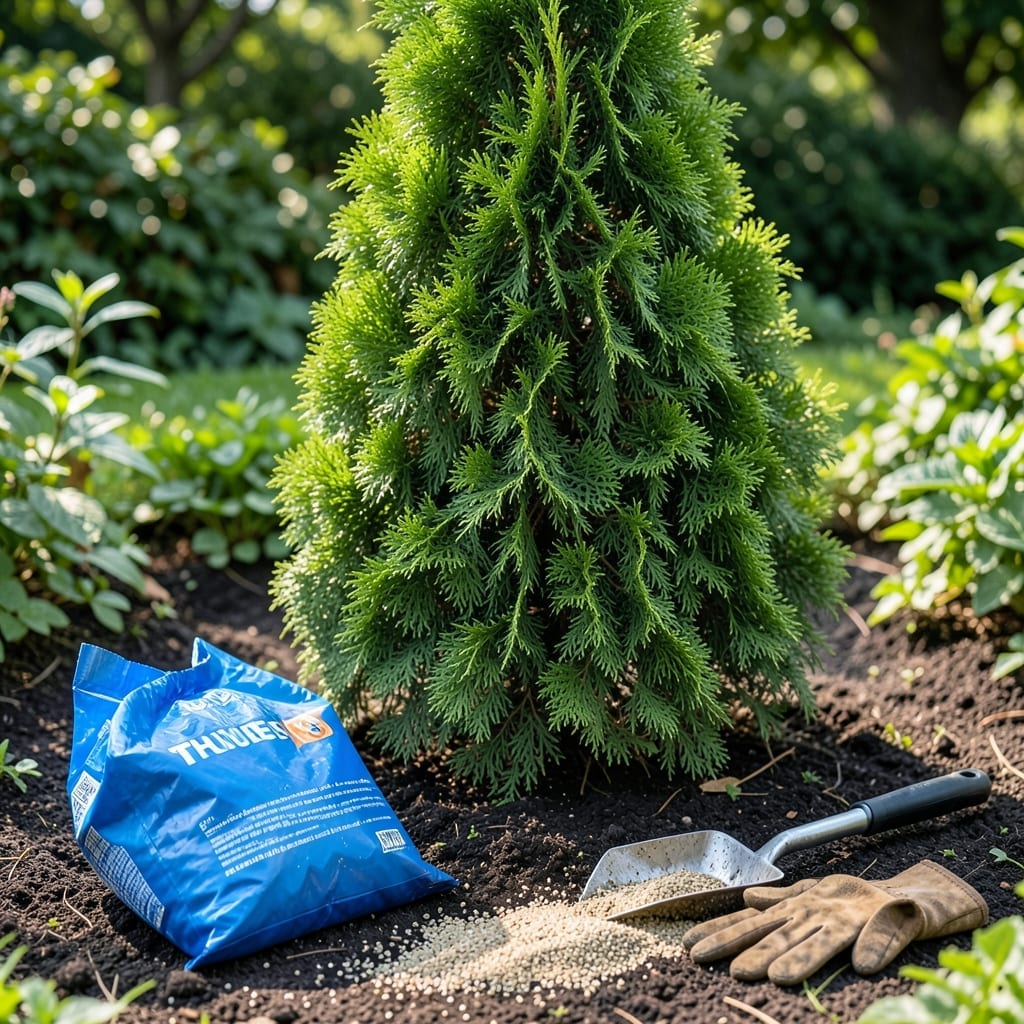
Timing your fertilization can make or break your Thuja Green Giant’s growth. These fast-growing evergreens demand nutrients, but feeding them at the wrong time wastes effort and money.
I learned the hard way that spring and fall are the sweet spots for this 🌳 tree. The secret lies in aligning your feeding schedule with the tree’s natural growth cycles.
Whether you’re establishing a new privacy screen or maintaining mature specimens, the timing is everything. Too early or too late, and you risk stunting growth or causing damage.
Let me show you exactly when to fertilize for lush, vibrant Thuja Green Giant that will be the envy of your neighborhood.
Getting the timing right for fertilizing Thuja Green Giant can transform your hedge from mediocre to magnificent. These fast-growing evergreens have specific seasonal needs that directly impact their health and vigor.
I’ve found that aligning fertilization with the tree’s natural growth cycles yields the best results. Spring and fall emerge as the prime fertilization windows for these giants. 🌳
| Season | Action | Best Months | Frequency | Notes |
|---|---|---|---|---|
| Early Spring | Light Feed | March-April | Every 6-8 weeks | Encourages new growth |
| Summer | Light Feed | May-June | Every 6-8 weeks | Avoid heavy feeding |
| Early Fall | FEED | September-October | Every 6-8 weeks | Prep for winter |
| Winter | Skip | November-February | None | Dormant period |
In early spring, I recommend a light feeding to kickstart new growth as the soil warms. This is when your Thuja is coming out of dormancy and actively seeking nutrients to fuel its spring flush.
The summer months call for a more cautious approach. While you can apply a light feed, avoid heavy fertilization during hot, dry periods. The stress of heat combined with excess nutrients can burn the roots and damage your trees.
Early fall is my favorite time to fertilize Thuja Green Giant. The cooler temperatures and increased moisture create ideal conditions for root uptake. This feeding helps the tree store nutrients for winter and prepares it for strong spring growth.
I cannot stress this enough: skip winter fertilization entirely. During dormancy, your Thuja won’t process nutrients effectively. Worse, it can lead to nutrient runoff that pollutes waterways without benefiting your trees.
For established hedges, I’ve seen great results with every 6-8 weeks during the growing season. New plantings may benefit from a lighter, more frequent schedule to establish strong root systems.
Always water deeply after fertilizing to help distribute nutrients and prevent root burn. I like to do this in the early morning when the soil is cool and the tree can maximize absorption before the heat of the day.
Remember, more isn’t always better with fertilization. Stick to the schedule, and your Thuja Green Giant will reward you with lush, dense growth that creates the perfect privacy screen. 🌿
Choosing the right fertilizer for your Thuja Green Giant is as important as timing. I’ve tested various types and found that balanced fertilizers work best for these evergreens. A 10-10-10 or 12-6-6 NPK ratio provides the perfect mix of nitrogen, phosphorus, and potassium.
For established trees, I recommend slow-release granular fertilizers. They feed your Thuja gradually, reducing the risk of nutrient burn while promoting steady growth. Liquid fertilizers can work too, but they require more frequent application.
Organic
Synthetic
Improves soil health long-term
Quick nutrient availability
Slower release of nutrients
Precise nutrient ratios
Environmentally friendly
Cost-effective for large areas
Before applying any fertilizer, I always test my soil. A simple pH test can reveal if your Thuja needs acid-loving plant food or if the soil is already balanced. These trees prefer slightly acidic to neutral soil (pH 6.0-7.5
If your soil test shows nutrient deficiencies, adjust your fertilizer choice accordingly. For example, yellowing needles might indicate a nitrogen deficiency, while poor root development could signal a lack of phosphorus. Remember, less is often more with fertilization. I’ve seen many gardeners overdo it, leading to burnt roots and stunted growth. Always follow package instructions and water thoroughly after application to help distribute nutrients. For newly planted Thuja Green Giants, I suggest waiting 4-6 weeks before fertilizing. This gives the roots time to establish. After that, a light feeding with a balanced fertilizer will give your new trees the boost they need 🌳