
Beautiful Plants For Your Interior
Beautiful Plants For Your Interior
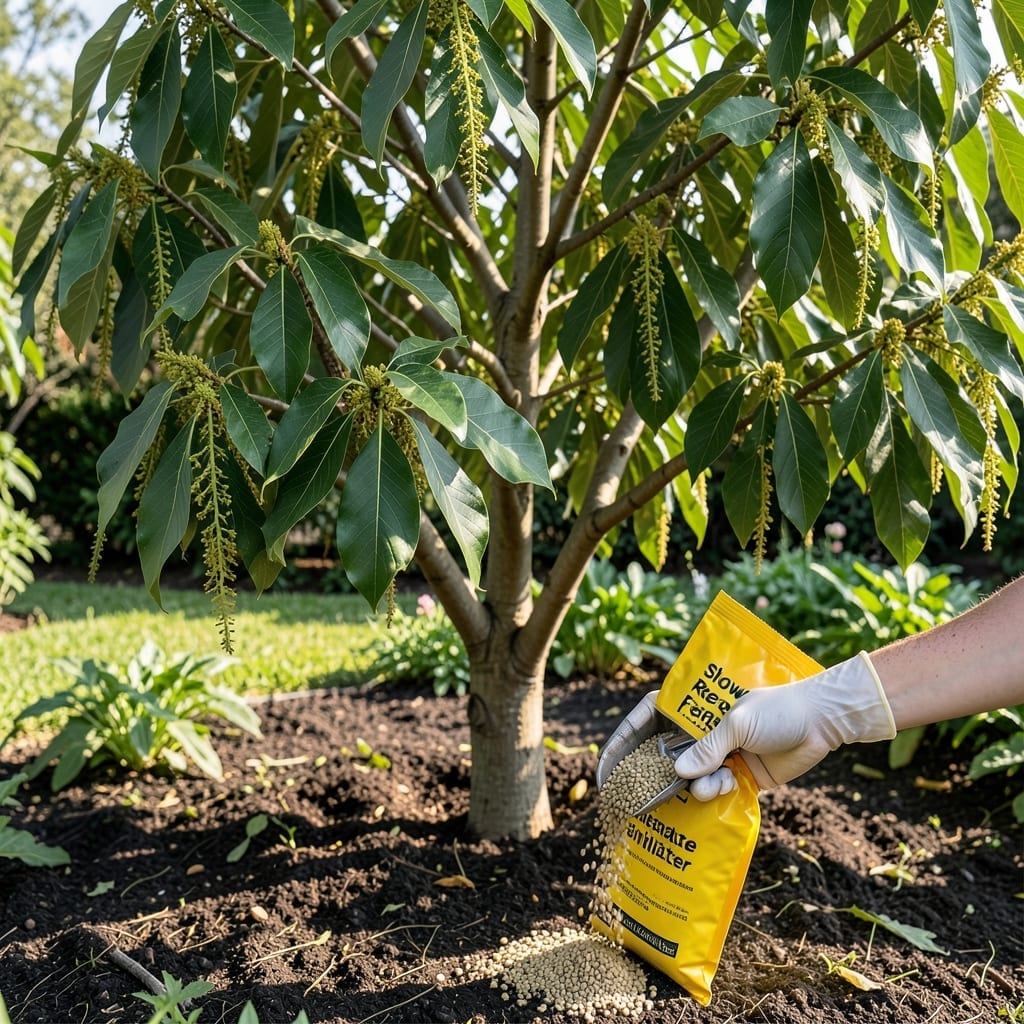
Timing your pecan tree fertilization correctly in Alabama’s unique climate can mean the difference between a bountiful harvest and a disappointing season.
The 🌳 Pecan Tree thrives in zone 8a, but knowing when to feed it is the key to success. Many gardeners miss the optimal windows and wonder why their trees underperform.
I’ve seen firsthand how proper timing transforms tree health and nut production. Whether you’re new to growing pecans or a seasoned pro, this guide will help you align your efforts with Alabama’s seasons.
Discover the exact schedule that works for our region’s soil and weather patterns. Let’s get your trees the nourishment they need, right when they need it.
Alabama’s USDA zones 7-8 create a unique fertilization window for pecan trees. I’ve learned that timing is everything when it comes to feeding these trees for maximum nut production and healthy growth.
The state’s warm climate and distinct seasons mean your fertilization approach must be seasonally precise. Miss the optimal windows, and you risk stunting growth or wasting resources.
| Season | Action | Key Notes |
|---|---|---|
| Early Spring (Feb-Mar) | Feed | Apply 1 lb per inch of trunk diameter before bud break |
| Late Spring (Apr) | Light Feed | Support new growth with balanced fertilizer |
| Summer (May-Jul) | Light Feed | Maintain nut development every 6-8 weeks |
| Fall (Aug-Oct) | Skip | Avoid late fertilization to prevent winter damage |
| Winter (Nov-Jan) | Skip | Tree is dormant, no feeding needed |
In early spring, I always apply fertilizer before the bud break phase. This gives the tree a nutrient boost just as it’s waking up from dormancy. Use a balanced 10-10-10 or 12-4-8 formula for best results.
The late spring application should be lighter but still important. This is when the tree is focusing on leaf growth and establishing its canopy. I’ve found that zinc supplements are particularly beneficial during this phase.
Summer fertilization is all about supporting nut development. Alabama’s hot summers can stress trees, so I recommend light applications every 6-8 weeks. Be sure to water deeply after fertilizing to help nutrients reach the roots.
As we move into fall, it’s crucial to stop fertilizing. Any new growth stimulated by late feeding won’t have time to harden off before winter, making it vulnerable to cold damage. I’ve seen too many gardeners make this mistake.
Winter is the time to let your pecan trees rest. They’re in full dormancy, and any fertilizer applied now would simply wash away before the tree can use it. Save your efforts for the spring surge.
For Alabama’s sandy loam soils, I recommend testing your soil pH before fertilizing. Pecan trees prefer a pH of 6.0-6.5. If your soil is too acidic, you may need to add lime before your spring feeding.
Remember, these are general guidelines. Your specific tree’s needs may vary based on its age, size, and local conditions. When in doubt, observe your tree and adjust accordingly 🌳
Alabama’s sandy loam and clay soils demand a tailored approach to pecan tree fertilization. The state’s USDA zones 7-8 experience warm summers and mild winters, which affect nutrient uptake.
I’ve found that zinc deficiency is common here, so supplementing with zinc sulfate in early spring gives trees a strong start. Nitrogen is critical during the growing season to support foliage and nut development.
🌱 Key Takeaway:
Alabama pecan trees thrive with balanced fertilization in spring and zinc supplements to combat soil deficiencies. Avoid late fall feeding to prevent winter damage.
Potassium is another essential nutrient for pecan trees, especially during nut filling. I recommend testing your soil’s pH levels—pecans prefer a range of 6.0 to 6.5 for optimal nutrient absorption.
In Alabama’s humid climate, slow-release fertilizers work best to prevent nutrient leaching from heavy rains. Apply 1 lb per inch of trunk diameter, measured annually, for balanced growth.
Summer fertilization should be light but consistent to support nut development. Over-fertilizing during drought can stress trees, so always pair feeding with deep watering.
Finally, fall fertilization is a no-go—it can spur new growth that won’t harden off before winter. Stick to the spring and summer schedule for the best results in Alabama. 🌳