
Beautiful Plants For Your Interior
Beautiful Plants For Your Interior
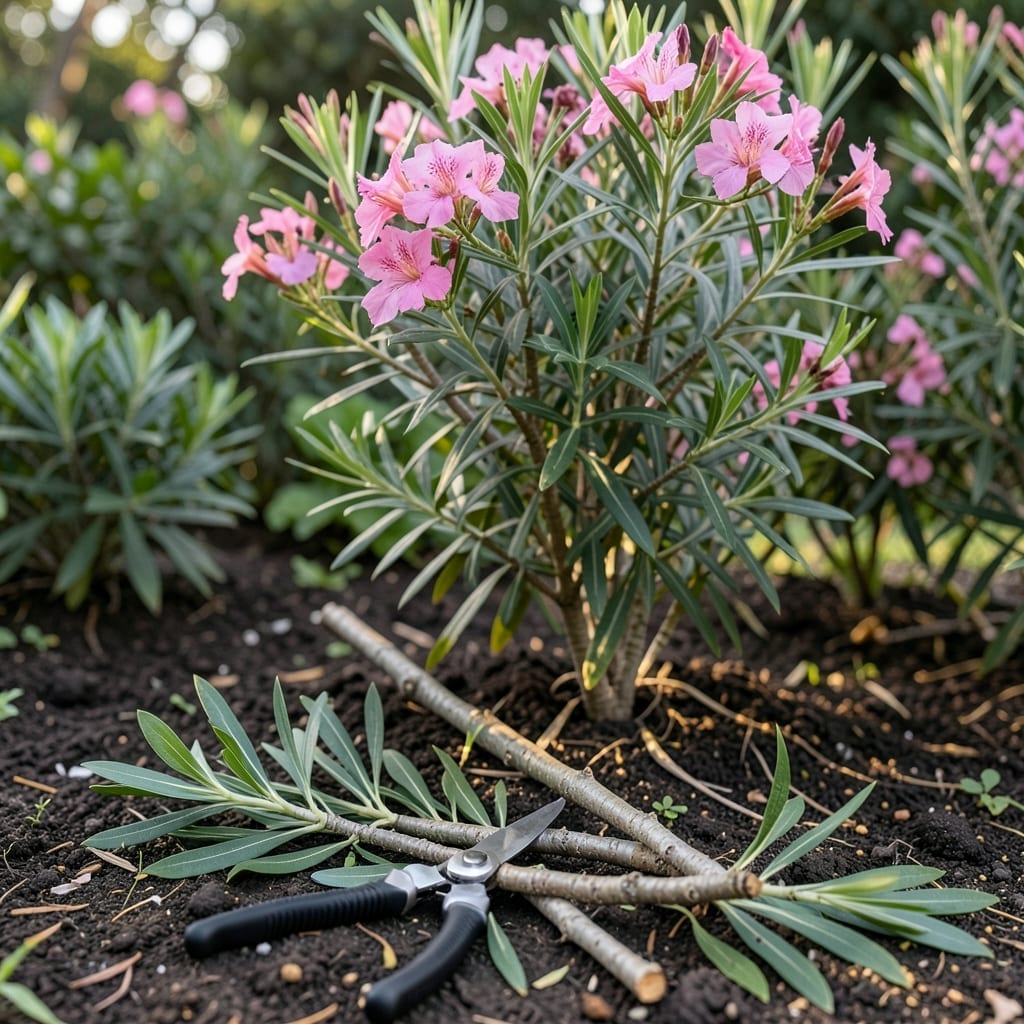
I know that lush, vibrant 🌺 Oleander can transform any landscape, but timing your pruning wrong can ruin its potential. These hardy shrubs need careful attention to thrive.
Cutting back Oleanders at the right moment ensures healthier growth and abundant blooms. Miss the window, and you might end up with a sad, sparse plant.
Discover the ideal seasons and techniques to keep your Oleanders looking their best year-round. Let’s make it simple and effective.
Timing your oleander pruning correctly is crucial for vibrant blooms. I’ve found that late winter to early spring works best, just before new growth starts. This gives the plant time to recover and produce flowers.
In warmer climates like USDA zones 8-11, you can prune as early as February. Cooler areas should wait until March or April to avoid frost damage. Always prune before the first flush of blooms appears.
| Season | Action |
|---|---|
| Late Winter | Best time to prune |
| Early Spring | Shape and cut back |
| Summer | Light trimming after blooming |
| Fall/Winter | Avoid pruning to prevent cold damage |
If you prune too late in the season, you risk cutting off flower buds that have already formed. I always check for swelling buds before making any cuts. This ensures I don’t accidentally remove potential blooms.
For established oleanders, a light trim after the first bloom cycle can encourage a second flush of flowers. This is especially effective in warmer climates where the growing season is longer.
In drought-prone areas, prune conservatively. Oleanders are drought-tolerant, but heavy pruning can stress them. I recommend removing only 1/3 of the plant at a time to maintain health.
Remember, oleanders are toxic plants. Always wear gloves and long sleeves when pruning to avoid contact with the sap. Safety first—this plant’s milky sap can cause skin irritation.
If your oleander is overgrown, don’t panic. You can rejuvenate it by cutting back 1/3 of the oldest stems each year for three years. This gradual approach prevents shock and promotes new growth.
For the best results, use sharp, clean pruners to make smooth cuts. I always disinfect my tools between plants to prevent spreading disease. This small step makes a big difference in plant health.
Finally, after pruning, give your oleander a balanced fertilizer to support recovery. I use a 10-10-10 formula in early spring to give it a nutrient boost. This helps the plant bounce back quickly and produce those gorgeous blooms we all love
✂️Pruning oleanders doesn’t have to be intimidating. I start by gathering the right tools: sharp bypass pruners, loppers for thicker stems, and protective gloves to avoid the toxic sap.
First, I inspect the plant for dead or diseased wood and remove those branches entirely. This prevents the spread of issues and keeps the shrub healthy. Always cut back to healthy tissue just above a leaf node.
For shaping, I focus on opening the center to improve air circulation. This reduces the risk of fungal diseases. I make cuts at a 45-degree angle to help water run off and prevent rot.
If your oleander is overgrown, take it slow. I recommend removing no more than 1/3 of the plant in a single pruning session. This gradual approach prevents shock and encourages new, healthy growth.
After pruning, I clean up all debris around the base. Oleander clippings are toxic and should never be composted or left where pets or children might access them. Dispose of them in sealed bags.
Finally, I give my oleander a deep watering to help it recover. If it’s early in the growing season, I’ll also apply a balanced fertilizer to support new growth and blooming.
✂️