
Beautiful Plants For Your Interior
Beautiful Plants For Your Interior
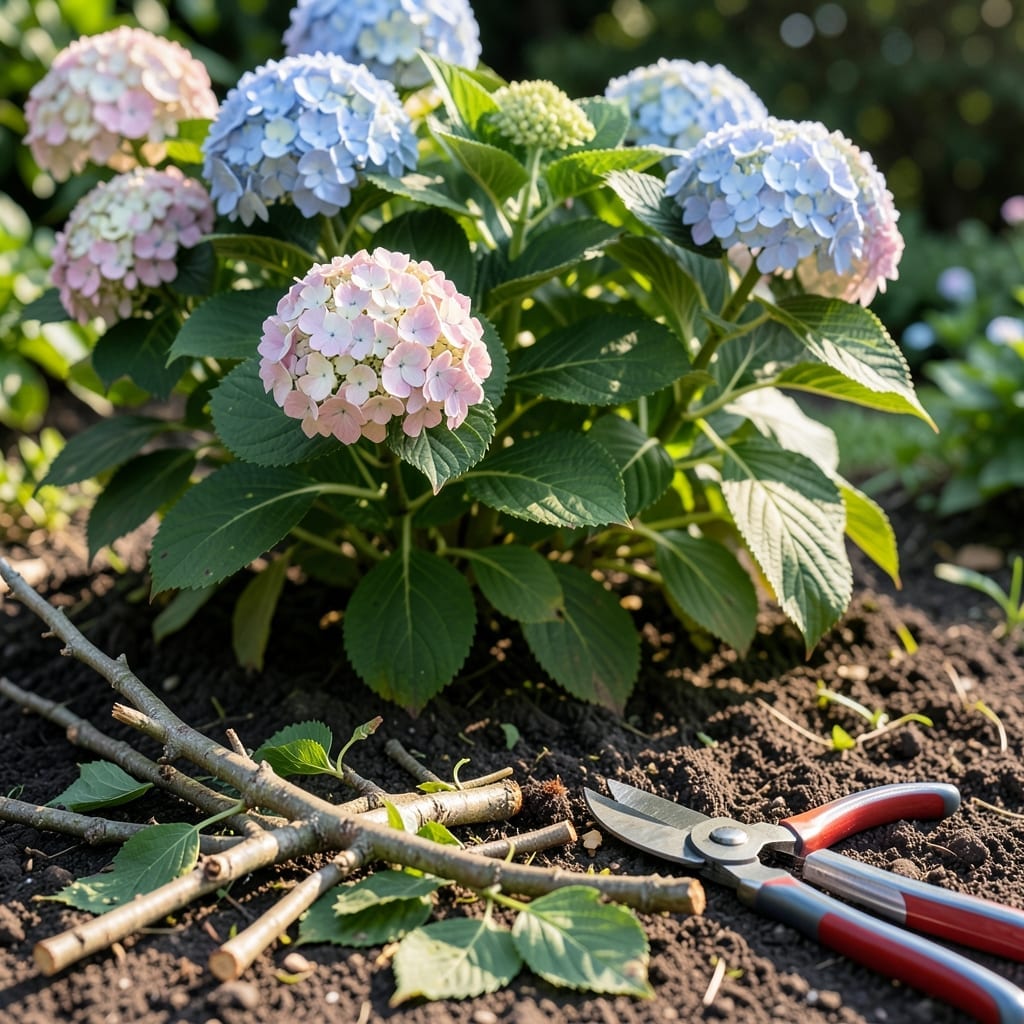
Pruning your 🌸 Hydrangea bushes at the wrong time can cost you a season of blooms. I learned this the hard way after accidentally cutting back my plants too late one year.
Timing is everything when it comes to these beautiful shrubs. The right approach depends on whether you’re growing bigleaf, panicle, or smooth varieties.
Discover the exact seasonal windows to prune each type for vibrant, healthy growth and maximum blooms. Let me show you how to get it right.
I get asked all the time: When should I prune my hydrangeas? The answer depends entirely on the variety. Different types set their flower buds at different times.
Bigleaf hydrangeas form their buds on old wood, meaning last year’s growth. If you prune these in winter or early spring, you risk cutting off all those potential blooms.
| Hydrangea Type | Pruning Time | Bloom Formation |
|---|---|---|
| Bigleaf | After flowering | Old wood |
| Panicle | Late winter/early spring | New wood |
| Smooth | Late winter/early spring | New wood |
Panicle hydrangeas are the easiest for beginners because they bloom on new wood. You can safely prune these in late winter before new growth starts.
For smooth hydrangeas, like the popular Annabelle, the timing is similar to panicles. I always prune mine in early spring just as the buds start swelling.
If you’re unsure which type you have, look at the flower shape. Bigleafs have those classic round mophead or lacecap blooms, while panicles are more cone-shaped.
Another trick I use is to observe the stems. Old wood will be darker and woodier, while new growth is lighter and greener. This helps me identify what needs to stay and what can go.
Remember that climate matters too. In colder zones, wait until the last frost date has passed before pruning. In milder areas, you can start a bit earlier.
For all types, always use sharp bypass pruners to make clean cuts. I keep mine handy year-round for any maintenance trimming that might be needed.
And ✂️
I always start by identifying the wood type before making any cuts. For bigleaf hydrangeas, I look for darker, woodier stems which are old growth that will produce this year’s flowers.
For panicle and smooth types, I focus on removing dead or weak stems first, then shape the plant. These bloom on new wood, so timing is more flexible.
I make my cuts just above a leaf node at a 45-degree angle. This helps water run off and prevents rot. Always use sharp bypass pruners for clean cuts that heal quickly.
For bigleaf hydrangeas, I prune immediately after flowering. This gives the plant time to develop new flower buds for next year before winter sets in.
With panicle hydrangeas, I wait until late winter when the plant is still dormant but spring is near. This timing ensures I don’t cut off any potential new growth.
After pruning, I always clean up the area around the base. Removing old leaves and debris helps prevent fungal diseases that can affect next year’s growth.
And ✂️