
Beautiful Plants For Your Interior
Beautiful Plants For Your Interior
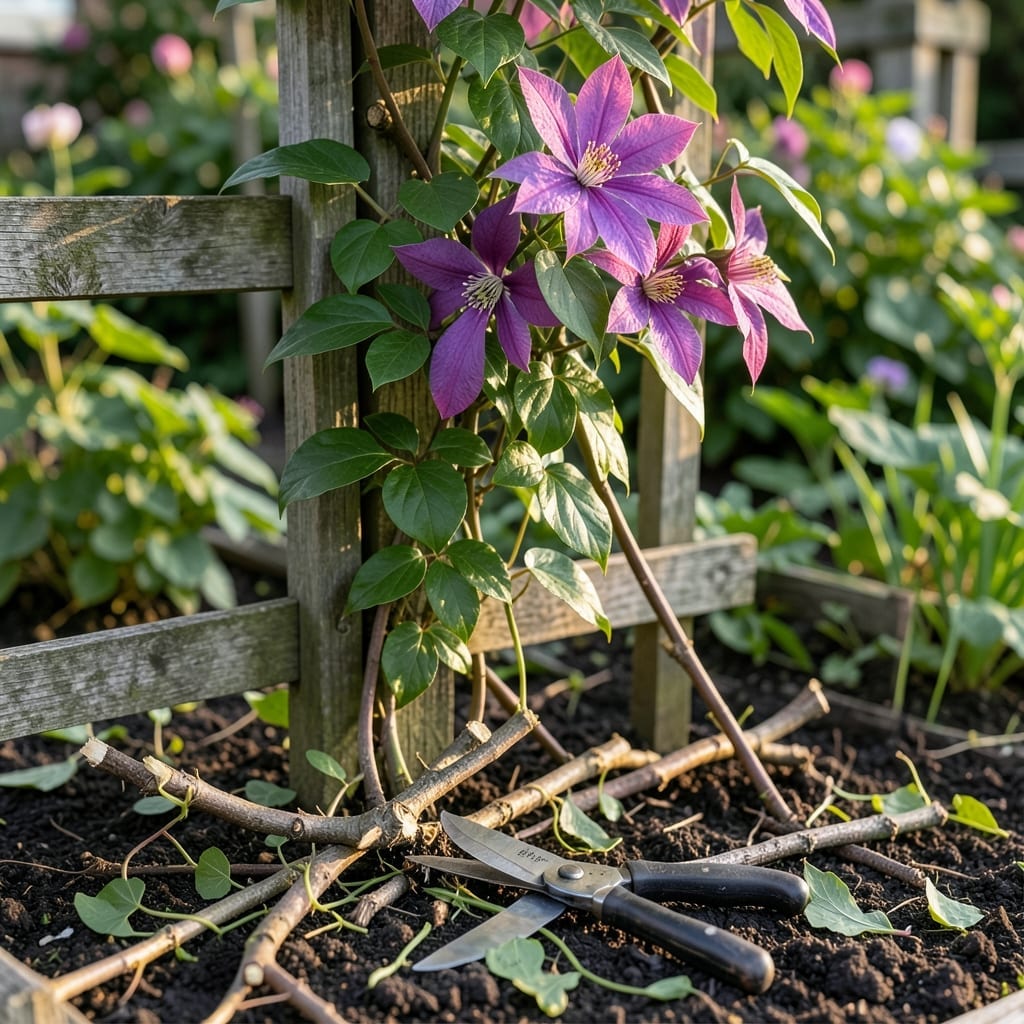
Pruning Clematis 🌸 at the right time can mean the difference between a lackluster vine and a burst of vibrant blooms. Many gardeners accidentally sabotage their plants by cutting back at the wrong moment.
What most don’t realize is that timing depends entirely on your plant’s variety. Early-flowering and late-flowering types have completely different needs when it comes to pruning schedules.
Discover the simple yet crucial distinctions between clematis groups and when to make your cuts. This knowledge will help you achieve the healthiest, most flourishing vines possible.
I know how confusing clematis pruning can feel, especially with so many varieties available. The secret lies in understanding that clematis fall into three groups, each with distinct bloom times and pruning needs. This classification helps prevent accidental flower loss.
Group 1 clematis bloom on old wood from the previous year, so they need minimal pruning. Group 2 plants flower on both old and new wood, requiring a balanced approach. Group 3 clematis bloom on new wood only, allowing for more aggressive cuts.
| Group | Bloom Time | Pruning Window | Action |
|---|---|---|---|
| Group 1 | Early spring | After flowering | Remove dead wood only |
| Group 2 | Spring + summer | Late winter | Light prune, remove weak stems |
| Group 3 | Late summer | Early spring | Cut back to 12-18 inches |
For Group 1 clematis, I wait until immediately after their spring blooms fade. This timing allows me to remove only the dead or damaged wood while preserving next year’s flower buds. Examples include Clematis alpina and Clematis macropetala.
Group 2 clematis require a two-phase approach. I do a light prune in late winter to remove weak growth, then a second light trim after their first flush of blooms. Popular varieties here include Clematis ‘Nelly Moser’ and ‘Jackmanii’.
With Group 3 clematis, I get more aggressive. These late bloomers flower on new wood, so I cut them back hard in early spring to about 12-18 inches from the ground. This encourages strong new growth and abundant flowers.
Remember, when in doubt about your clematis group, observe its bloom time. Early spring bloomers are almost always Group 1. Those that flower in spring and summer typically belong to Group 2, while late summer bloomers are usually Group 3.
I always use sharp bypass pruners for clean cuts and
The best time of day for pruning is on a dry, overcast day in late winter or early spring. This timing helps prevent disease spread and gives the plant time to recover before active growth begins. Avoid pruning on wet days or during freezing temperatures.
By following these group-specific guidelines, I’ve found my clematis produce more blooms and maintain healthier growth patterns. The key is consistency and paying attention to each plant’s unique needs ✂️
I always start by identifying my clematis group before making any cuts. This first step prevents accidental removal of flower buds and ensures I’m working with the plant’s natural growth cycle. It’s the foundation of successful pruning.
The tools I use are just as important as the timing. I recommend sharp bypass pruners for clean cuts, gardening gloves for protection, and disinfectant wipes to prevent disease spread between plants. Clean tools make all the difference.
For Group 1 clematis, I look for faded spring blooms as my signal. I only remove dead wood and any weak stems, being careful not to disturb the new growth that will produce next year’s flowers.
With Group 2 clematis, I do my first light pruning in late winter, removing about one-third of the old growth. Then after the first bloom cycle, I give it another light trim to encourage second flush of flowers.
For Group 3 clematis, I’m more aggressive. In early spring, I cut all stems back to about 12-18 inches from the ground. This hard pruning stimulates vigorous new growth that will produce abundant late summer blooms.
I always make my cuts just above a healthy bud at a 45° angle. This technique helps water run off the cut surface, reducing the risk of rot or disease. I also look for swollen buds as signs of new growth ✂️