
Beautiful Plants For Your Interior
Beautiful Plants For Your Interior
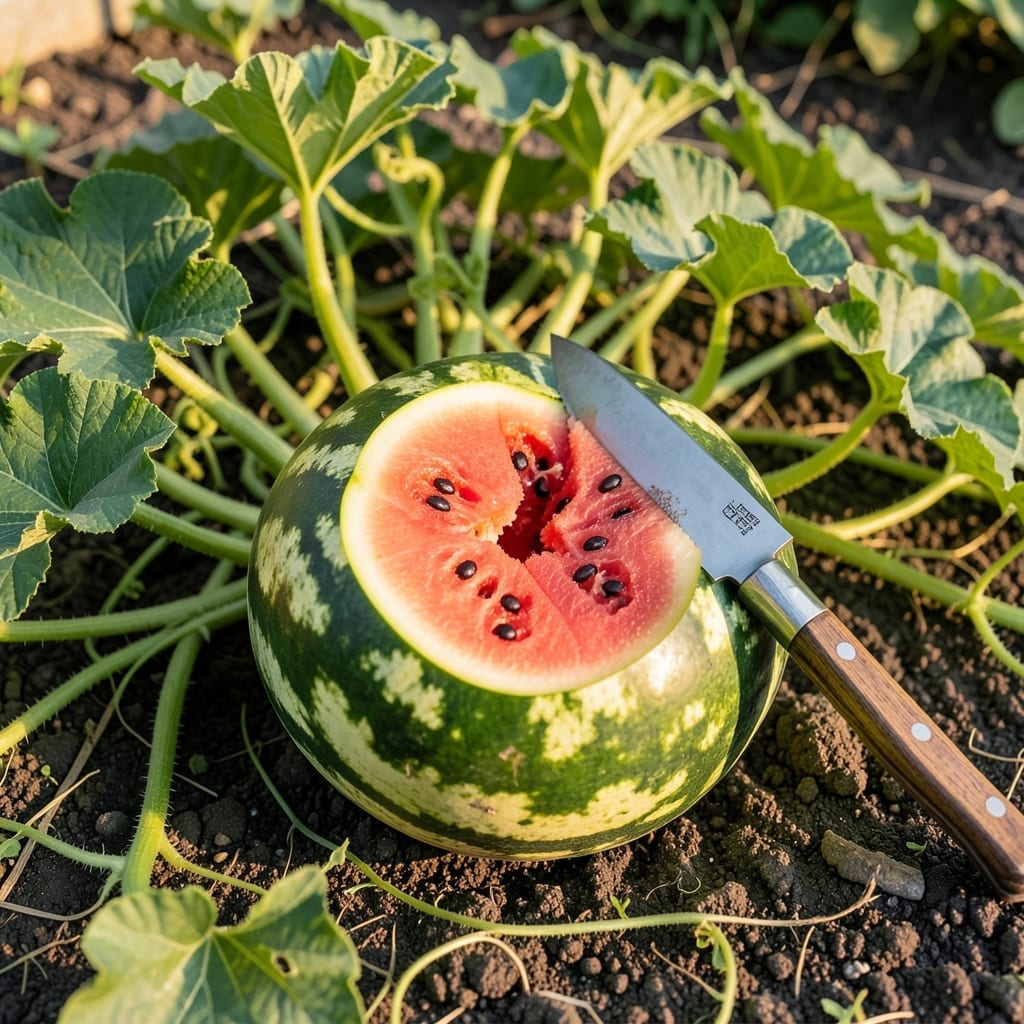
Knowing exactly when to cut a Watermelon can mean the difference between a juicy, sweet harvest and a disappointing, underripe flop. Timing is everything with this summer favorite.
I remember my first attempt at growing 🍉 – I picked it too early and ended up with a bland, mealy mess. The signs of ripeness are subtle but unmistakable once you know what to look for.
From the stem’s telltale slip to the rind’s color shift, there are clear indicators that your melon is ready. Even the weather plays a role in that perfect harvest moment.
Discover how to read these nature-given clues and never second-guess your timing again. Your taste buds will thank you.
I always check for the stem slip first—when the tendril near the stem turns brown and dry, it’s a clear sign your watermelon is ready. This is one of the most reliable indicators of ripeness.
The underside of the melon is another key spot. If it’s shifted from white or pale green to a cream color, your watermelon is likely at peak sweetness. This is called the ground spot and it’s a telltale sign.
| Sign | What to Look For | Ripeness Status |
|---|---|---|
| Tendril near stem | Brown and dry | Ready |
| Underside color | Cream-colored | Ready |
| Rind texture | Dull, not shiny | Ready |
| Sound when tapped | Deep, hollow sound | Ready |
| Tendril near stem | Green | Not Ready |
The rind texture also changes as the fruit matures. A shiny rind means it’s not ready, while a dull finish signals ripeness. I run my fingers over the surface to confirm the shift.
Another classic test is the thump test. Tap the melon and listen for a deep, hollow sound. A high-pitched or metallic sound means it needs more time on the vine.
I’ve found that morning harvesting works best. The sugar content is highest after a cool night, and the fruit is firmer, making it easier to handle without bruising.
If you’re still unsure, check the stem itself. A dried, cracked stem often indicates the watermelon has detached naturally, which is a strong sign of readiness.
For seedless varieties, I rely more on the ground spot and rind dullness, as the tendril test can be less reliable. These types often need a few extra days to fully sweetens.
Remember, weather conditions play a role too. A stretch of hot, dry days can speed up ripening, while cool, wet weather may delay it. Always adjust your timing accordingly.
With practice, you’ll start to recognize these signs instantly. I’ve harvested dozens of perfect watermelons by trusting the stem slip and rind shift—they rarely lead me astray. ✂️
I’ve seen many gardeners rush to cut their watermelons too early, only to find them underripe. One of the biggest mistakes is ignoring the tendril near the stem. If it’s still green, the melon isn’t ready.
Another common error is overlooking the underside color. A white or pale green bottom means it needs more time. Wait for that cream-colored patch to appear before harvesting.
⚠️ Avoid These Harvesting Pitfalls
Cutting too early results in bland flavor and poor texture. Always check the stem tendril and rind dullness before making the cut.
Weather conditions also play a role. Harvesting on a rainy day can dilute the melon’s sweetness. Aim for a dry, sunny morning for the best flavor.
Don’t rely solely on the thump test. While a deep, hollow sound is a good sign, combine it with visual cues like the tendril and underside color for accuracy.
Finally, avoid using a dull knife when cutting the melon from the vine. A clean, sharp cut prevents damage to the plant and ensures a smoother harvest.
By steering clear of these mistakes, you’ll enjoy a sweet, juicy watermelon every time. Patience and attention to detail are key.