
Beautiful Plants For Your Interior
Beautiful Plants For Your Interior
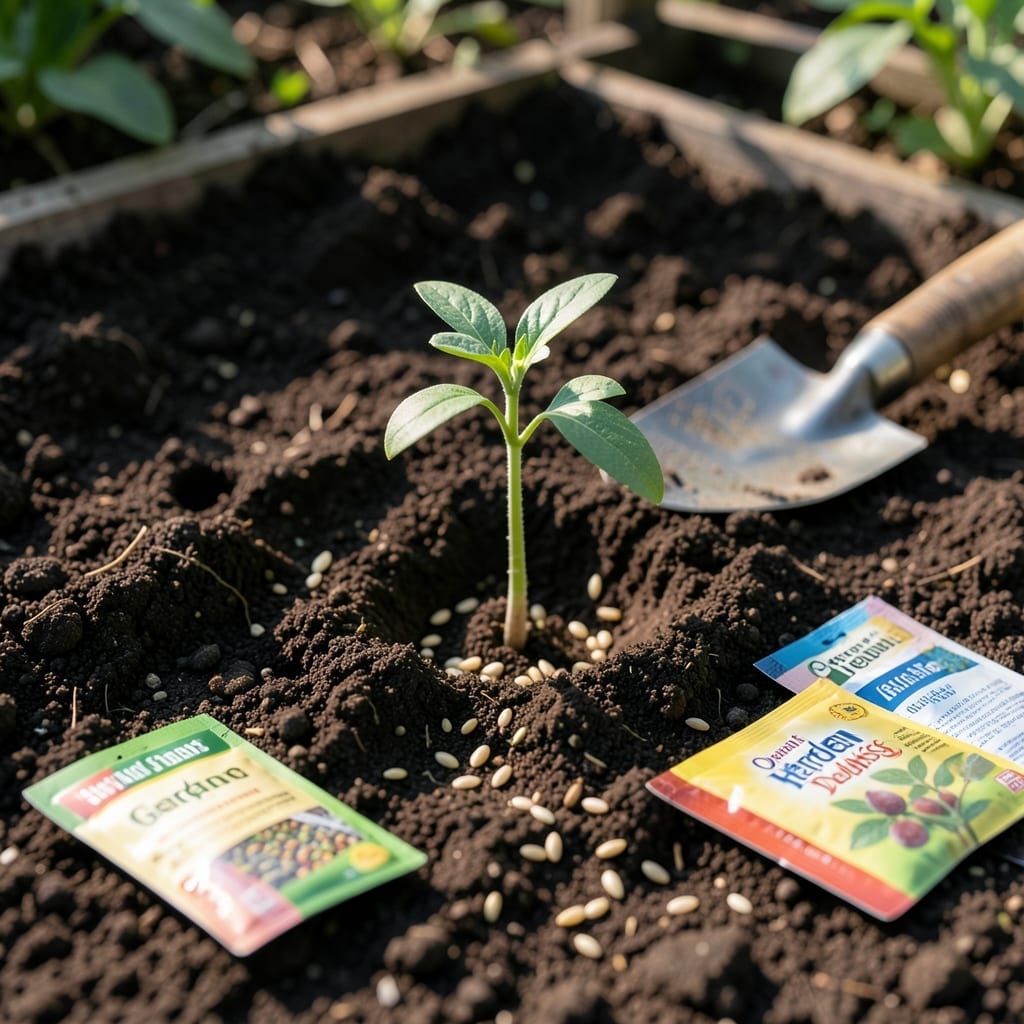
Planting General Seed 🌱 correctly can transform your garden from a struggle to a success story. The number of seeds per hole often stumps even seasoned gardeners.
It’s not just about tossing seeds in and hoping for the best. The right approach ensures stronger sprouts and healthier plants down the line.
I’ll break down the factors that determine the perfect count, from seed size to germination rates. You’ll learn how to avoid overcrowding while maximizing your chances of success.
Discover the simple yet effective strategies that will make your planting efforts thrive this spring.
I always recommend planting 2-3 seeds per hole as a general rule, but the exact number depends on seed size and germination rates. Larger seeds like beans or squash can be planted one per hole, while tiny seeds like carrots or lettuce benefit from multiple seeds to ensure at least one sprouts.
For seeds with lower germination rates, such as parsnips or onions, I plant 3-4 seeds per hole to increase the chances of success. This approach compensates for seeds that may not germinate, ensuring you don’t end up with empty spots in your garden.
| Seed Type | Seeds per Hole | Notes |
|---|---|---|
| Large (Beans, Squash) | 1 | High germination rate |
| Medium (Tomatoes, Peppers) | 2-3 | Thin to strongest seedling |
| Small (Carrots, Lettuce) | 3-4 | Low germination rate |
| Tiny (Herbs, Flowers) | 4-5 | Sprinkle lightly, thin later |
Once your seeds sprout, thinning seedlings is essential to prevent overcrowding. I use small scissors to snip weaker seedlings at soil level, leaving the strongest one to grow unobstructed. This step ensures each plant has enough space and nutrients to thrive.
For direct sowing in the garden, I space holes according to the mature plant size listed on the seed packet. For example, bush beans need 4-6 inches between plants, so I plant one seed per hole at that spacing.
If you’re starting seeds indoors, I suggest using seed trays with individual cells. This lets you control the environment better and makes thinning easier. Plant 1-2 seeds per cell and remove extras after germination.
Remember, soil temperature and moisture affect germination. I always check the seed packet for ideal conditions. For instance, peppers need warm soil (above 70°F), so I start them indoors early.
For slow-germinating seeds like rosemary or lavender, I plant 3-4 seeds per hole and keep the soil consistently moist but not soggy. Patience is key—some seeds can take 2-3 weeks to sprout.
I’ve found that pre-soaking seeds like corn or peas for 12-24 hours can speed up germination. This trick reduces the time they spend in the ground, giving you faster results and more uniform growth.
Finally, always label your plantings with the seed type and date. This helps me track germination rates and adjust my approach next season. Happy planting! 🌱
Getting the planting depth and spacing right is just as important as seed quantity. I always check the seed packet for specific guidance, but there are general rules to follow.
For large seeds like beans or squash, plant 1-2 inches deep. Medium seeds such as tomatoes go about ½ inch deep, while tiny seeds like lettuce need just ¼ inch coverage.
| Plant Type | Depth | Spacing |
|---|---|---|
| Large Seeds (Beans) | 1-2 inches | 3-4 inches apart |
| Medium Seeds (Tomatoes) | ½ inch | 18-24 inches apart |
| Small Seeds (Lettuce) | ¼ inch | 6-12 inches apart |
Spacing between holes varies by plant. I give vining plants like cucumbers 36 inches between holes, while bush beans can be closer at 4-6 inches.
For row planting, I maintain consistent spacing in all directions. With container gardening, I reduce spacing slightly but never crowd seeds.
Remember that overcrowding leads to weak plants competing for nutrients. I thin seedlings when they’re 2-3 inches tall, keeping only the strongest.
Always adjust based on your soil quality and climate conditions. In poor soil, I give plants extra space to access more nutrients. 🌱