
Beautiful Plants For Your Interior
Beautiful Plants For Your Interior
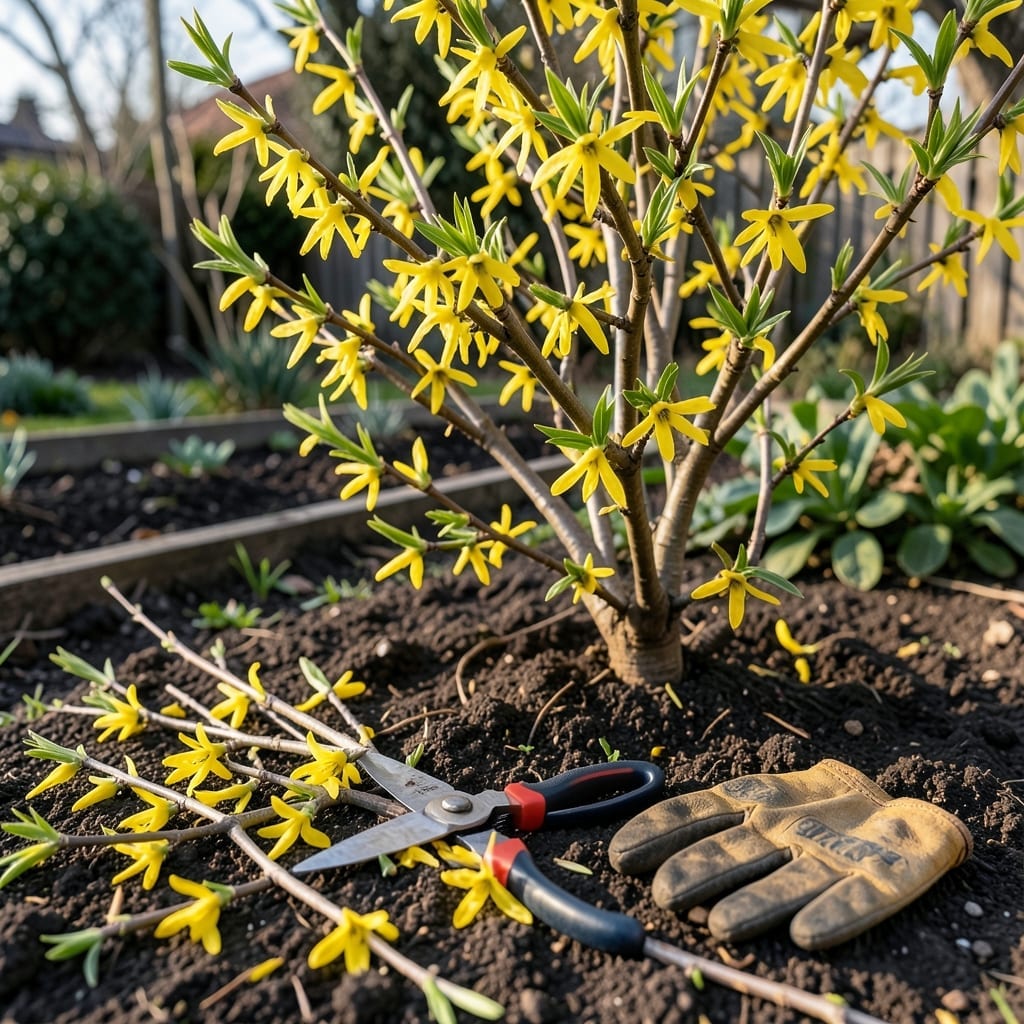
Timing your forsythia pruning wrong can cost you a season of vibrant yellow blooms. The 🌸 Forsythia bush thrives when trimmed at the right moment, and missing that window means sacrificing next year’s spectacular display.
I’ve seen too many gardeners make this common mistake, cutting back their shrubs at the wrong time and wondering why they’re greeted with bare branches come spring. The solution is simpler than you think.
Discover the perfect window to trim your forsythia for healthier growth and more abundant flowers. Let me show you how to get it right every time.
I always recommend pruning your forsythia bushes right after they finish blooming. This timing is crucial because it allows the plant to set buds for next year’s flowers on the new growth that follows. ✂️
The forsythia’s growth cycle is unique. It produces its vibrant yellow flowers on old wood, meaning the branches that grew the previous year. If you prune too late, you risk cutting off the very branches that would have bloomed next spring. ☀️
🌱 Pro Tip: Forsythia Blooming Cycle
Prune immediately after flowering (usually late spring) to give your forsythia time to grow new wood that will bloom next year.
When you trim after the blossoms fade, you’re giving your forsythia the maximum time to produce new growth. This new growth will then have an entire growing season to mature and set flower buds for the following spring. 🌿
A common mistake I see is pruning in late summer or fall. This might seem logical as you’re preparing your garden for winter, but it actually removes the flower buds that have already formed. The result? A forsythia with few or no blooms the next year.
The ideal window for pruning is typically from late April to early June, depending on your climate and when your forsythia finishes blooming. In my experience, the sooner you prune after flowering, the better your plant will respond. ✂️
Another reason post-bloom pruning works so well is that it allows you to shape your bush while it’s still leafed out. This makes it easier to see the plant’s natural form and make precise cuts for a balanced, attractive shape.
Remember, forsythias are hardy plants and can tolerate a variety of conditions. But when it comes to pruning, timing is everything. A well-timed trim will reward you with more abundant blooms and a healthier, more vigorous plant. 🌸
If you’re unsure when your forsythia has finished blooming, keep an eye on the petals falling. Once most have dropped and you see new green growth starting to emerge, that’s your signal to grab those pruners and get to work.
Finally, don’t be afraid to be bold with your cuts. Forsythias respond well to aggressive pruning and can even be cut back to the ground if they’ve become overgrown. Just be sure to do this right after flowering to ensure you don’t sacrifice next year’s display.
I always start pruning my forsythia bushes with a sharp pair of bypass pruners and a clear plan. The best time is right after flowering, when new growth begins to emerge. ✂️
First, remove any dead or diseased wood at the base. Then, cut back about one-third of the oldest stems to the ground to encourage new growth. This rejuvenates the plant while maintaining its shape.
🌱 Pruning Steps
Next, shape the bush by trimming back overgrown branches to a natural form. Aim for a rounded shape, cutting just above a leaf node to encourage branching. This helps maintain air circulation. 🌿
Be sure to step back frequently to assess your progress. It’s easy to get carried away, but over-pruning can stress the plant. I find that light, frequent pruning works better than drastic cuts.
After pruning, gather all cuttings and debris to prevent pests and diseases. A clean garden bed ensures your forsythia stays healthy and ready for its next blooming cycle. 🪴
Finally, water your forsythia deeply after pruning to help it recover. This is especially important in dry climates or during hot weather. A well-hydrated plant will bounce back quickly and reward you with vibrant blooms next year.