
Beautiful Plants For Your Interior
Beautiful Plants For Your Interior
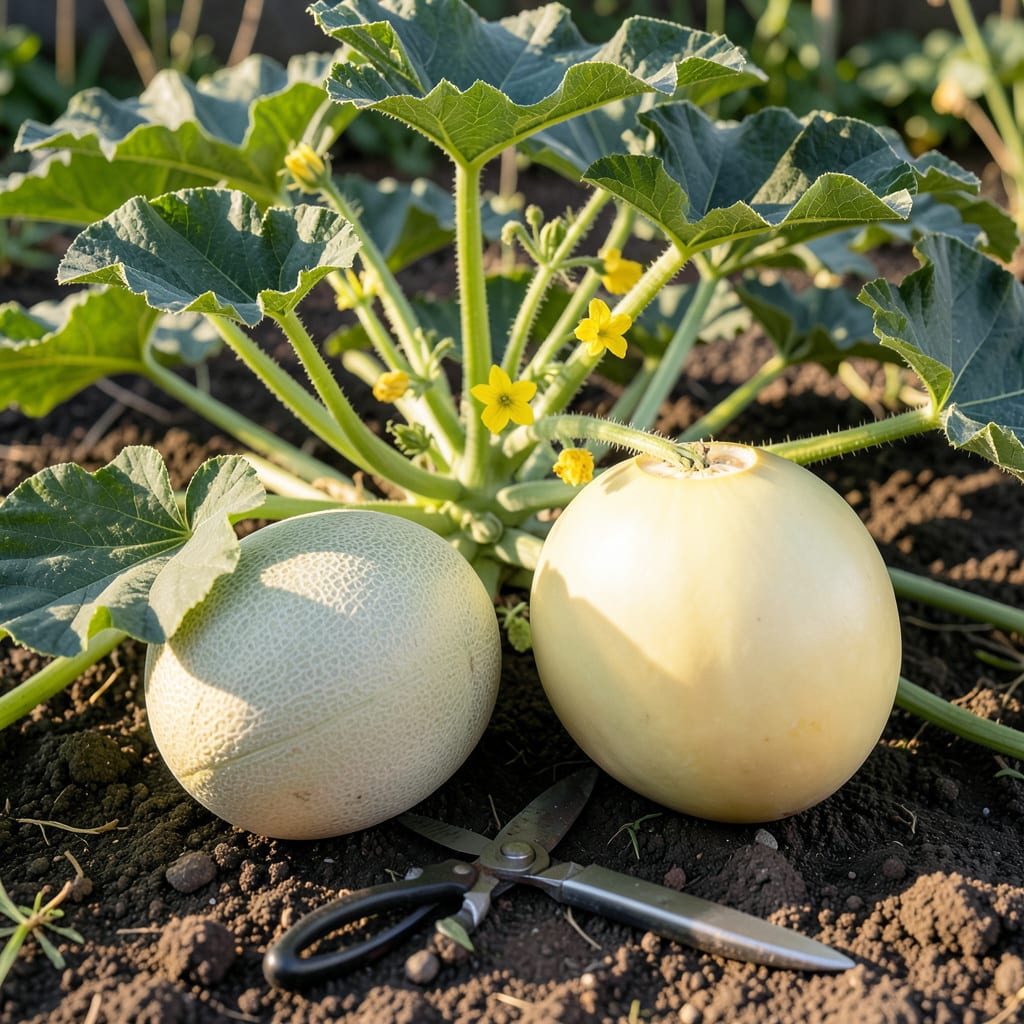
Picking a 🍈 Honeydew too early means bland fruit, while waiting too long risks a mushy mess. The difference between perfect and disappointing often comes down to timing.
I’ll show you the subtle signs to watch for and the simple tests that guarantee you’ll harvest Honeydew at its sweetest peak every time.


Timing your honeydew harvest perfectly starts with watching the stem slip. A full slip occurs when the stem detaches completely, signaling peak ripeness. Partial slip means it’s nearly ready but may need a day or two.
The rind color transforms from bright green to a creamy yellow as the fruit matures. This shift is a clear visual cue that the sugars inside are developing. Don’t rely on size alone, as it’s not a ripeness indicator.
| Sign | Description |
|---|---|
| Full Slip | Stem detaches completely from vine |
| Creamy Rind | Rind turns from green to pale yellow |
| Blossom End | Slight softness when gently pressed |
Another reliable test is the blossom end check. Press gently on the opposite side of the stem—if it yields slightly, your honeydew is likely ripe. This softness indicates the fruit is ready to pick.
I always recommend combining multiple tests for accuracy. The stem slip and color change together are stronger indicators than either alone. This dual approach reduces the chance of picking too early or too late.
If the rind remains green and the stem hasn’t slipped, leave the melon on the vine. Harvesting at this stage will give you underripe fruit with poor flavor. Patience here pays off with sweeter melons.
For gardeners in warmer climates, honeydews may ripen faster. Watch for the color change to accelerate during heatwaves. Cooler weather can slow ripening, so adjust your expectations accordingly.
The netting on the rind can also become more pronounced as the fruit matures. While not as reliable as the stem slip or color, it’s another visual cue to add to your assessment.
Remember that honeydew melons don’t continue ripening after picking like some other fruits. Once harvested, the sugar content won’t increase, so timing in the garden is everything.
I’ve found that checking these signs in the early morning gives the most accurate results. The cooler temperatures make it easier to detect subtle changes in color and texture.
Beyond visual cues, I rely on the scent test for honeydew ripeness. A mature melon emits a sweet, musky aroma at the blossom end. If you don’t detect any fragrance, the fruit likely needs more time on the vine.
The sound test is another useful method. Tap the melon lightly—when ripe, it produces a hollow, deep sound. An unripe honeydew will sound solid or dull, while an overripe one may sound flat.
⚠️ Warning: Don’t rely on size alone to judge ripeness. A large honeydew isn’t necessarily ripe, and a smaller one might be perfectly sweet. Always combine multiple tests for the best results.
I’ve found the aroma test works best in the early morning when the air is cool and scents are more detectable. Warm afternoons can mask the honeydew’s natural fragrance, making this method less reliable later in the day.
For the sound test, use your knuckles rather than your fingertips for a clearer tone. Practice on a few melons to train your ear—you’ll quickly learn the difference between ripe and unripe sounds.
If the blossom end lacks scent and the tap sounds dull, leave the melon be. Harvesting too soon means missing out on the full sugar development that makes honeydew so delicious.
Remember, these tests work best when combined with the stem slip and color changes we discussed earlier. Using all your senses—sight, touch, sound, and smell—ensures you’ll pick at the absolute peak of ripeness.
In my experience, the scent test is the most foolproof. A strong, sweet aroma at the blossom end almost always means your honeydew is ready to enjoy.
For the sweetest honeydew, I always harvest in the early morning. The cooler overnight temperatures help the melon retain its sugar content, giving you the best flavor right off the vine.
Using sharp pruners is essential to avoid damaging the vine or the fruit. A clean cut prevents bruising and helps the remaining melons continue developing without stress.
After picking, store your honeydew at room temperature for a day or two. Unlike some fruits, honeydews won’t continue ripening significantly off the vine but can soften slightly for better texture.
If you must harvest later in the day, try to do so on a cloudy day or in the shade. Direct sunlight can cause the fruit to overheat, potentially affecting its flavor and storage life.
Finally, handle your honeydews gently to prevent bruising. Even a small dent can lead to spoilage, so I always place them in a padded basket or directly into a box for transport.
With these tips, you’ll enjoy perfectly sweet honeydew every time you harvest. ☀️
A ripe honeydew emits a sweet, musky aroma at the blossom end. If there’s no scent, it needs more time. This fragrance intensifies as sugars develop inside the fruit.
Only if it shows partial slip and other signs like color change. A full slip means peak ripeness, but partial slip with a creamy rind may still be ready. Always check multiple indicators.
Cooler overnight temps help the melon retain maximum sugar content. Harvesting later in hot weather can reduce sweetness and storage life. Use sharp pruners for a clean cut.
No, size alone is unreliable. A large honeydew can be underripe, while a smaller one might be perfectly sweet. Focus on color, scent, and stem slip instead.
