
Beautiful Plants For Your Interior
Beautiful Plants For Your Interior
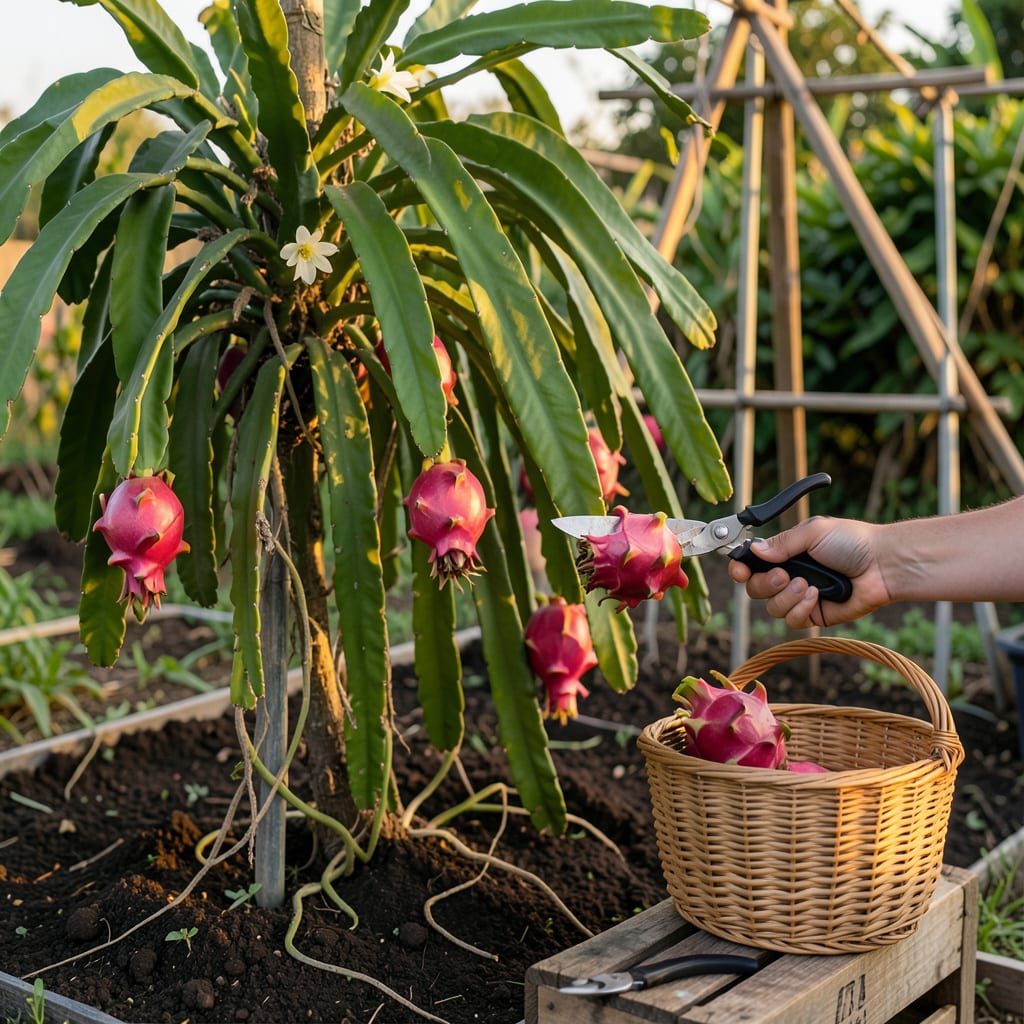
Timing your Dragon Fruit 🐉 harvest perfectly can turn a good crop into an amazing one. Picking too early or too late affects both taste and texture.
I’ll show you the 3 clear signs to watch for, so you can confidently harvest at peak ripeness. Let’s make sure your next harvest is the best yet.


As a tropical cactus, dragon fruit gives clear visual signals when it’s harvest-ready. I watch my plants closely during late summer to catch these signs early.
The most obvious indicator is the color transformation. Your fruit will shift from a dull green hue to a vibrant pink or red, depending on the variety.
Vibrant color change from green to pink/red
Wings (bracts) begin to dry and droop
Slight give when pressed gently
The wing-like bracts on the fruit are another tell. When they start to dry out and droop slightly, your dragon fruit is nearing peak ripeness.
I also check for firmness changes. A ripe dragon fruit will have a slight softness when you press it, similar to a ripe avocado. But it shouldn’t be mushy.
Remember that color intensity varies by variety. My Hylocereus undatus turns bright pink, while Hylocereus costaricensis develops a deep red hue.
The stem connection is another clue. When ripe, the fruit will twist off easily from the vine with minimal effort. If it resists, give it more time.
I’ve found that morning harvesting works best. The fruit is at its freshest state after the cool night, and the sugars are most concentrated.
Don’t wait for the wings to turn brown. That’s a sign of over-ripeness, which affects flavor and storage life. Catch it at the first sign of drooping.
In my experience, these visual signs are more reliable than counting days. My dragon fruit often ripens 150 days after flowering, but weather can speed up or slow this down. 🌱
Before harvesting, I always perform a few simple tests to confirm ripeness. The first is the gentle squeeze test—your fruit should yield slightly, like a ripe avocado.
A ripe dragon fruit will also have a sweet aroma near the stem. I lean in close and take a deep breath to catch that tropical fragrance. If it smells bland, it’s not ready yet.
⚠️ Don’t Overdo It: Pressing too hard can bruise the fruit. Use just your fingertips and be gentle. Over-ripe fruit will feel mushy and may have brown wings, which means it’s past its prime.
The stem test is another reliable method. When the fruit is ready, the stem connection will loosen, allowing the fruit to twist off easily. If it resists, leave it for another day.
I also check the wing tips for browning. While slight drooping is good, brown or crispy wings mean the fruit is overripe. Harvest before this happens for the best flavor.
For my Hylocereus megalanthus (yellow dragon fruit), I look for a bright yellow skin with no green patches. The wings will also start to curl inward when ripe.
Timing matters too. I avoid harvesting in the midday heat, as the fruit can over-soften in high temperatures. Early morning or late evening is ideal for preserving freshness. 🌿
I’ve found that early morning is the ideal time to harvest dragon fruit. The cooler temperatures help preserve the fruit’s natural sugars and freshness after picking.
The pre-dawn hours are particularly effective because the fruit has had all night to replenish moisture and nutrients. This results in a juicier harvest with better flavor concentration.
💡 Pro Tip: Harvest between 6-8 AM for peak sweetness and texture. Evening picks work too, but avoid midday heat.
Avoid harvesting during the hottest part of the day. The midday sun can cause the fruit to over-soften quickly, leading to a mushy texture and shorter storage life.
Evening harvesting is my second choice. As temperatures drop, the fruit begins to recover from heat stress, making it a good alternative if mornings aren’t possible.
I always check the weather forecast before harvesting. If a heatwave is expected, I’ll pick my dragon fruit a day early to prevent heat damage to the delicate fruit. 🌱
Underripe fruit stays green with firm, upright wings. It will feel hard when pressed and won’t twist off the vine easily.
No! Brown wings mean it’s overripe. Harvest when they first start to droop for the best flavor and texture.
Early morning (6-8 AM) preserves sweetness and freshness. Avoid midday heat, as it can cause over-softening.
Yes! Pink/red varieties turn vibrant, while yellow types develop bright skin with curled wings. Always check variety-specific cues.
