
Beautiful Plants For Your Interior
Beautiful Plants For Your Interior
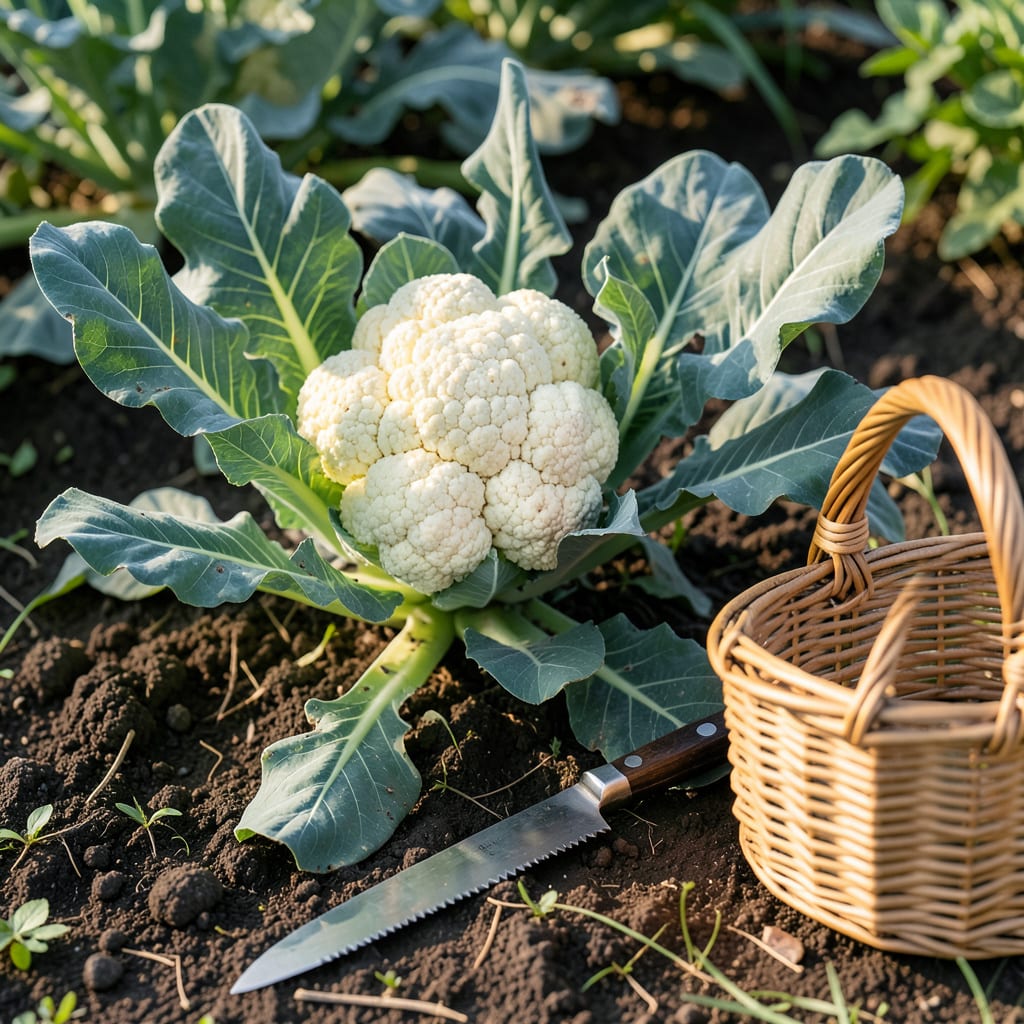
Timing your cauliflower 🥬 harvest perfectly makes all the difference between a firm, tender head and a tough, bitter one. I’ve learned the hard way that missing the sweet spot by just a few days can ruin weeks of careful growing.
From June through October, watch for visual cues like compact heads and uniform color. I’ll show you exactly what to look for so you never pick your cauliflower too early or too late again.
Getting the timing right for harvesting cauliflower starts with knowing your variety. I’ve found that early types like ‘Snowball Y’ are ready in just 50-60 days, while others need more patience.
Mid-season varieties, such as ‘Skywalker’, typically take 70-80 days to mature. Late-season ones, like ‘Purple of Sicily’, can stretch to 100 days or more in cooler climates.
| Variety Type | Days to Maturity | Best Climate |
|---|---|---|
| Early | 50-60 days | Warm |
| Mid-Season | 70-80 days | Temperate |
| Late | 90-100 days | Cool |
Climate plays a huge role in these timelines. In my experience, cooler temperatures can slow growth, while consistent warmth speeds it up. Always adjust for your local conditions.
For example, in USDA Zone 6, I start seeds indoors 4-6 weeks before the last frost. This gives them a head start for a June harvest.
If you’re in a hotter zone, like Zone 9, you might plant later to avoid heat stress. Cauliflower prefers 60-70°F for optimal growth.
I always recommend checking the seed packet for exact days to maturity. But remember, these are just estimates—your garden’s microclimate matters too.
Another tip: succession planting can extend your harvest. I plant a new batch every 2-3 weeks for a continuous supply.
And don’t forget, soil temperature matters as much as air temperature. Cauliflower thrives in well-draining soil around 65-70°F.
Finally, keep an eye on the weather. A late frost can damage young plants, while heatwaves may cause bolting. Timing is everything with cauliflower!
☀️I check my cauliflower plants daily as harvest time nears. The first sign is a firm head about 6-8 inches across. Smaller heads may need more time to reach their full potential.
Another key indicator is the tight curds—they should feel dense and compact. If the head still feels loose or spongy, I know it’s not quite ready for picking.
Color is another reliable clue. For white varieties, I look for a creamy white hue. Purple types deepen in color, while green cauliflower becomes more vibrant as it matures.
The leaves often give hints too. When they start pulling away from the head, it’s usually a sign that the cauliflower is ready. This natural separation exposes the head to sunlight.
I avoid harvesting if the head is still tightly wrapped in leaves. This often means it needs a few more days to develop its full size and texture.
Finally, I watch for consistent growth. If the head stops growing significantly over a few days, it’s likely reached maturity. Trust your instincts—you’ll know it’s time!
🌱Picking cauliflower at the wrong time can ruin your harvest. I learned this when I harvested a head too early and ended up with a small, loose curd that lacked flavor.
If you harvest too late, the head may separate and develop a bitter taste. The texture becomes coarse, and the plant may even start to bolt in warm weather.
If you catch an overmature head early, you can still salvage it. I trim off any discolored parts and use it immediately for best quality.
For underripe cauliflower, patience is key. Give it a few more days to firm up and reach full size. Check daily to avoid missing the window.
I’ve found that blanching—tying leaves over the head—can help protect the curds if you need to delay harvest slightly. This keeps them tender and white.
🌱Look for a firm head about 6-8 inches across with tight curds. The color should be uniform, and leaves will start pulling away from the head.
Avoid harvesting during heatwaves, as it can cause bolting. Early morning is ideal for cutting heads when temperatures are cooler.
Give it 2-3 more days of growth. If it’s still under 4 inches and loose, it’s not ready. Patience ensures better flavor and texture.
Yes, tying leaves over the head can delay maturity slightly. This protects curds from sun damage and keeps them tender for 1-2 extra days.
